How Many Fit in the Box?
Quick Activity Snapshot
- Age Range
- Ages 3–4
- Prep Time
- 5 minutes
- Skills Practiced
- Counting how many objects fit in a box
- Materials
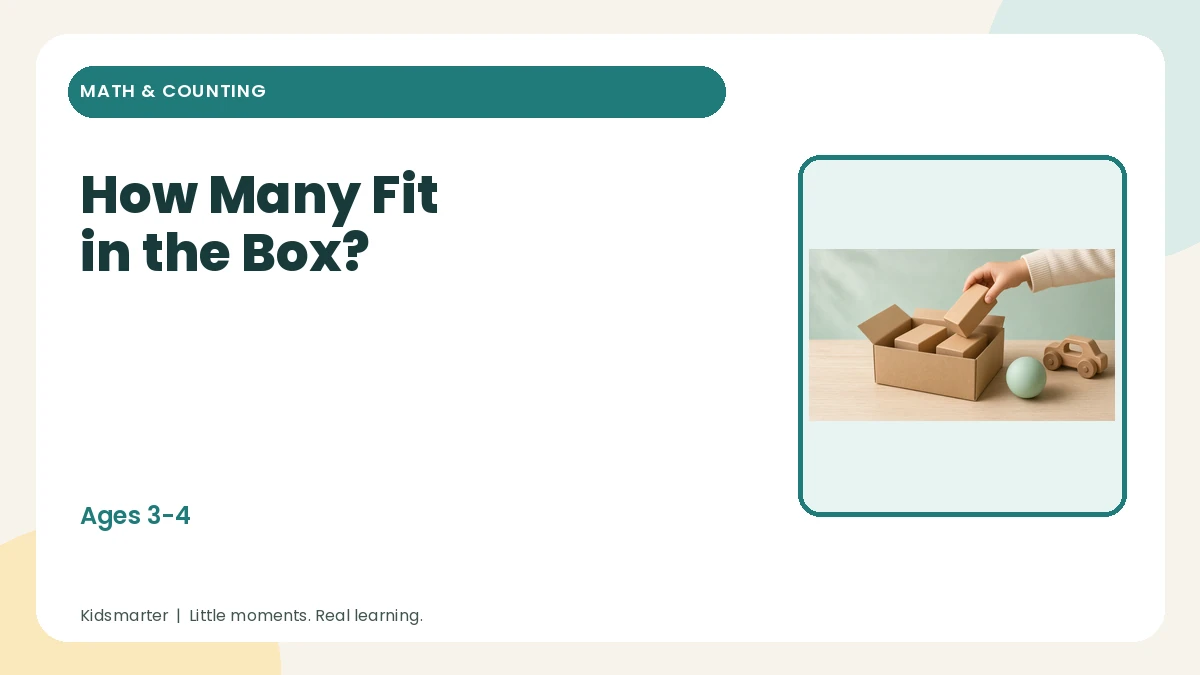
- A small open box and a few large toys or blocks
Age ranges are suggestions, not developmental milestones or standards. Choose the setup for this child, and stop whenever needed.
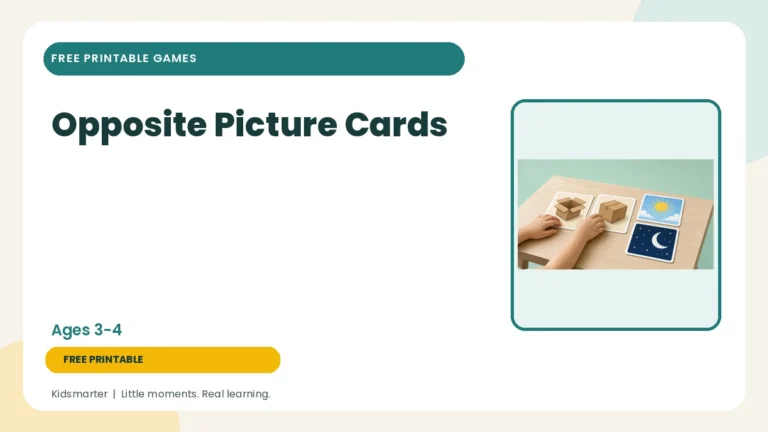
A small box can turn packing into a counting job: you look at a few large toys, you may guess how many will fit, and then you place them in and count. The interesting part is how many actually fit, not packing as many tiny things as possible. This is not a game about which cup holds more water, not a lid-fitting job, and not a fair-share plate game.
Materials You’ll Need
- A small, sturdy, open cardboard box or an unbreakable container that sits on a table and is too small for a child to climb into
- Four to eight familiar toys or blocks that are too large to fit in a child’s mouth, such as wooden blocks, a large ball, or a wooden car
Use a tabletop box, not a trunk, a chest, or a box with a lid that can close on a child. Skip packing peanuts, beads, coins, and other small fillers that could be swallowed. An adult checks the box for sharp staples or loose flaps before you begin.
Step-by-Step How to Play
-
Set the open box and the toys on the table. Say, “We can find out how many of these will fit in the box.” Let your child look and touch the empty box first.
-
You may ask, “How many do you think will fit?” A number, a shrug, or “I don’t know” all count. Then invite your child to place one toy at a time into the box.
-
When no more will fit without pushing hard or making the box tip, stop and count the toys that are inside, pointing to each one. Name what you see: “Three fit. The ball did not fit this time.”
-
If your child still wants a turn, empty the box and try a different mix of toys, or stop. A surprising result is useful, not a failing. When you are finished, take the toys out and put the box away so it is not left as a hiding place.
Small Details That Make This Activity Work
Keep the toys large, and stop when the box is comfortably full. The job is to count what fits, not to cram the last object in. If your child wants only to fill and dump, you can count once together and then stop, or stay with one more fill. This is not Which Cup Holds More?, not Match the Lid to Its Container, not Two Plates Fair Shares, and not Footstep Measuring: the question is how many of these large objects fit in this box.
Why This Activity Helps
Everyday packing can make counting and quantity talk visible. NAEYC’s family math-talk guidance includes number and operations ideas such as quantity, one-to-one counting, and talking about how many in daily life, rather than a rapid quiz. That page offers language and everyday examples; it does not evaluate this box-filling game, and finishing one count is not evidence of school readiness. Children may enjoy placing the toys without guessing first, or without being able to count all the way alone.
Easy Ways to Adapt by Age
Make It Simpler
Use only three large blocks and a box that will clearly hold two or three. You can place the blocks yourself and count them slowly, pointing to each one.
Ready for a Challenge
After one fill, take the toys out and try a smaller box, or ask whether the same toys will fit if you turn a long block on its side. Keep the toys large, and stop if the extra comparing turns the game into a tight squeeze or a mess you cannot stay with.
Parent Tip & Safety Note
Stay at the table for the whole activity. Use a small, open tabletop box, not a chest or a box a child could climb into and close. Choose toys that are too large to swallow, and do not add packing peanuts, beads, or other small fillers. Check the box for sharp staples before you start. When you are finished, empty the box and put it away. Stop if anyone is frustrated, if the box starts to tear in a sharp way, or if your child is finished.
Explore more activities in this category or free printable games.
For everyday language about number, quantity, and counting, see NAEYC’s Math Talk With Infants and Toddlers. That page describes math talk in daily life; it does not test this box-filling game, and it does not treat finishing one count as a developmental screening.