Rhyme Toss With Rolled-Up Socks
Quick Activity Snapshot
- Age Range
- Ages 3–4
- Prep Time
- 5 minutes
- Skills Practiced
- Rhyming and listening
- Materials
- Several pairs of clean rolled socks, A basket or laundry bin, Simple picture cards or spoken word pairs
Age ranges are suggestions, not developmental milestones or standards. Choose the setup for this child, and stop whenever needed.
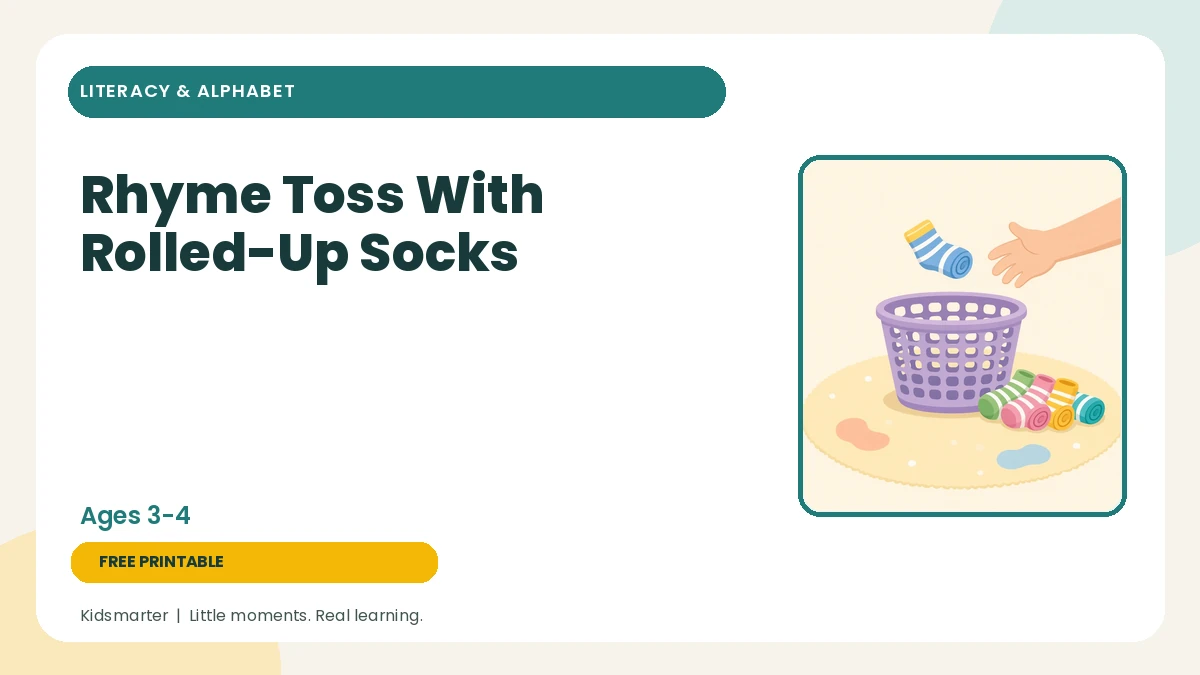
Rolled socks make a satisfying landing sound without the bounce of a ball. In this listening game, a toss follows a rhyming pair such as cat and hat. Your child can join with a guess, a gesture, or simply an enthusiastic throw after you model.
Materials You’ll Need
- Several pairs of clean rolled socks
- A basket or laundry bin
- Simple picture cards or spoken word pairs
Set a laundry basket within easy reach, not across the room. Print the eight picture cards and cut them apart yourself. The sheet has four pairs: cat and hat, dog and log, sun and bun, and bee and tree. Begin with cat and hat, then sun and bun; name every picture so vocabulary does not obscure the rhyme.
Step-by-Step How to Play
-
Show cat and say it naturally. Follow with hat, stretching the ending slightly: “Cat, hat. Those endings sound alike.” Toss a sock together. This first turn demonstrates the rule without testing it.
-
Offer cat with two visible choices, hat and sun. Say both possibilities aloud, giving equal emphasis to each. Ask, “Which one sounds like cat at the end?” Accept pointing to the picture.
-
After the pair is chosen, say it together and invite a gentle underhand toss. Keep the basket close enough for success. If the pair does not rhyme, model the rhyme before taking the shared throw.
-
Try a contrasting pair such as dog and log. Avoid adding beginning-sound questions during the same round; a child sorting by initial sound may otherwise receive mixed instructions about what to hear.
-
Let your child choose one pair for your turn, then gather socks together. End after three or four pairs. Returning familiar rhymes on another day is more useful than racing through a long stack.
Small Details That Make This Activity Work
A near miss can reveal what your child is listening for. Cat and car share a beginning, so choosing car may show attention to sound even though it is not the ending needed here. Acknowledge that shared start, then model cat and hat side by side. Keep the toss available after a supported match so throwing does not become a reward withheld for mistakes. If speaking and moving at once is distracting, say the words while seated, decide on a pair, and only then stand to throw. You can separate the listening and movement without losing the fun.
Why This Activity Helps
Rhyming directs attention to the sound structure of spoken words rather than their meanings. A child can hear a rhyme without recognizing printed letters. Dialects and accents affect some pairs, so use examples that rhyme in your household's speech.
Easy Ways to Adapt by Age
Make It Simpler
Say the pair yourself and invite only the toss. Later offer two clearly different spoken endings. Nonsense rhymes are welcome when everyone knows they are invented words.
Ready for a Challenge
Ask your child to supply a new rhyme before throwing, or identify which word does not belong in cat, hat, sun. Keep the movement slow enough for genuine listening.
Parent Tip & Safety Note
Use soft clean socks without hard objects tucked inside. Keep throws below shoulder height and away from people, pets, and breakables. Choose a low basket beside a wall rather than a target near a lamp or pet bed, and let the child retrieve the sock only after everyone has stopped throwing. Adults cut the eight cards; younger siblings need supervision around small paper pieces. If dog and log do not rhyme in your household’s pronunciation, use another printed pair.
Explore more activities in this category or free printable games.