I-Spy Letter Walk Around the House
Quick Activity Snapshot
- Age Range
- Ages 2–3
- Prep Time
- 2 minutes
- Skills Practiced
- Environmental print and letter spotting
- Materials
- Your home, A small notepad (optional)
Age ranges are suggestions, not developmental milestones or standards. Choose the setup for this child, and stop whenever needed.
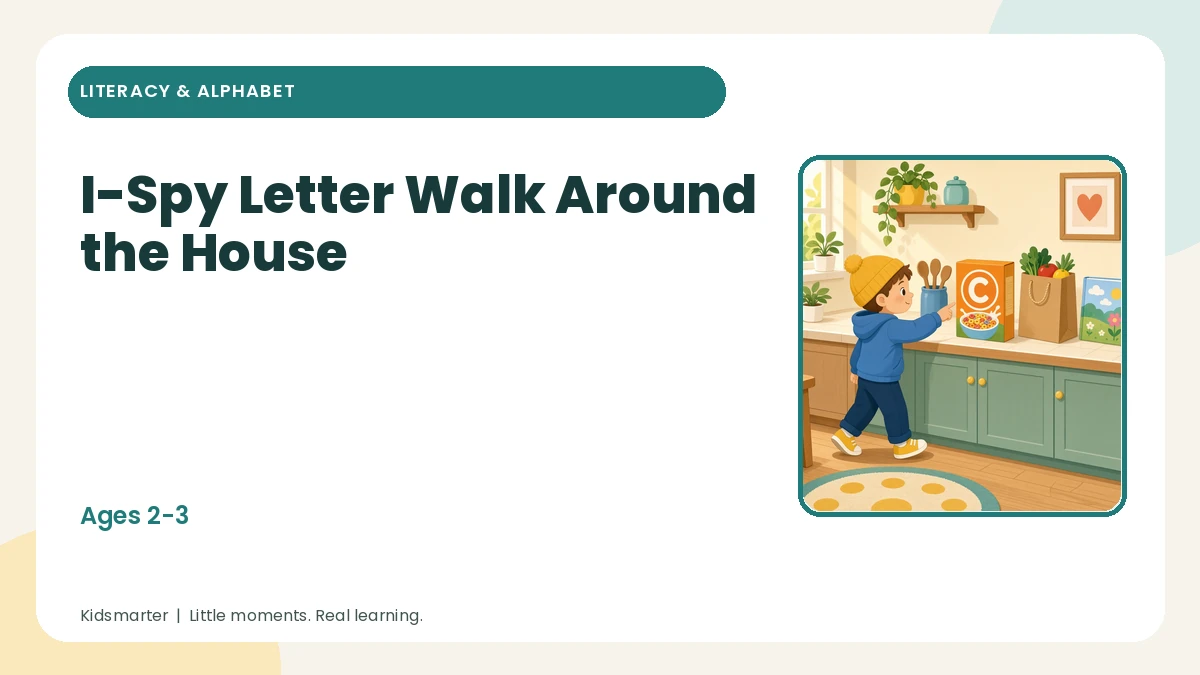
Your kitchen is already full of print, even when nobody has opened a book. This short letter walk turns a cereal box, a familiar book cover, and a shopping bag into places to investigate. Choose one letter rather than trying to tour the whole alphabet.
Materials You’ll Need
- Your home
- A small notepad (optional)
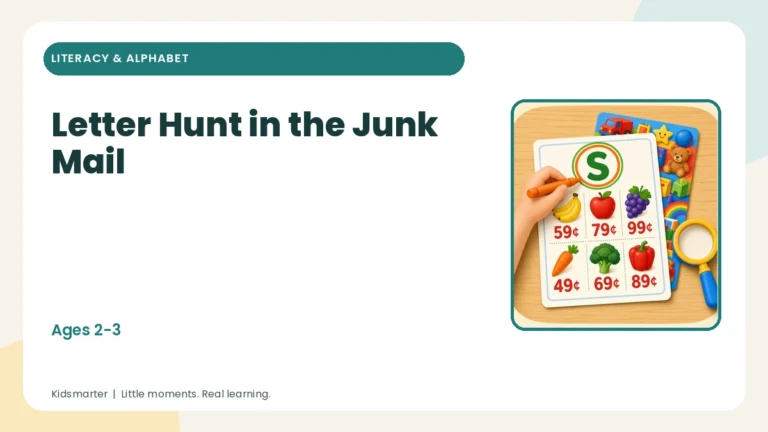
Before inviting your child, put three safe packages at toddler eye level. Pick a large uppercase S if possible; small decorative lettering makes an unnecessarily difficult first search. Keep cupboards, medicine labels, and cleaning products off the route.
Step-by-Step How to Play
-
Start beside one package and point out your target. Say, “This is S. It curves around like a little snake.” Trace its printed shape with your finger without expecting your child to name it back.
-
Walk to the next object together. Ask, “Can your finger find another shape like this?” Allow several seconds of looking. If necessary, cover most of the word so only two or three letters remain visible.
-
Celebrate an actual comparison: “You noticed two curvy letters.” If your child points at a different letter, place the model beside it and describe one difference instead of announcing a wrong answer.
-
Let your child choose the final stop. Open a book, examine a tissue box, or look at a reusable bag. Count discoveries on your fingers, not as a score but as a reminder of the route.
-
Finish by revisiting the first S. Invite your child to show a stuffed animal where it lives. Leave the safe package nearby so another short discovery can happen later without another planned lesson.
Small Details That Make This Activity Work
A useful discovery is often a near match. Your child may point to C while searching for S because both have a curve. Put the letters side by side and follow each outline slowly: one opens on a side, while the other changes direction through its middle. You have a concrete comparison without a correction lecture. On the next walk, change the location but keep the target letter. A new package gives a chance to recognize its shape outside the original context. If your child remembers the package instead of the letter, that simply tells you to continue showing both together.
Why This Activity Helps
Environmental print connects the marks adults read with things children recognize. Looking for one stable shape practices visual comparison; naming it supplies language for that discovery. Recognizing a brand logo is not the same as reading its letters.
Easy Ways to Adapt by Age
Make It Simpler
For a younger toddler, find identical large letters on two matching labels. Point together and accept touching or looking as participation. A two-stop walk can be enough.
Ready for a Challenge
For an interested older child, compare uppercase S with lowercase s. Later choose a second letter with a different outline, such as T, and explain how their paths differ.
Parent Tip & Safety Note
Stay beside your child throughout the walk, especially near stairs and kitchen drawers. Set out an empty cereal carton and a book cover before the child arrives, with addresses turned away. Leave packages closed; do not let the search become permission to open containers. If S appears inside a logo, compare it with a plain S you draw nearby, because the decorative surround may be what the child remembers. Photograph a discovery only if useful; there is no worksheet to finish.
Explore more activities in this category or free printable games.