Count-and-Color 1 to 5 Mat
Quick Activity Snapshot
- Age Range: Ages 2–3
- Prep Time: 2 minutes to print
- Skills: Counting to 5
- Materials: Printed mat, crayons
Age ranges are suggestions, not developmental milestones or standards. Choose the setup for this child, and stop whenever needed.
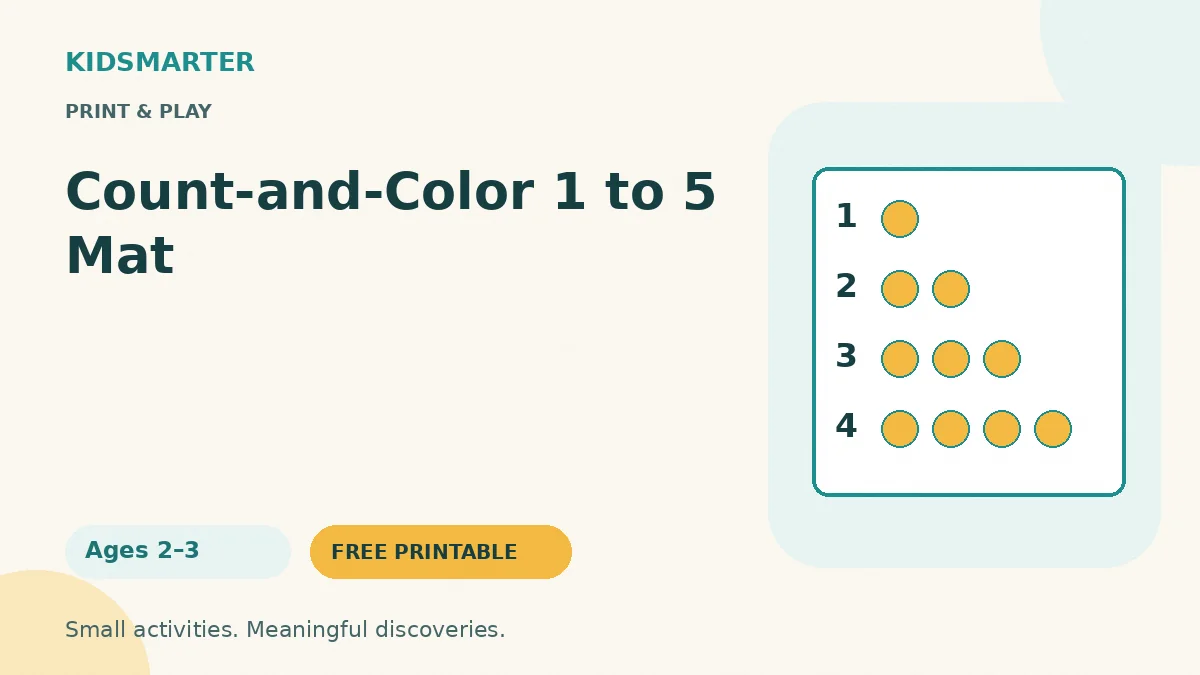
A counting mat is most useful when the child can connect every number word with something visible. This printable places one through five beside small fruit sets, leaving plenty of room to point and color. The rows show one apple, two bananas, three oranges, four pears, and five oranges as simple line drawings. You can use just one row at a time. The aim is not staying inside every line. It is noticing that the printed 3 belongs with a set of three things, however the coloring turns out.
Materials You’ll Need
- Printed mat
- Crayons
Print the Letter-size mat and offer two or three chunky crayons. The fruit names are optional conversation starters, not a vocabulary test. Put the sheet on a stable surface and keep another blank sheet nearby so the child can explore crayon marks freely before or after the counting game. Use the whole page; folding to show one row is enough, and no cutting is required.
Step-by-Step How to Play
-
Fold the sheet to show only the first row. Point to the numeral 1 and then the single apple. Say, “One apple. This mark says one.” Let your child tap the apple and make any color mark they like. Avoid asking them to copy the numeral or use a realistic color; choosing purple for an apple does not interfere with counting it.
-
Reveal the next row and touch each banana once as you say, “One, two. Two bananas.” Sweep a finger around both at the end to connect the final word with the whole set. Invite the child to point while you count or count while you point. If one banana is touched twice, slow down and repeat together without making a dramatic correction.
-
Continue to a row that matches the child’s interest and comfort. Before coloring, ask, “Can we give each fruit one little dot?” A single mark on each object provides a visible way to track what has already been counted. Then allow broader coloring. It is fine to stop at three rather than finishing five rows simply because the worksheet includes them all.
-
Compare two neighboring rows by pointing, not by covering the page with adult explanations. Ask, “Does this row have more fruit pictures or fewer?” Place one fingertip under each item in turn to show the comparison. If the child guesses, count both groups together. Keep numeral recognition optional; a child can understand the groups while still needing you to read the printed symbols.
-
Let the child choose one finished row to describe to a toy or another adult. “There are four pears here.” Ask them to show which objects they counted, then put the crayons away together. On a later day, use large toy foods or blocks to build a matching set beside the mat. Returning to the same picture with real objects can deepen the connection without another worksheet.
Why This Activity Helps
Touching one object for each number word supports one-to-one counting. Naming the total after counting introduces the idea that the final number represents the whole set. Pairing each set with a numeral makes the written symbol visible in context. Coloring is simply a way to participate and track attention; neatness is unrelated to whether the child understands the quantity. Small sets keep the counting checkable by looking and pointing.
Easy Ways to Adapt by Age
Make It Easier: Use only the rows for one and two. Cover the numeral if it distracts from counting the objects. Let your child tap with a whole finger while you supply the words, then color freely. If holding a crayon is tiring, skip coloring altogether and use the page as a shared pointing game with a short, clear ending.
Add a Challenge: Ask an older preschooler to build the same quantity with large blocks, then move the blocks into a different arrangement and check the total. Cover one picture with your hand and ask how many remain visible. Invite the child to draw an extra fruit on scrap paper, discussing how the amount changes without altering the printed mat’s original matching sets.
Free Printable Included
Print this US Letter mat at actual size and use the whole page. Fold to show one row at a time. No cutting is required.
Parent Tip & Safety Note
Supervise children under three around crayons, caps, and any small counting materials. Use oversized objects if matching the page with real items, and do not place loose beans or beads on the mat for toddlers. Adults may fold the page as needed. Avoid correcting color choices or requiring completion; the useful work is shared counting, not producing a display-worthy sheet.