Cut-and-Paste Size Sort
Quick Activity Snapshot
- Age Range: Ages 2–3
- Prep Time: 5 minutes
- Skills: Size sorting
- Materials: Printed sheet and broad pieces pre-cut by an adult, an adult-managed glue stick (optional), no scissors in the toddler workspace
Age ranges are suggestions, not developmental milestones or standards. Choose the setup for this child, and stop whenever needed.
Big and small become easier to discuss when a child can move the pictures themselves. This cut-and-paste sort uses matched pairs of the same objects in two clearly different sizes. An adult can do all the cutting for a toddler; the learning task is comparing and choosing a destination, not managing scissors before the child is ready. A few pieces placed thoughtfully are enough. Glue turns the final arrangement into a record, but it is optional.
Materials You’ll Need
- Printed sheet and broad pieces pre-cut by an adult
- An adult-managed glue stick, optional
- No scissors in the toddler workspace
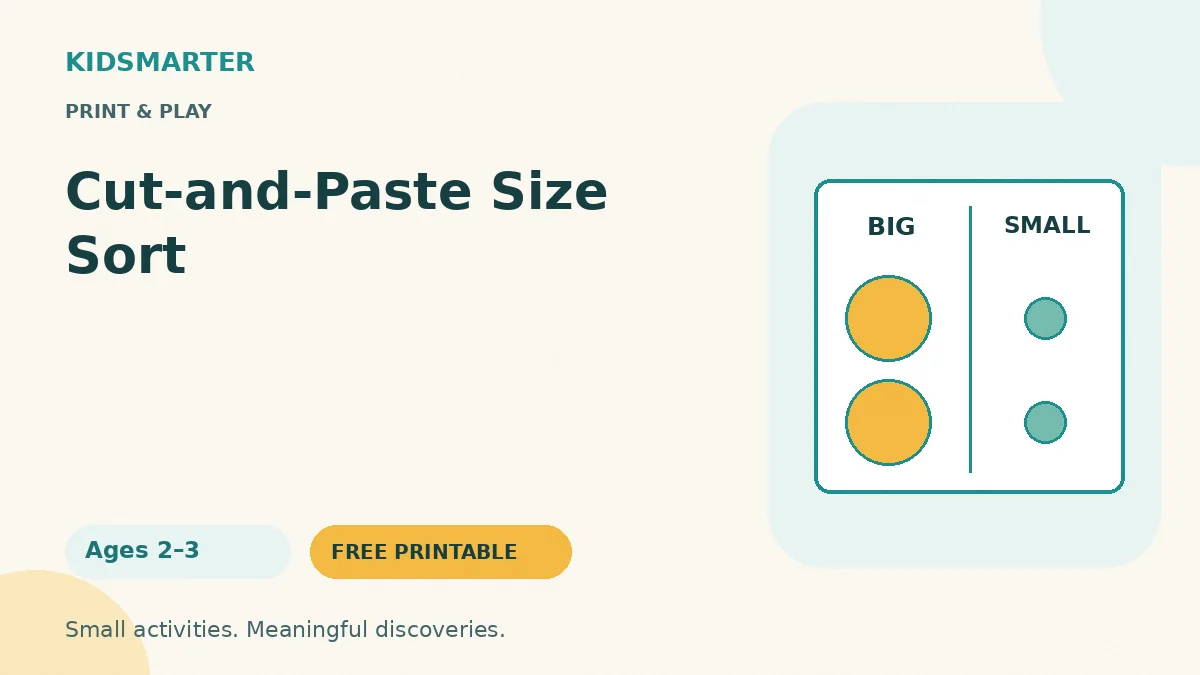
The printable includes a BIG and SMALL sorting mat plus a separate page of large and small apples, houses, and balls. Add a washable glue stick if desired. An adult cuts the picture cards and removes scraps before play. Keep each pair together at first so size can be compared directly. Print both pages at the same scale; reducing only the cards would change their proportions relative to the model examples. The sorting mat can stay whole.
Step-by-Step How to Play
-
Place one large apple and one small apple side by side. Name the shared object first: “These are both apples.” Then compare: “This apple picture is bigger than this one.” Let the child overlap the cards or point between them. Avoid describing the larger apple as better or the small one as a baby unless pretend play clearly remains separate from the size comparison.
-
Show the two columns on the mat and place the large apple in BIG as a model. Ask where the smaller apple could go. Use the pictures’ relative size rather than expecting the child to read the column labels. If the choice is uncertain, bring the cards together again for a direct comparison. Leave them unglued while the child is still exploring the sorting rule.
-
Offer the house pair next. Ask, “Which house is bigger? Which is smaller?” Invite the child to place both, then compare each with its matching partner across the mat. A big apple and a small house picture may not represent real-world size relationships; explain that you are comparing the printed pictures in each pair, not claiming apples are larger than houses.
-
Add the ball pair and inspect the completed arrangement together. Ask, “Does each big picture have its smaller partner on the other side?” Let the child move any card they want to reconsider. If they sort by object instead, acknowledge the rule they found: “You put apples together.” Then restate today’s size rule and model separating just one pair before inviting another try.
-
If the child wants a permanent page, lift one card at a time and help apply a small amount of glue. Press it down with a flat hand, then replace the glue cap yourself. A child who prefers moving the cards can skip gluing and store them in a large envelope. Reusing the pieces later may be more valuable than finishing a single collage today.
Why This Activity Helps
Sorting matched pictures by size requires comparing an attribute while ignoring object identity and color. Having two versions of the same item reduces the number of changing features. Physical placement makes the rule visible, and revising a choice is easy before gluing. The activity introduces relative language, not formal measurement; something can be small compared with one object and large compared with another in a different set.
Easy Ways to Adapt by Age
Make It Easier: Offer one pair at a time and cover the rest of the mat. Place your own finger on the BIG column as you name it. Use only apples and houses, and let the child point while you move the pieces. If pictures are too abstract, compare a large bowl and a small bowl in real life before returning to paper.
Add a Challenge: Invite an older preschooler to arrange a new set of three sizes from smallest to largest before sorting. Ask why a medium object cannot always be labeled big or small without a comparison. Let the child draw a new pair of the same object in two sizes. Keep real-world object size separate from the size of its printed picture.
Free Printable Included
Print both US Letter pages at actual size. An adult cuts the picture cards; the sorting mat can stay whole. Remove scraps before play.
Parent Tip & Safety Note
Adults pre-cut for toddlers and supervise any age-appropriate scissor use. Children under three need close supervision with paper cards, glue caps, and scraps that could be mouthed. Use washable glue and avoid tiny decorative additions. Do not force sticky hands or a finished product; pointing and moving cards provide the same comparison opportunity without glue.