CVC Flip Cards
Quick Activity Snapshot
- Age Range
- Ages 5–6
- Prep Time
- 8 minutes to print and assemble
- Skills Practiced
- Blending CVC words
- Materials
- Printed flip cards, A metal ring or paperclip, Scissors
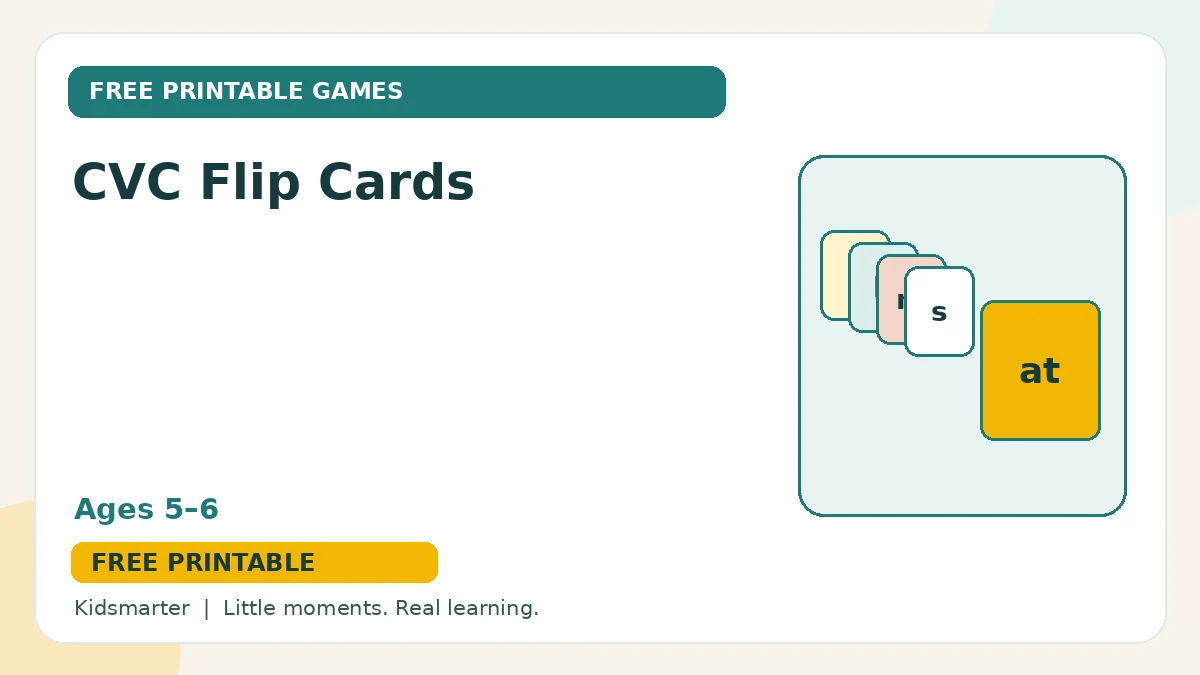
A flip card makes one change easy to see: the ending stays, the first letter moves, and a new word appears. In this printable set, your child can start by flipping C, H, M, or S in front of -at and reading cat, hat, mat, or sat. The sheet also includes first letters B, R, P, and F, and a second ending, -an, for a later day. The useful work is saying each sound and blending the new word, not racing through the stack. You will assemble the cards once, model one flip, and then keep the session to a few comfortable words.
Materials You’ll Need
- Printed flip cards
- A metal ring or paperclip
- Scissors
Print the cards, cut them with adult help, and fasten the first-letter flips on a ring or a large paperclip above a fixed -at card. Sit at a table with the ring lying flat. Begin with two first letters your child already knows, and keep the other cards in an envelope.
Step-by-Step How to Play
-
Show the base -at and say the two sounds, then blend them. Add one first letter, such as m, and model: ‘/mmm/ /a/ /t/—mat.’ Keep the sounds close together so they become a word, not three separate guesses.
-
Invite your child to flip to a new first letter and read the word from the beginning. Point under each letter as you blend together if needed. After reading, you can act out hat or sit down for sat, so meaning is checked in a simple way.
-
Flip back and forth between two words, such as cat and mat, and ask, ‘Which part changed?’ Look at the first letter and then reread both words. If a word is guessed from the picture memory of the last flip, cover the first letter briefly and reveal it again.
-
Add a third first letter only after two words feel steady. Let your child be the flipper while you wait for the blended word. A short chain of three successful readings is a good place to smile and pause.
-
Finish by taking the cards off the table and choosing one favorite word to write or draw on scrap paper if your child wishes. Store the set on its ring so it can come out again later with the same few letters before you add a new ending.
Small Details That Make This Activity Work
Notice whether a missed word happens at the first sound or during the blend, and give extra support at that point. Leave the same ring in a basket so a short review can happen on another day without printing a new set.
Why This Activity Helps
You can flip one first letter while the ending stays, then blend the new word from the beginning. The flip makes that one-letter change easy to point to, and rereading from the first sound is a way to check a remembered picture. Start with letters your child already knows and is beginning to blend. A small, familiar group of words is more helpful than a long stack used once.
Easy Ways to Adapt by Age
Make It Simpler
Use only two first letters and blend the word yourself while your child flips the card and repeats the whole word. You can also say the word aloud and ask your child to flip to the letter that matches the first sound.
Ready for a Challenge
Add a second ending, such as -an, on another day, using letters already known. Ask your child to predict the new word before flipping, then check by blending. Keep new vowel sounds for a later set rather than mixing them into this first ring.
Parent Tip & Safety Note
Adults should cut the cards and manage small rings or clips, especially around children under three. Keep the paperclip away from mouths. Stop if blending becomes tense; return to saying the sounds with your child rather than insisting on an independent reading.
The age range above is a suggested starting point for this setup, not a developmental milestone or a standard your child must meet. Fasten only the letters you will use today, blend from the first sound after every flip, and keep rings or clips out of mouths.
Find another small invitation to play in Free Printable Games, or explore our free printable games. Choose one that fits your child’s interests, available materials, and energy today.