If-Then Obstacle Course
Quick Activity Snapshot
- Age Range
- Ages 5–6
- Prep Time
- 10 minutes
- Skills Built
- Following rules and conditional thinking
- Materials
- The revised whole-page rule sheet, A clear level route with adult-held cues, or a seated space, No floor paper, loose cushions, climbing furniture, or tape needed
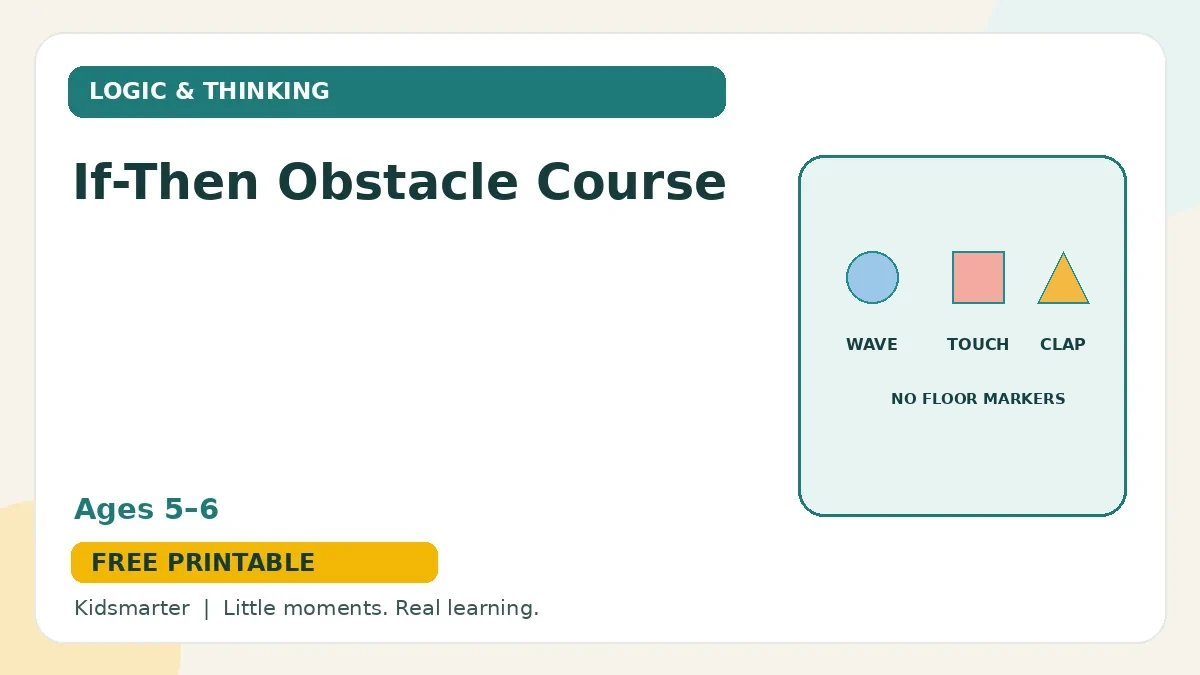
A simple rule can turn a clear walking route into a stop-and-signal course. An adult shows a colored shape cue beside the route, and the child pauses for its action: blue circle means wave once; red square means touch your own shoulders once. Nothing goes underfoot. The same rules work while seated, with no hopping, crawling under furniture, or spinning.
Materials You’ll Need
- The revised whole-page rule sheet
- A clear level route with adult-held cues, or a seated space
- No floor paper, loose cushions, climbing furniture, or tape needed
Use a clear, level space with no obstacles on the walking surface. Start with the blue-circle and red-square rules, pointing to their panels on the whole revised sheet. An adult holds it beside the route, or sits opposite the child for a seated game. Read the words aloud; colors and shapes are cues, not a reading test. No cutting or floor marks are required.
Step-by-Step How to Play
-
Show the blue circle and say, “If the cue is blue circle, wave once.” Demonstrate. Then show red square: “Touch your own shoulders once.” Read the matching card and let the child point to the cue before trying the action. Both rules are available to check.
-
Invite the child to walk to a pause beside you, or remain seated, then show one cue. If the action differs, point back to the rule: “This is red square; our rule says touch shoulders.” Model it if wanted and continue from there. There is no need to restart a route as a penalty.
-
Once the two rules are familiar, show them in an uneven order, such as blue, blue, red, blue. Two blue cues still need two separate waves; switching a cue is not the rule for when to act. Pause between presentations and accept pointing to the action while an adult demonstrates.
-
If another rule is welcome, introduce yellow triangle: clap three times. Later, green rectangle means open and close your hands twice. Say and demonstrate each new rule before using it. One new cue is enough; keep the remaining panels out of focus until wanted.
-
For a final turn the child can choose which cue you see while you do the action. They can point to a panel while the adult manages the sheet. Read any family-written rule aloud first and use only a comfortable stationary action. Put the page away when finished.
Small Details That Make This Activity Work
Keep each cue visible until you have checked the rule together. A repeated action may mean the cue was hard to see, the wording was unclear, or the child preferred a different game; show it again or stop rather than diagnosing a skill. Point to the shape as well as naming its color if that is useful.
Why This Activity Helps
An if–then instruction links a stated condition to an action. Here you can check that link against a visible card. Changing a rule requires telling everyone the new link first; simply changing a cue means applying the existing rule for that cue. The activity is a short shared rule game, not a test of speed or reading.
Easy Ways to Adapt by Age
Make It Simpler
Show only the blue-circle cue and wave together. The child may point while an adult performs the action. Keep the game seated if that suits the space or child; a walking route is optional, not a harder level everyone must reach.
Ready for a Challenge
Let the child choose cues for your turn, with the adult reading the words. Or announce a new family rule for just one cue, demonstrate it, and try a short round. Keep the original card covered if its old action would conflict; do not change the rule secretly.
Parent Tip & Safety Note
Keep the walking surface empty and away from stairs, doors, cords, and furniture edges. No jumping, spinning, crawling under furniture, or stepping on paper is needed. Use the seated version whenever space or balance is uncertain, and stop any uncomfortable action. An adult manages the whole sheet if paper is mouthed.
The age range is a suggestion, not a developmental standard. One cue with an adult demonstration is a complete way to join in.
Find another small invitation to play in Logic & Problem Solving, or explore our free printable games. Choose one that fits your child’s interests, available materials, and energy today.