Homemade Spot-the-Difference Drawings
Quick Activity Snapshot
- Age Range
- Ages 5–6
- Prep Time
- 10 minutes
- Skills Practiced
- Careful looking and comparing two pictures
- Materials
- The printed two-picture sheet and a pencil or crayon
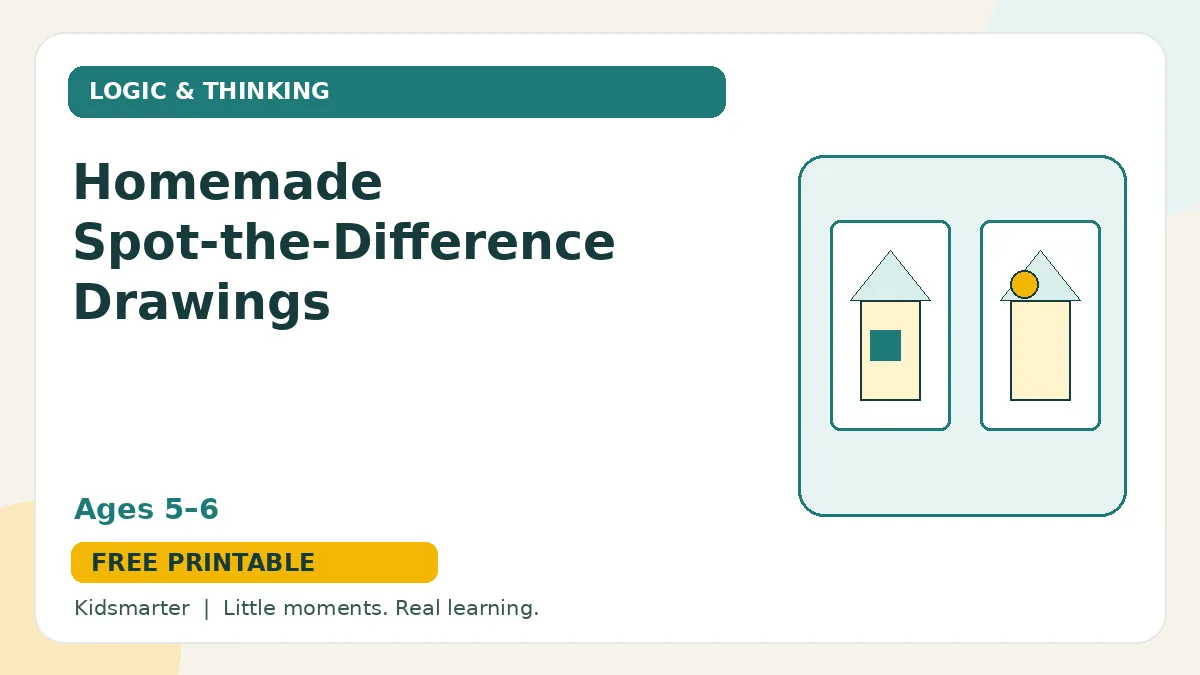
A quiet looking game rewards slow, careful comparison rather than speed. The printable shows the same house, tree, and sun in Picture A and Picture B, with exactly five planned differences: the sun has a smile in B; the chimney is missing in B; the second window is missing in B; B has two birds and A has one; and A has an extra path line. There is no flower on this sheet.
Materials You’ll Need
- The printed two-picture sheet
- A pencil or crayon
Print the sheet at actual size and keep it whole. Use a pencil or crayon for circling. Cover or set aside page 2, the adult key, before you begin. If you later make a homemade pair, plan five changes in advance and keep both pictures in view at the same time.
Step-by-Step How to Play
-
Look at Picture A and Picture B together, from top to bottom. Say, ‘These pictures are almost the same. We are looking for five differences.’
-
When your child finds a change, circle it in both pictures and mark the tally boxes 1 through 5. Searching both pictures helps confirm that the change is real.
-
If a search stalls, suggest one region rather than naming the answer: ‘Look at the roof,’ or ‘Look at the path.’ Avoid turning the first round into a timed contest.
-
When five differences are circled, compare them with the adult key on page 2. If a circled mark is not one of the five planned changes, look again at that area together.
-
If interest remains, make a homemade pair another day: draw a simple house, tree, and sun twice, changing five small features on the second page, and keep your own answer list separate.
Small Details That Make This Activity Work
Sitting side by side with both pictures visible keeps the comparison fair. A short pause after each find is more useful than rushing to the next one. Five differences are enough for one sitting.
Why This Activity Helps
Comparing two similar pictures gives a clear reason to look carefully and to check a possible change in both places. A tally makes the stopping point visible. The game values careful looking, not speed or a claimed gain in vision or school skill.
Easy Ways to Adapt by Age
Make It Simpler
Search one region at a time, such as the sky or the house, and accept pointing instead of neat circles. You can also start with three differences and leave the last two for later.
Ready for a Challenge
Invite a second careful pass to confirm all five before you open the key. Or, on another day, draw a homemade pair with five planned changes and an adult-only answer list. Do not add a timer.
Parent Tip & Safety Note
Use the printed sheet or a homemade drawing; do not cut the pictures into small pieces. Keep pencils away from mouths, and tidy scraps if you later make a homemade version. The age range above is a suggested starting point for this setup, not a developmental milestone or a standard your child must meet.
Find another small invitation to play in Logic & Problem Solving, or explore our free printable games. Choose one that fits your child’s interests, available materials, and energy today.