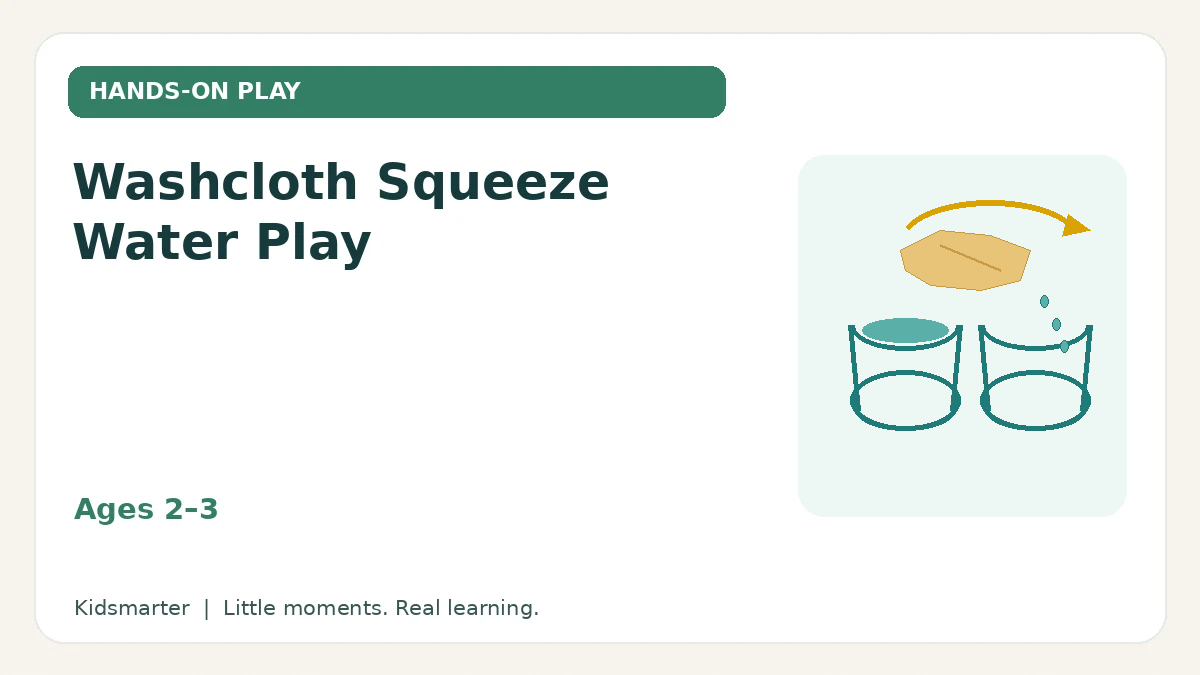
Washcloth Squeeze Water Play
Quick Activity Snapshot
- Age Range
- Ages 2–3
- Prep Time
- 5 minutes
- Skills Practiced
- Two-hand movement and cause and effect
- Materials
- Two shallow bowls inside a broad tray, a whole soft washcloth, a very small amount of plain water, towels for the floor
Age ranges are suggestions, not developmental milestones or standards. Choose the setup for this child, and stop whenever needed.
One washcloth can move a surprising amount of water between two bowls. Toddlers get an immediate result from their own squeeze, then try adjusting their hands to do it again. A towel and a very small amount of water keep the invitation manageable indoors.
Materials You’ll Need
- Two shallow bowls inside a broad tray
- A whole soft washcloth
- A very small amount of plain water
- Towels for the floor
Place two shallow bowls inside a broad tray on a stable low surface. Add only a small amount of plain water to one bowl. Use a whole soft washcloth, not a sponge that could shed pieces, and omit coloring. Put towels within adult reach and clear electrical equipment from the area.
Step-by-Step How to Play
-
Dip the washcloth into the water and lift it slowly over the same bowl. Let your child see it drip. Say, “The washcloth is holding water,” then pass it over the empty bowl before squeezing.
-
Offer the washcloth with both bowls close together. Your child may press it with two palms or curl fingers around it. Describe the visible result: “When you pressed, water came out.” Avoid repositioning every finger.
-
Invite another dip and transfer. If most water spills, move the bowls closer or support the child’s wrists with their permission. Spilled water is useful feedback about the route, not a reason to scold.
-
Try a gentler squeeze followed by a firmer one. Ask what your child notices about the drips. Keep the comparison qualitative; there is no need for measuring cups or an exact number of transfers.
-
End by using the washcloth to collect small puddles in the tray. Empty both bowls yourself and let your child help dry the area. Put the washcloth somewhere it can dry fully between uses.
Small Details That Make This Activity Work
Watch where the effort goes. If the washcloth is too large to surround with both hands, a toddler may press it down against the bottom of the empty bowl instead of lifting and squeezing. That is a sensible adaptation you can name and support. Keeping the water shallow reduces the weight of the soaked washcloth and makes the transfer easier to control. Plain water already gives useful feedback through drips and a changing bowl level; no coloring is needed. If your child mainly enjoys dipping and watching, stay with that investigation rather than repeatedly redirecting them to complete a planned number of transfers.
Why This Activity Helps
Absorbing and releasing water demonstrates a simple relationship between an action and a visible change. The two-handed squeeze and bowl-to-bowl transfer invite coordinated movement. Everyday play offers practice opportunities without guaranteeing a particular strength or developmental outcome.
Easy Ways to Adapt by Age
Make It Simpler
Use a very soft, easy-to-compress washcloth and let the child squeeze over the original bowl. An adult can hold the washcloth while the child presses with one palm.
Ready for a Challenge
Mark a low target line on the empty bowl and predict how many squeezes might fill to it. Count only if your child remains interested in the transfer itself.
Parent Tip & Safety Note
An adult stays continuously within arm’s reach, giving full attention to the water activity, with no phone or other task competing for attention. Use plain water only and a whole washcloth; stop if fabric sheds or mouthing begins. Empty every bowl and tray immediately after use or any interruption. Dry the floor and use dry cloth transfer instead if continuous supervision is unavailable.
Safety reference: AAP water-safety guidance.
Explore more activities in this category or free printable games.