Finish This Familiar Line
Quick Activity Snapshot
- Age Range
- Ages 3–4
- Prep Time
- 1 minute
- Skills Practiced
- Listening for a familiar word and finishing a known line
- Materials
- A short line from a rhyme or song your family already knows
Age ranges are suggestions, not developmental milestones or standards. Choose the setup for this child, and stop whenever needed.
A familiar rhyme can leave a space at the end. You start a short line your family already knows, then you pause so your child can say the last word. One or two lines are enough. This is not pointing under printed lyrics, not clapping the beats in a word, and not a test of inventing a new rhyme.
Materials You’ll Need
- A short line from a rhyme or song your family already sings, such as a public-domain lullaby or a homemade greeting you use every day
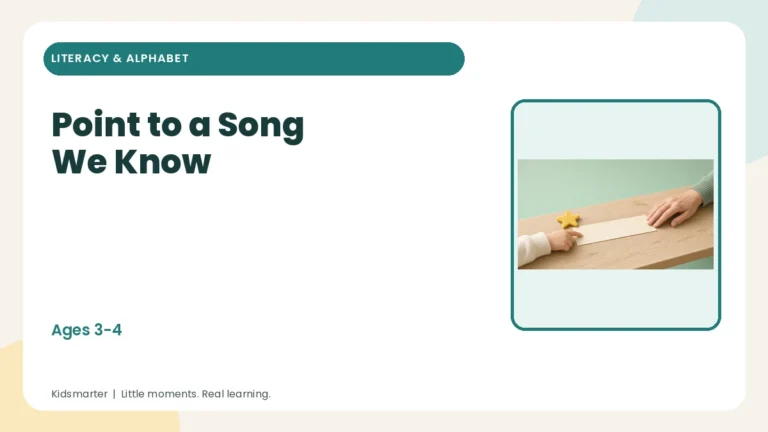
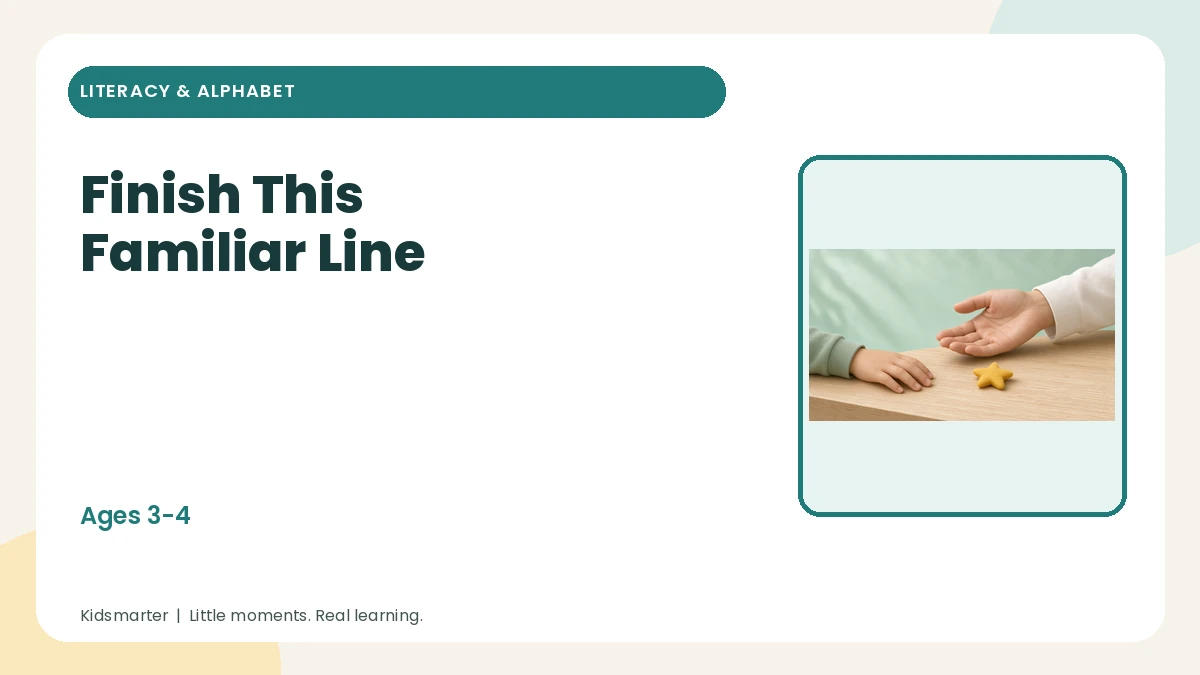
- Optional: one large, unbreakable cue, such as a felt star, that is too big to swallow
You do not need a printed lyric strip, a book, or a recording. Keep any cue too large to swallow, and stay together.
Step-by-Step How to Play
-
Sit facing each other. Say, “I’ll start a line we know, and then I’ll stop. You can say the last word.”
-
Say a familiar line slowly, and pause before the last word: “Twinkle, twinkle, little ____.” Wait. If they say “star,” smile and say the whole line together. If they are quiet, you can finish the word and try the same line again.
-
Repeat the same line once or twice if they still want a turn. You may then try one other familiar line. There is no required list of songs.
-
When they are finished, stop. Saying the last word once can be a complete game.
Small Details That Make This Activity Work
Use a line they already know well. Do not quiz them on a new song. If they want to sing the whole line with you, that is enough; they do not have to wait for the pause. This is not a printed song-line pointing game, not a kitchen word clap, not an echo clap pattern, and not a rhyme toss: the job is to listen and finish a familiar last word.
Why This Activity Helps
Pausing in a known rhyme is one everyday way to listen for a familiar word. Reading Rockets’ Activities to Encourage Your Preschooler, excerpted from a U.S. Department of Education family booklet, includes reading nursery rhymes and stopping before a rhyming word so a child can fill in the blank. That page is written for families of preschoolers, including 4- and 5-year-olds, and it describes rhyme games in general. It does not evaluate this homemade pause-and-finish game, and finishing a familiar line is not evidence of later reading. Children may enjoy listening without saying the word alone.
Easy Ways to Adapt by Age
Make It Simpler
Say the line together all the way through, then try one pause at the very end. You may supply the last word if they need it.
Ready for a Challenge
After the familiar line is easy, pause at the last word of a second known line. Stop if the extra turns start to feel like a quiz, or if they would rather just sing.
Parent Tip & Safety Note
Stay together. You do not need a book, a speaker, or a printed strip. If you use a felt star or another cue, choose one too large to swallow and put it away after you finish. Avoid copying song lyrics you do not have permission to put into print; you can simply say or sing a line you already know. Stop when your child is finished or wants to sing without pausing.
Explore more activities in this category or free printable games.
For stopping before a rhyming word so a child can fill in the blank, see Reading Rockets’ Activities to Encourage Your Preschooler, excerpted from a U.S. Department of Education family booklet. That page is written for families of preschoolers, including 4- and 5-year-olds, and it describes rhyme games in general; it does not evaluate this homemade pause-and-finish game, and it does not treat finishing a familiar line as evidence of later reading.