Playdough Snake Snip
Quick Activity Snapshot
- Age Range: Ages 4–5
- Prep Time: 5 minutes
- Skills: Opening and closing scissors on dough
- Materials: Ready-to-use commercial playdough rolled into a thick snake, child-safe blunt-tip scissors, and a tray
Age ranges are suggestions, not developmental milestones or standards. Choose the setup for this child, and stop whenever needed.
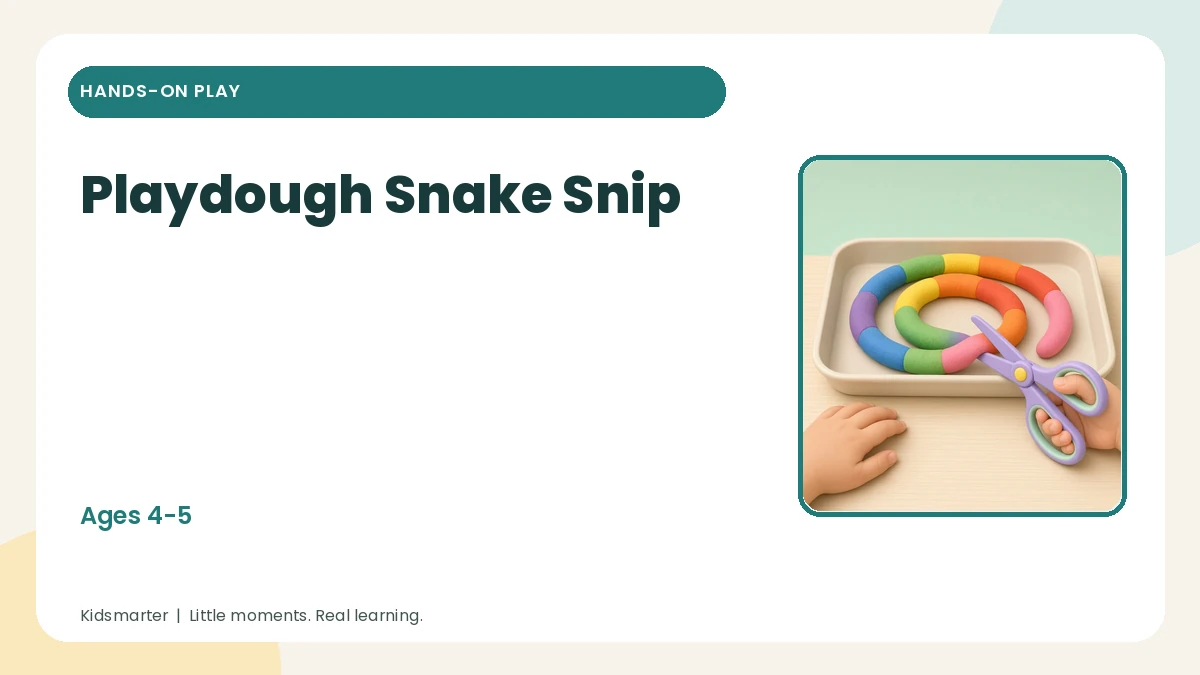
A soft dough snake gives beginning scissor users something forgiving to cut: it stays on the tray, separates visibly, and can be rolled together again. This is not a race to make tiny pieces. Your preschooler practices opening and closing the blades while the other hand has a clear, safe place away from the cutting area. An adult stays beside the child throughout. If the scissors crush rather than cut, that is information about the tool or dough, not a failure.
Materials You’ll Need
- Ready-to-use commercial playdough, not raw-flour homemade dough
- Child-safe blunt-tip scissors that can cut dough
- A tray
Set out soft commercial playdough, age-appropriate blunt-tip child scissors, and a stable tray. Check that the scissors fit the child’s hand and open without excessive effort; some plastic dough scissors are easier than stiff paper scissors. Provide left-handed scissors when appropriate. Keep a separate dough portion for your demonstration, and do not add beads, toothpicks, or other hidden objects to the snake.
Step-by-Step How to Play
-
Roll a thick, short dough snake together, about the width of an adult finger. A very long thin rope can wobble and distract from cutting. Place it horizontally on the tray. Show the child how the scissors open and close while held still above your own workspace. Say, “The blades stay pointed toward the dough, and our other hand stays away from them.”
-
Help the child identify a comfortable hand position, with thumb generally facing upward, without forcing fingers into unsuitable loops. Let them practice one open-close movement without dough. If the tool will not open easily, change scissors rather than asking for more effort. Show how to rest the snake on the tray; nobody needs to hold it close to the blades.
-
Put one end of the snake between the open blades near their middle and invite a slow close. Say, “Open, slide over the dough, close.” The first cut may be a squeeze or a partial snip. Let the child reopen and try at the same spot. Keep your own fingers away from the blades; demonstrate on your separate dough instead of reaching into the child’s cutting space.
-
Move to a fresh section for another snip, leaving substantial chunks rather than tiny pellets. Ask, “Do we need to open before the next cut?” Let the child set the scissors down to rearrange pieces. A safe pause is more useful than continuous cutting. If the snake flattens, roll it again and continue for one or two attempts while the movement is still comfortable.
-
Place the scissors flat on the tray with handles toward the child and say, “Cutting is finished.” Gather the pieces, compare the lengths informally, and roll them back into a single snake. An adult cleans and stores the scissors separately from the dough so independent dough play does not automatically include access to cutting tools.
Why This Activity Helps
Scissor use combines controlled opening and closing, visual attention to the material, and keeping the assisting hand in a safe position. Dough provides resistance and a visible change without requiring the child to follow a thin paper line. It is one practice option, not a necessary stage or a substitute for professional advice. Readiness varies, and a comfortable grip depends partly on the design and fit of the scissors.
Easy Ways to Adapt by Age
Make It Easier: Let the child tear a dough rope by hand first, then use easy-opening dough scissors for one cut at a time. An adult can roll and position the material before each attempt. If safe tool handling is not established, postpone scissors and explore separating dough with a large blunt dough scraper under direct adult supervision instead.
Add a Challenge: Invite an older preschooler to make three large chunks of roughly similar length, comparing them after cutting. Add broad marks to a fresh snake as suggested stopping points, without expecting exact accuracy. Later, move to short snips in the edge of a stiff paper strip only when the child can open, close, and put down the scissors safely and comfortably.
Parent Tip & Safety Note
Child-safe scissors still require continuous adult supervision and safe handling; they are not toys. Do not use raw-flour homemade dough, including craft or salt dough. Keep portions and cut chunks large, and roll scraps back together so they do not become small pellets. Check dough allergies, prevent tasting, and wash tools afterward. Stop when hands tire, and never let a child walk while carrying open scissors or cut toward another person’s hand.