Clothespin Color Clip
Quick Activity Snapshot
- Age Range
- Ages 3–4
- Prep Time
- 8 minutes
- Skills Practiced
- Finger strength and color matching
- Materials
- Large low-resistance child-activity clips without exposed detachable springs, Printed color wheel or a plain card, Washable markers, adult-managed
Age ranges are suggestions, not developmental milestones or standards. Choose the setup for this child, and stop whenever needed.
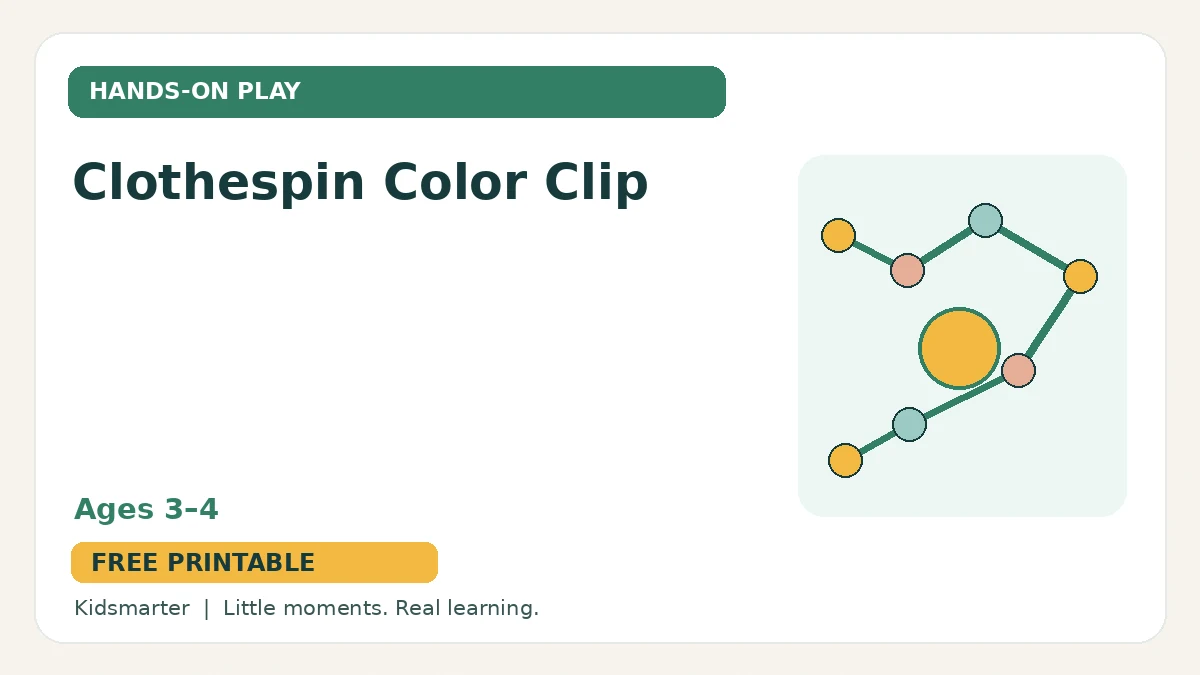
A clothespin makes a little gate that opens when fingers press its handles. Clipping it to a matching part of a color wheel gives that movement a purpose. Name colors naturally, but let a child point or compare directly without being quizzed on color words.
Materials You’ll Need
- Large low-resistance child-activity clips without exposed detachable springs
- Printed color wheel or a plain card
- Washable markers, adult-managed
Print the wheel with labeled color sectors and reinforce it with card if desired. Mark the handles of several easy-opening clothespins to match. Test the spring yourself; a stiff pin can make an otherwise sensible invitation needlessly frustrating.
Step-by-Step How to Play
-
Show the hinge and the two handles. Press slowly so your child sees the jaws open. Say, “Press here and this end opens,” keeping fingers clear of the gripping edges.
-
Select one pin and compare its mark with the wheel. Hold it beside two sectors and ask which looks the same. Use the printed labels as adult guidance, not a reading requirement for the child.
-
Help steady the wheel while your child opens and positions the pin. They can release it gradually once the edge sits between the jaws. Keep the sector wide enough that alignment does not require tiny precise movements.
-
Rotate the wheel to bring another sector within easy reach. Offer another pin and repeat at your child's pace. If matching distracts from learning the mechanism, use unmarked pins on a plain card first.
-
Remove the pins together by squeezing rather than pulling hard. Invite your child to choose a favorite sector for the final clip. Inspect and store the clips immediately after play; exposed or detachable springs are not suitable materials.
Small Details That Make This Activity Work
A matching cue should be visible on the part of the pin your child actually sees while gripping it. Test the wheel from the child's position before inviting a match. If the sector colors print differently from your markers, add the same simple shapes to both and say what the new rule uses. The printable includes labels for adults, but children can compare without reading them. Try fewer pins first so hand fatigue does not obscure an otherwise understood match. A child who can choose the right sector but needs help opening the clip has shown the comparison; support the mechanism separately.
Why This Activity Helps
Operating a spring clip involves controlled pressure and releasing at a useful moment. Matching adds visual comparison and a reason to choose a location. These are separate challenges, so removing the color task can make the hand action more accessible.
Easy Ways to Adapt by Age
Make It Simpler
Use large low-resistance clips and an adult-held strip of stiff card. Open the clip yourself and let your child position and release it before attempting the entire action.
Ready for a Challenge
Add matching shape marks when colors alone are easy. Your child might design a wheel for a partner, checking that every pin has an unmistakable destination.
Parent Tip & Safety Note
Clips can pinch, and damaged clips may pinch or release parts. Inspect each one, supervise directly, and stop if squeezing hurts. Use only large child-activity clips with enclosed parts; omit clips and make crayon matches if mouthing or pinching is likely.
One More Useful Way to Try It
Use large low-resistance clips intended for children's activities, with no exposed detachable spring. Ordinary wooden laundry pins are not the default materials here. Inspect the clip after a few turns and replace it if the hinge loosens. A child can first choose the matching sector by pointing, then receive help with opening; that preserves the color decision without demanding a difficult squeeze. If pinching or mouthing remains likely, use the same wheel with broad crayon marks and omit clips entirely. Add matching shapes to both wheel and handles if the printed colors differ from your markers. Never insist a child identify a color they cannot distinguish visually.
Explore more activities in this category or free printable games.