Rhyming Pair Cards
Quick Activity Snapshot
- Age Range
- Ages 4–5
- Prep Time
- 5 minutes to print and cut
- Skills Practiced
- Rhyming
- Materials
- Printed cards, Scissors
Age ranges are suggestions, not developmental milestones or standards. Choose the setup for this child, and stop whenever needed.
A cat and a hat make a familiar pair for the ears, even though they are very different things. These printable picture cards let your child compare spoken endings and collect matching rhymes. Begin with two obvious pairs before spreading every card across the table.
Materials You’ll Need
- Printed cards
- Scissors
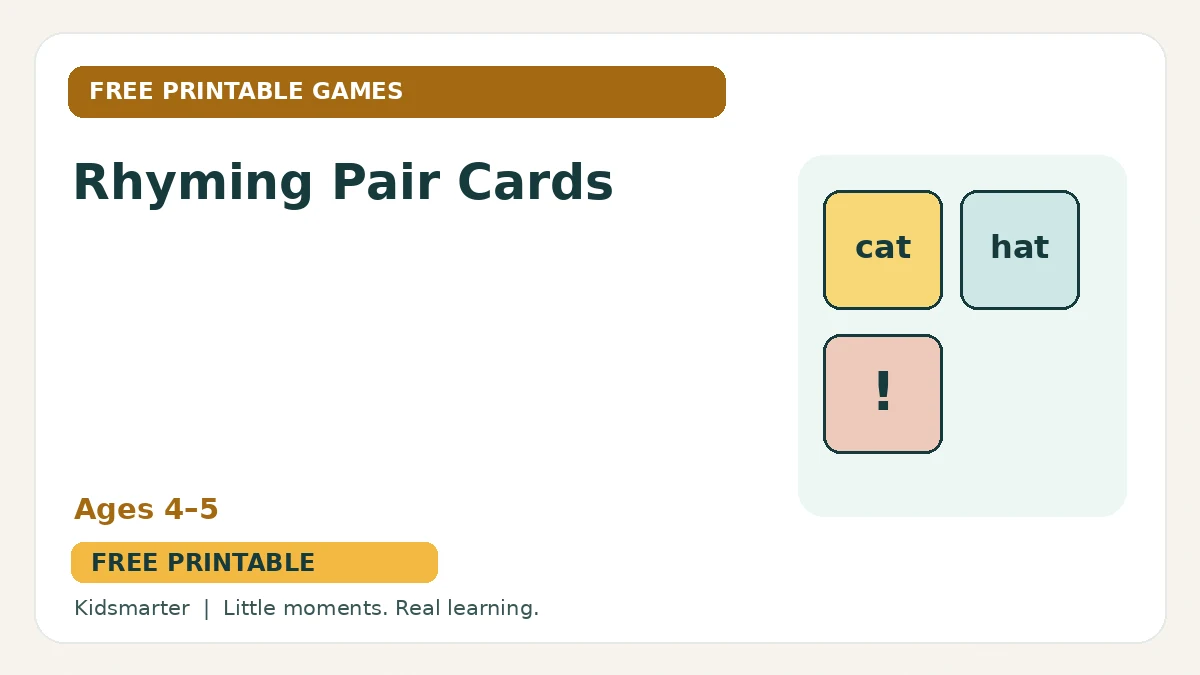
Print the eight-card sheet and have an adult cut along the borders. The pairs are cat and hat, dog and log, sun and bun, and bee and tree. Name each picture together so the intended words are clear.
Step-by-Step How to Play
-
Place cat beside hat and say both names. Stretch their shared ending slightly, then speak them normally: “Cat, hat. They sound alike at the end.” Invite a response without requiring your child to repeat after you.
-
Offer dog with log and sun as choices. Name both options aloud, giving equal emphasis. Ask which has an ending like dog, and let your child point, move a card, or say the word.
-
Gather the matched pair and compare it once more by listening. If your child chooses by meaning, acknowledge the connection first, then return to endings: “Dogs do like the sun. Listen to dog and log.”
-
Add one new pair at a time while keeping earlier pairs visible as models. Accept invented rhyming words during conversation, but use the pictured labels when deciding where the printed cards belong.
-
Read the finished pairs in a playful rhythm or make a tiny silly sentence for a favorite pair. Stop before every card becomes obligatory. Keep the sheet's naming list in the storage envelope for consistent future play.
Small Details That Make This Activity Work
Keep the picture names consistent with the pair list. A child might reasonably call a bun bread, which no longer rhymes with sun. Explain the chosen name and show the pair again without correcting their everyday vocabulary. Some families pronounce particular vowels differently, so listen to your actual spoken pairs rather than assuming every published rhyme works universally. If a pair is unsuitable, use another from the sheet or draw your own. You can keep matching purely auditory by saying two words while the cards remain face down, then reveal them after the decision. Pictures should support listening, not replace it with a memorized visual pair.
Why This Activity Helps
Rhyming encourages attention to the sound structure of words rather than only their meanings. Picture choices reduce the need to retrieve a word independently. Rhymes depend on pronunciation, so choose pairs that actually rhyme in the variety of English your family speaks.
Easy Ways to Adapt by Age
Make It Simpler
Keep only cat and hat visible and model the relationship yourself. Let your child finish a repeated phrase or simply hand over the matching picture after hearing the pair.
Ready for a Challenge
Ask for a third rhyme, including a clearly labeled nonsense word if desired. Later offer a group of three spoken words and ask which ending differs, with pictures available for support.
Parent Tip & Safety Note
Adults cut and supervise the cards, especially with younger siblings or children who mouth paper. Do not insist on repeated pronunciation or correct a child's accent to make a rhyme work. Change the word pair instead when household speech differs. A related sock-toss version reuses these pictures with movement; this version is for tabletop listening and comparing.
Explore more activities in this category or free printable games.