I-Spy Letter Sounds Page
Quick Activity Snapshot
- Age Range
- Ages 4–5
- Prep Time
- 2 minutes to print
- Skills Practiced
- Letter-sound search
- Materials
- Printed I-spy page, A crayon or highlighter
Age ranges are suggestions, not developmental milestones or standards. Choose the setup for this child, and stop whenever needed.
An I-spy page can be a sound search rather than a speed challenge. Your child listens to familiar picture names, chooses the ones beginning with the target sound, and marks them at a comfortable pace. Start by looking together; a busy page should not hide the instructions.
Materials You’ll Need
- Printed I-spy page
- A crayon or highlighter
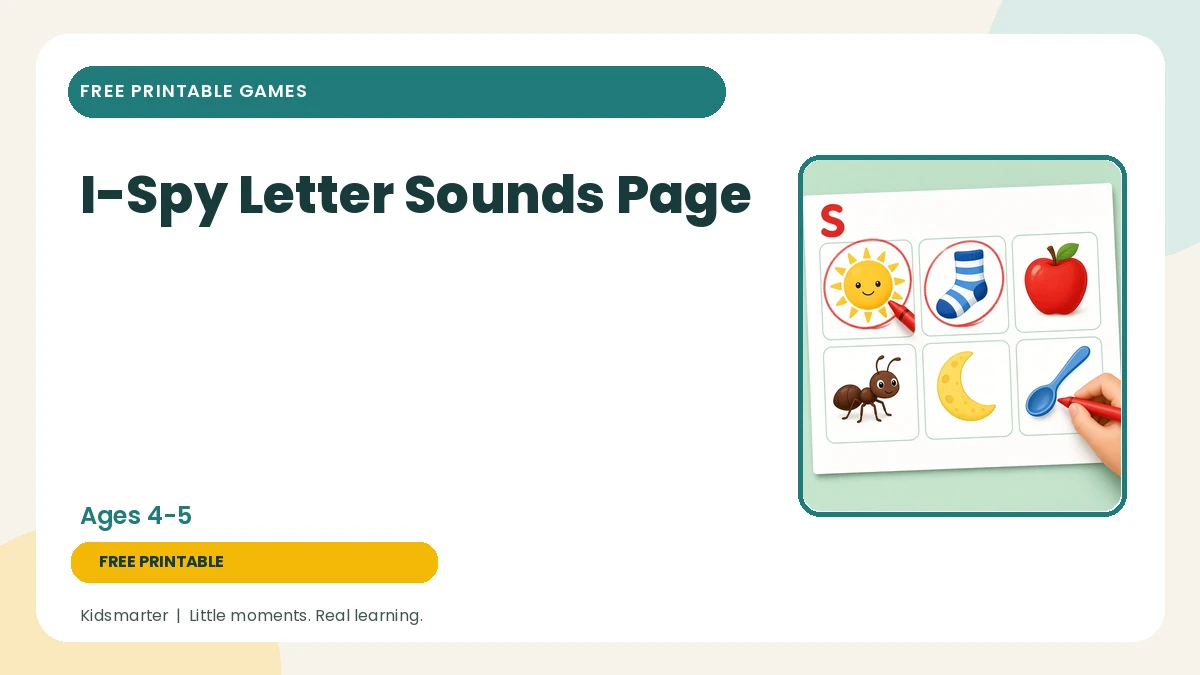
Print the page at actual size. The target is S and the pictures repeat sun, sock, fish, moon, ball, and bus in a mixed grid. Set out a large crayon and cover half the grid if the full array looks distracting.
Step-by-Step How to Play
-
Point to the S in the heading and say its common sound as in sun. Name the sun and sock pictures together before searching. Explain that this round listens to beginnings, not the final sounds of words.
-
Explore the first row slowly, naming every picture. Ask which begins with /s/. Model one choice: “Sun starts with /s/, so I will circle it.” Say the whole word naturally after emphasizing its beginning.
-
Invite your child to scan the next row and circle or mark a matching picture. Touching an image is also a valid response. If a different name is used, agree on the intended word before considering its sound.
-
Pause at bus, which has /s/ at the end rather than the beginning. Say both bus and sun aloud and compare where the sound occurs. Avoid presenting this as a trick; it clarifies what the game asks listeners to notice.
-
Count marked suns and socks only if your child wants to. There is no requirement to find every target before stopping. Save the page for another short round or let your child invent a new search.
Small Details That Make This Activity Work
The page repeats a small picture vocabulary intentionally so naming becomes less demanding as the search continues. There are eight target pictures altogether: four suns and four socks. Keep that count as an adult check, not a score your child must reach. Search by rows, by favorite picture, or with a scrap-paper window; different routes can all be useful. A circled bus may show that the child heard /s/ but attended to its final position. Compare the spoken words gently and return to a clear beginning example. The aim is a better listening distinction, not a cleaner-looking completed page.
Why This Activity Helps
The activity combines listening for an initial phoneme with scanning a visual field. Those are separate demands, and reducing the visible rows can preserve the listening goal. A circled picture alone does not prove a child read a word or understood every sound relationship.
Easy Ways to Adapt by Age
Make It Simpler
Show a single sun beside a moon and say the words yourself. Let your child point to the one with the target beginning, then return to a small portion of the page.
Ready for a Challenge
Ask your child to find another real object beginning with the same sound, or compare beginning and ending sounds in a familiar spoken word without introducing extra written work.
Parent Tip & Safety Note
Use non-toxic drawing tools and manage marker caps. Adults can help with circling if the motor demand distracts from listening. Respect home-language pronunciation and choose a different target if the intended picture labels are unfamiliar or ambiguous.
Explore more activities in this category or free printable games.