Playdough Number Stamps and Builds
Quick Activity Snapshot
- Age Range: Ages 4–5
- Prep Time: 8 minutes
- Skills: Numeral and quantity matching
- Materials: Ready-to-use age-appropriate playdough only if suitable for this child, The whole 1–6 number sheet and a washable mat, Plain paper and a whole crayon for the no-dough version
Age ranges are suggestions, not developmental milestones or standards. Choose the setup for this child, and stop whenever needed.
Pressing a numeral into soft dough creates a mark; building a matching set gives that mark a quantity. This activity brings the two together without expecting neat handwriting. A child might stamp 4, make four separate dough portions, and check each against the model. Start with one of the six printed numbers that interests your child rather than working through every panel. A paper-and-pointing version is available too.
Materials You’ll Need
- Ready-to-use age-appropriate playdough only if suitable for this child
- The whole 1–6 number sheet and a washable mat
- Plain paper and a whole crayon for the no-dough version
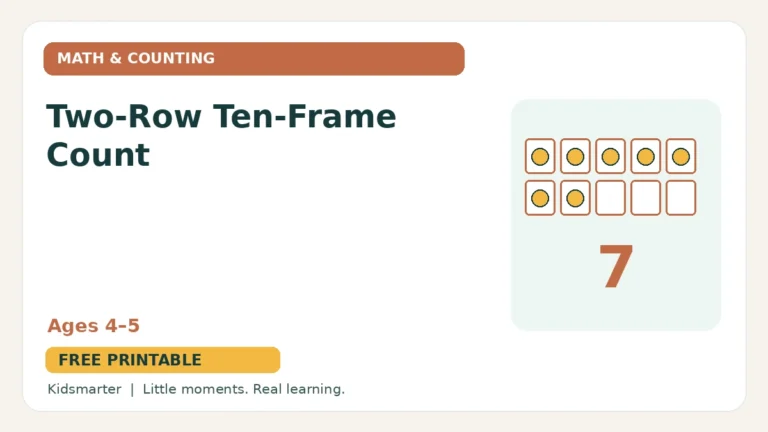
Set out the whole number sheet beside a washable mat. The PDF has six numeral-and-dot panels, one through six. Its dots are only 28 points across: use them as counting cues, not a target size for dough balls. Choose ready-to-use playdough according to its label and ingredients; do not give children dough made with raw flour. If dough would be mouthed or is unsuitable, leave it put away and use adult-drawn crayon groups on plain paper instead.
Step-by-Step How to Play
-
Choose a panel such as 3. Point to its three dots and name the numeral: “This mark names three.” If using dough, invite your child to flatten one portion before building the group. If using paper, an adult draws the group beside the visible numeral. The child can point and count without copying the numeral or touching dough.
-
Look at the written 3 while you build. A suitable blunt numeral stamp is optional: an adult checks that its impression reads the same way as the printed numeral before offering it. Without a stamp, trace the numeral in the air or build its shape with one thick dough piece beside the card. In the paper version, point to the printed numeral while the adult draws the matching group; no numeral writing is required.
-
Make three separated dough portions on the mat, large enough for comfortable handling rather than sized to the printed circles. Point from one printed dot to one portion and count each once. If there are four portions, pair them with the three dots and notice the extra. With paper, draw three broad marks on a fresh sheet and point between the two groups; do not ask your child to move ink.
-
Press a shallow mark into each separate portion with a fingertip or an intact blunt block. Count each press once, then count the portions again. Spread them apart and compare the total. Keep them separate for this comparison: if two portions stick into one lump, say that you joined pieces and make a fresh separated set instead of insisting nothing changed. In the paper version, make a fresh drawing with the same number spaced differently.
-
Let your child choose a second card or make a mystery set for you. If they build five balls and choose a 2 card, compare the set with the card's dot quantity and search for a better match together. Photograph the finished numeral-and-set combination if your child wants to save it, then squash everything for another day rather than preserving a perfect product.
Why This Activity Helps
The printed numeral names an amount, while the dots and dough show examples of that amount. Matching one portion with one dot gives you a visible way to check the group. The same three portions can occupy more space without becoming four, as long as none are added, removed, joined, or split. Keep the discussion about the set you can see rather than the neatness of the stamped shape.
Easy Ways to Adapt by Age
Make It Easier: Choose just one of the one-to-three panels. An adult can prepare the portions while your child points to the dots, or draw the whole group while the child counts. Skip numeral construction if it distracts from matching. Leave all dough put away if touching it is unwelcome or mouthing is likely.
Add a Challenge: Ask an older preschooler to build a set before uncovering its dot model. Split five dough balls into two groups, then bring them back together and check that there are still five. Invite the child to describe the parts in ordinary language, such as "two here and three here," without requiring addition notation or speed.
Free Printable Included
Print this activity-specific pack on Letter paper. An adult prepares any cut pieces; use the activity directions above.
Parent Tip & Safety Note
Playdough is not food. Check its label and ingredients, use only materials suitable for this child, and switch to the whole-sheet drawing version whenever mouthing is likely. Do not use raw-flour craft dough. An adult manages optional tools; no beads, buttons, coins, or loose decorations are needed. Wash hands and clear dried crumbs after play.