Ten-Frame Fill Cards
Quick Activity Snapshot
- Age Range
- Ages 4–5
- Prep Time
- 3 minutes to print
- Skills Practiced
- Numbers to 10
- Materials
- Printed ten-frame cards, a thick crayon, or broad adult-cut paper counters
Age ranges are suggestions, not developmental milestones or standards. Choose the setup for this child, and stop whenever needed.
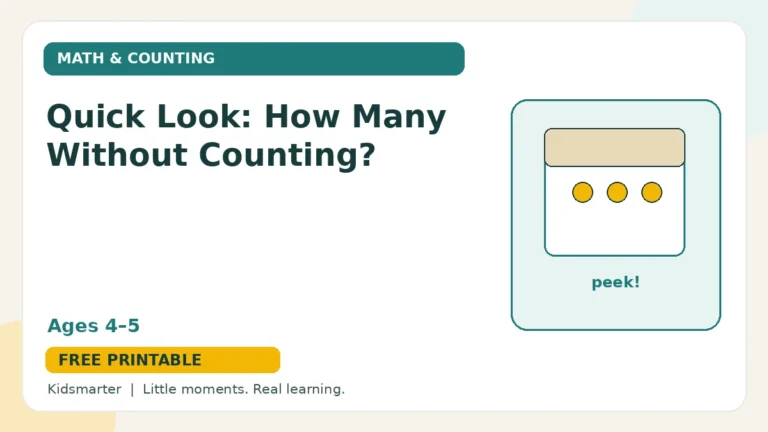
A ten-frame turns a small collection into a visible arrangement of filled and empty spaces. These printable cards invite children to build each number with counters or crayon marks and check it against the model. The goal is noticing how quantities relate to five and ten, not finishing the whole stack. Cereal or other small food counters are not needed.
Materials You’ll Need
- Printed ten-frame cards
- A thick crayon, or broad adult-cut paper counters
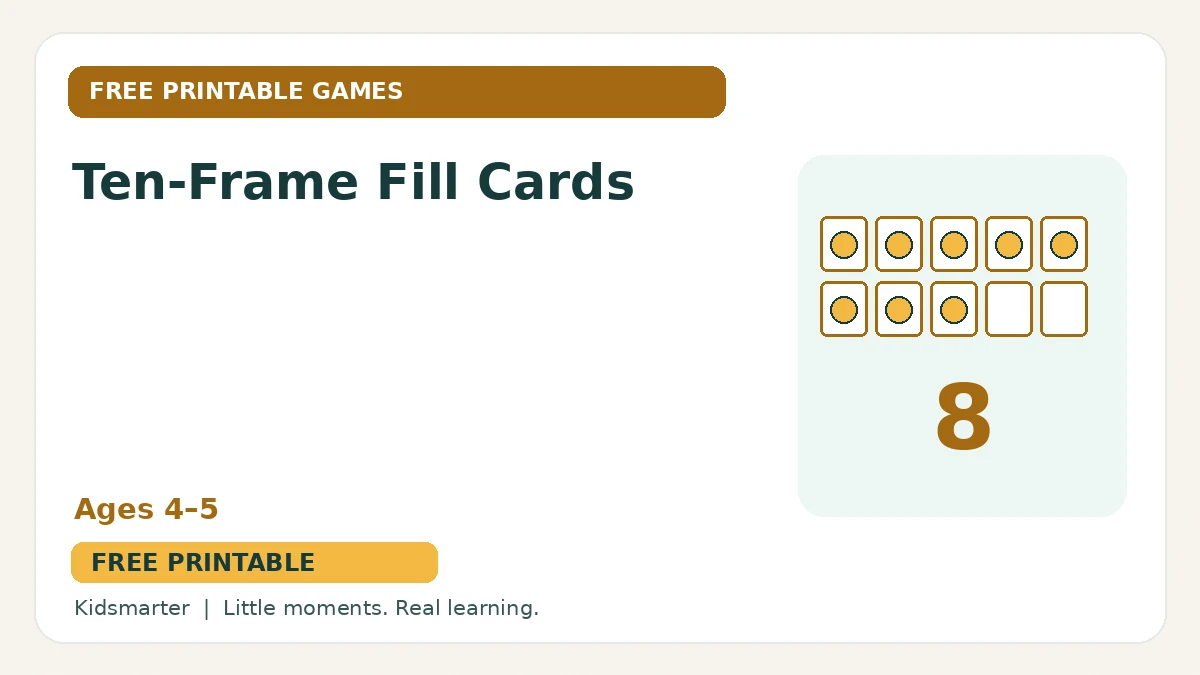
Print the card page and use it whole, or let an adult cut the six large cards apart if wanted. Each card shows a target number from five through ten, a dot model, and a blank frame to fill. Gather ten suitable large counters or use crayon marks. Prefer broad paper circles or crayon dots over cereal, beads, or other small pieces.
Step-by-Step How to Play
-
Choose five and count its model dots together. Notice that one row is full. Place one counter in each top-row space of the blank frame, moving left to right and touching each counter once.
-
Try six, showing the full top row and one underneath. Say, “Five and one more makes six.” Let your child count all six if that is their preferred checking method.
-
Select another card and invite your child to build it without help. Keep the printed model visible. If counters pile in one box, compare the one-counter-per-space arrangement and move them together.
-
Look at the empty spaces as well as the filled ones. For eight, two spaces stay empty; for nine, one; for ten, none. Those gaps can be pointed to without a spoken answer. Add counters physically to check instead of expecting a memorized number fact.
-
Let your child pick one card to show another person. They may explain with pointing or count the dots aloud. Put unused cards away rather than turning the session into a requirement to complete every number.
Small Details That Make This Activity Work
Each target card pairs a filled example with a blank workspace, so the child can compare two visible arrangements without holding the model in memory. Check that every mark occupies one space, then count the total rather than judging whether the dots look like the model’s dots. A completed frame need not be dismantled instantly: ask what your child notices about the spaces before changing numbers. If you build nine after eight, invite one additional counter rather than clearing everything, then compare what changed. Follow your child’s preferred checking strategy, including counting every item, instead of insisting they use a grouped shortcut. Finishing one chosen quantity is a complete session.
Why This Activity Helps
A structured frame makes five and ten useful reference quantities. Comparing a model with a filled frame supports one-to-one correspondence, while gaps make missing parts visible. Noticing a grouped amount can emerge gradually; there is no need to demand instant recognition.
Easy Ways to Adapt by Age
Make It Simpler
Cover the lower row and work within five using only a few counters. Draw a simpler one- or two-dot model beside the frame if the printed target is currently too demanding.
Ready for a Challenge
Hide the dot model while keeping the target numeral visible, then reveal it for checking. Compare two cards and describe what changes when one more counter is added.
Parent Tip & Safety Note
Counters and small manipulatives can choke. Use large paper circles or crayon dots, supervise younger siblings, and keep food out of this counting setup. Cereal is not needed.
Explore more activities in this category or free printable games.