Quick Look: How Many Without Counting?
Quick Activity Snapshot
- Age Range
- Ages 4–5
- Prep Time
- 4 minutes
- Skills Built
- Subitizing small sets
- Materials
- The printed dot-card page, managed by an adult, Plain paper for an opaque tabletop cover, Optional intact age-appropriate objects only if suitable
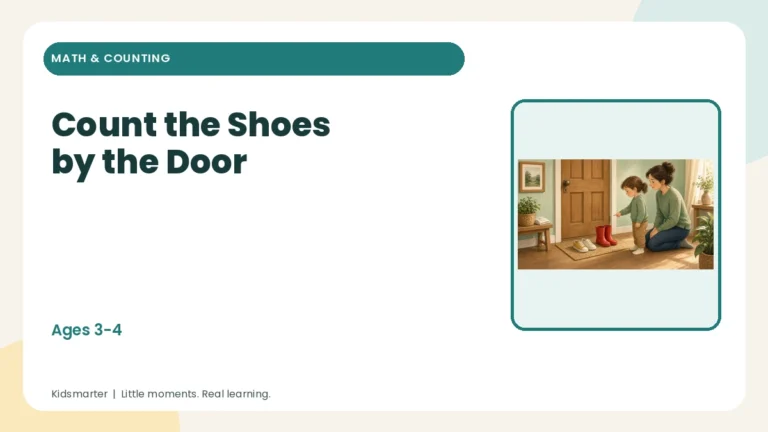
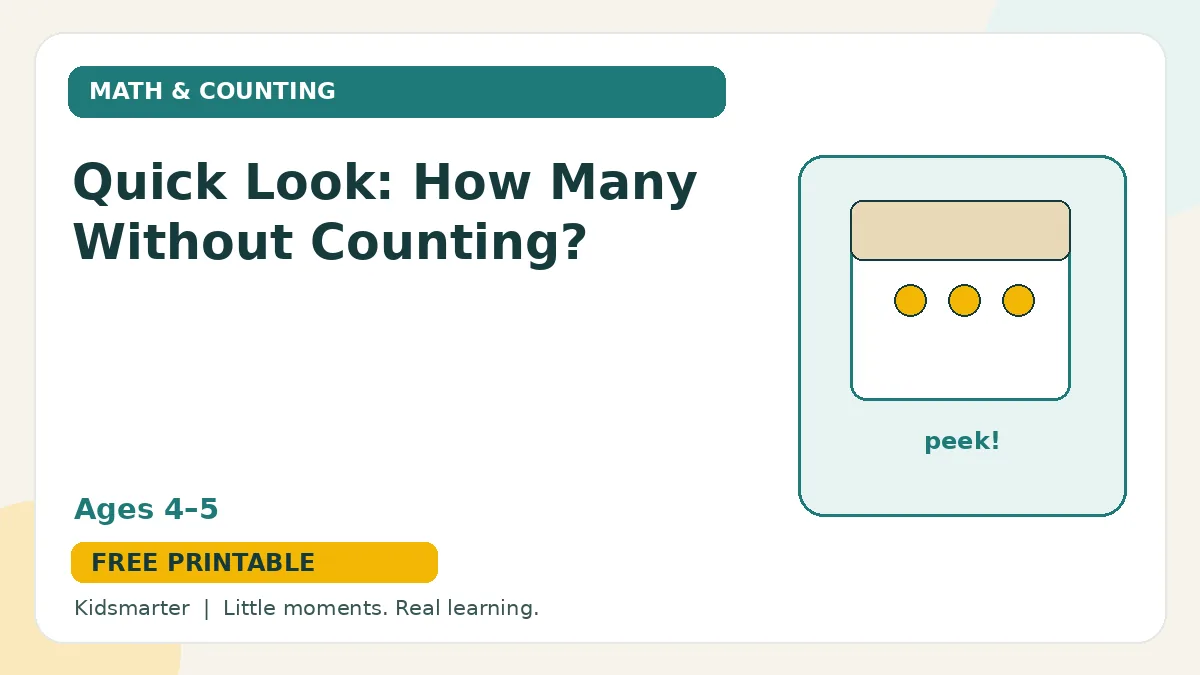
You might notice two shoes by the door without counting one by one. This peek-and-check game uses printed dot cards to explore a small group, then check it together. Show one card briefly, hide it, and listen to what your child noticed. A request for another look is welcome. Begin with two or three dots and keep counting available; this is a shared reveal, not a speed test.
Materials You’ll Need
- The printed dot-card page, managed by an adult
- Plain paper for an opaque tabletop cover
- Optional intact age-appropriate objects only if suitable
The PDF has two rows of five panels: one through five dots in lines, then the same amounts in clustered patterns. An adult can prepare a few cards and hold the rest out of reach. Show one card at a time, then turn its blank back toward the child; no towel or loose counters are needed. If loose paper is unsuitable, keep the page adult-held and fold unused panels behind the one being shown.
Step-by-Step How to Play
-
Start with a two-dot panel. Say, “We will look, hide it, and then check together.” Leave it visible for the first practice turn. A tray of suitable objects is an optional variation, but the card version is enough; there is no need to find household pieces to fill the tray.
-
Show the two-dot card briefly, then turn it over or cover it at tabletop level. “About two seconds” is only an invitation to a quick look, not a timed target. Ask, “How many did you notice?” Accept fingers, words, or “again,” and show it longer whenever requested. Keep the cover away from faces.
-
Show the card again and point to each dot while checking: “One, two. Two altogether.” Compare the check with the earlier idea without scoring the answer. You can repeat the same card before choosing a different amount or arrangement.
-
Try another two-dot panel, then perhaps three. Compare the line arrangement with the clustered arrangement of the same amount. Ask, “What helped you see it?” If your child counts every dot, let that check stand rather than shortening the reveal to force an immediate answer.
-
Finish with a familiar amount, perhaps the same two-dot card again. Your child can choose the last panel by pointing while an adult manages the page. Let them ask you how many you saw, then turn it back to check. Stop when interest fades even if some amounts have not been tried.
Small Details That Make This Activity Work
Keep the same amount while changing only its arrangement so you can talk about what stayed the same. Reserve this game for a non-eating moment; there is no reason to cover snacks or ask for quick answers during chewing. You can stop after one interesting comparison and use the same cards again another day.
Why This Activity Helps
Recognizing a small set at a glance, sometimes called subitizing, is practiced here by peeking, saying an amount, and then checking by counting. The brief uncover encourages a whole-group look, while the check keeps honest counting available. Identical objects reduce distraction. Children vary widely: some prefer to count every time, which is a valid strategy you can still honor after the peek.
Easy Ways to Adapt by Age
Make It Simpler
Choose a two-dot panel and leave it visible a little longer. Invite your child to point to the dots or show the number on their fingers before naming it. You can also peek together and simply say the amount aloud.
Ready for a Challenge
Try a five-dot panel after several enjoyable smaller groups. Compare its line arrangement with the other five-dot pattern. Talk about what you noticed in each; more looking time and counting remain available.
Parent Tip & Safety Note
An adult handles cutting and collects scraps. Keep the paper cover on the table, not over a face or body. Use the adult-held page instead of loose cards or objects whenever mouthing is a concern. Lift or turn the cover slowly if surprises are unwelcome, and let the child decide when to stop.
The age range above is a suggested starting point, not a milestone or a standard your child must meet. A longer look, another peek, or counting each dot are all ways to join in.
Find another small invitation to play in Math & Counting, or explore our free printable games. Choose one that fits your child’s interests, available materials, and energy today.