What Is This Animal Doing?
Quick Activity Snapshot
- Age Range
- Ages 3–4
- Prep Time
- 1 minute
- Skills Practiced
- Pointing to an animal in a familiar book and saying what it is doing
- Materials
- A familiar picture book or sturdy board book with a clear picture of an animal doing something
Age ranges are suggestions, not developmental milestones or standards. Choose the setup for this child, and stop whenever needed.
A familiar animal on the page can become a short talking job. You stay on that page, point to the animal, and say what it is doing, such as running, eating, or sleeping. This is not turning the page to find the same animal again, not rereading the page you just heard, not asking a general question about the picture, and not guessing what happens next.
Materials You’ll Need
- One familiar picture book or sturdy board book your family already shares, with a clear picture of an animal doing something, and no need to buy a new title
- A clear table, couch, or rug where you can sit together and both see the page
Choose a book you already own, and stay on one page. You do not need to copy any pages, and you do not need a printed worksheet. Stay with your child, and help hold the book so the pages are not torn.
Step-by-Step How to Play
-
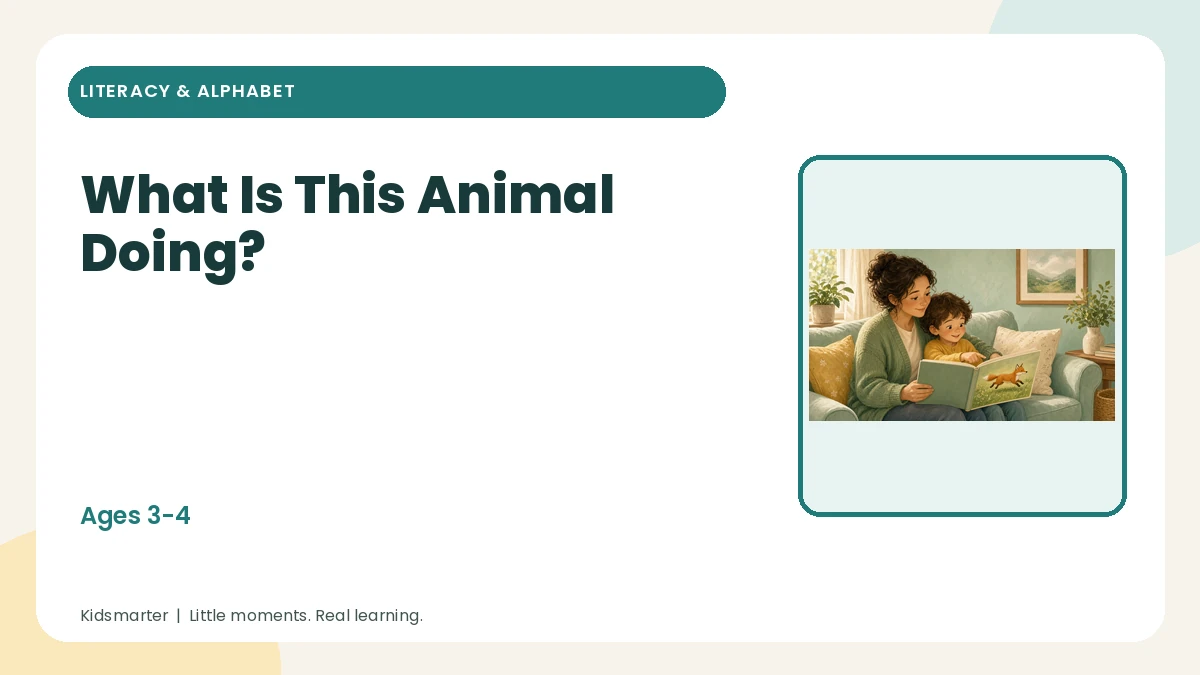
Open the book to a page where an animal is easy to see. Point to the animal and name what it is doing. Say, “This fox is running. What is the fox doing?”
-
Give your child time to look, point, or say a word such as “running.” If they only want to look, you can say the action again yourself.
-
If they still want a turn, you may point to the same animal once more, or look at one other animal on the same page. There is no score, and you do not need to turn the page.
-
Naming one action can be a complete activity. You do not need to talk about every picture in the book unless they ask to keep looking.
Small Details That Make This Activity Work
Stay on the same page, so the job is naming what the animal is doing, not searching a new page or following a new stretch of the story. Keep the talk short, and do not test whether they remember the story. If they only want to look at the animal, that can be enough. This is not finding the same animal on the next page, not rereading the page you just heard, not a question about the picture, not a pause to guess what happens next, not lingering on a favorite picture, not a cover-clues book walk, not a three-card retell, not a photo caption, not finishing a familiar line, and not clapping each word: the job is to point to the animal and say what it is doing.
Why This Activity Helps
Pointing to a familiar picture and saying what the animal is doing is one everyday way to talk about a book you already share. Reading Rockets’ Dialogic Reading: An Effective Way to Read Aloud with Young Children includes an open-ended prompt example: while looking at a familiar page, you might say, “Tell me what’s happening in this picture.” That page describes a full shared-reading method for families; it does not evaluate this homemade “what is the animal doing” game, and naming one action is not evidence of later reading or of later language scores. Children may enjoy looking without saying the action.
Easy Ways to Adapt by Age
Make It Simpler
You may say the action yourself: “The fox is running.” Then invite your child only to point to the running fox.
Ready for a Challenge
After one action is easy, you may look at a second animal on the same page and name what that one is doing. Stop if the extra talk starts to feel like a quiz, or if they would rather just look.
Parent Tip & Safety Note
Stay together. Use a book you already own, and do not copy pages from a copyrighted book to make a new packet. Help hold the book so the pages are not torn, and keep small or loose pieces of a damaged book out of mouths. Sit in a stable place, and do not balance the book where it could fall and hit anyone. Stop when your child is finished or wants to look at the pictures in another way, or no more looking at all.
Explore more activities in this category or free printable games.
For the family example of an open-ended prompt about what is happening in a picture, see Reading Rockets’ Dialogic Reading: An Effective Way to Read Aloud with Young Children. That page includes a short prompt example; it does not evaluate this homemade “what is the animal doing” game, and it does not treat naming one action as evidence of later reading or of later language scores.