Our Day in Three Words
Quick Activity Snapshot
- Age Range
- Ages 3–4
- Prep Time
- 5 minutes
- Skills Practiced
- Dictating a short list about the day
- Materials
- A sheet of paper and a washable marker
Age ranges are suggestions, not developmental milestones or standards. Choose the setup for this child, and stop whenever needed.
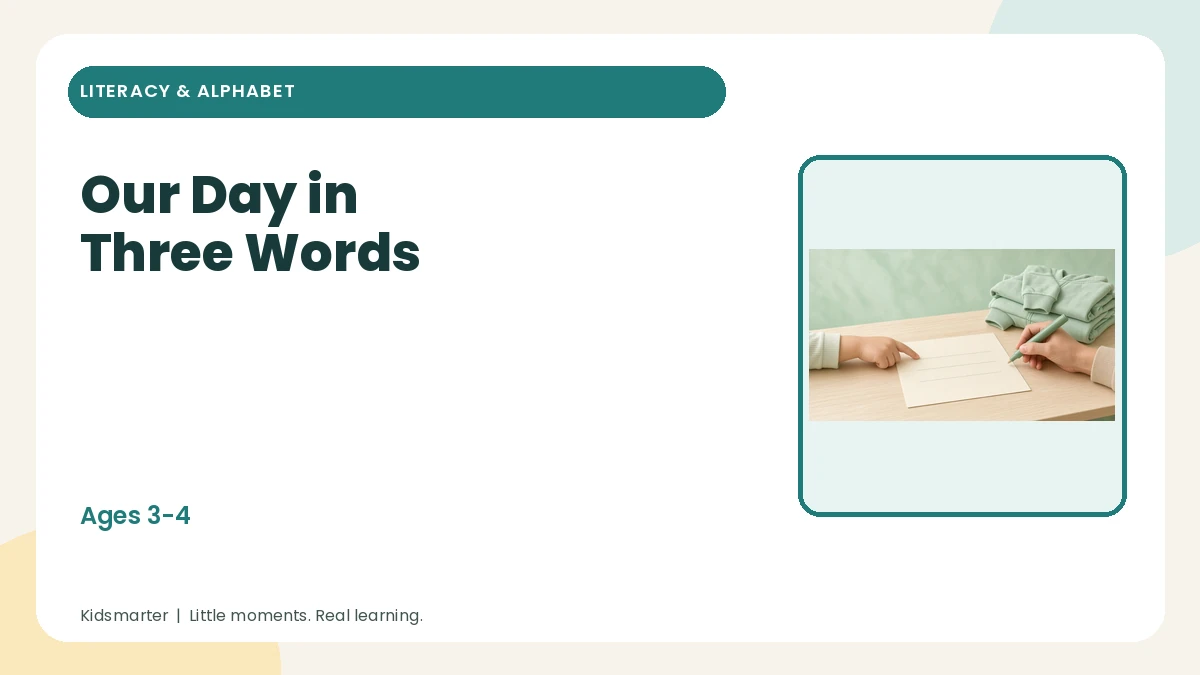
The day can give writing a small, real job. Your child helps choose three words about what happened, or about what is coming next—park, soup, grandma—and you write them in a short list. Then you reread the list together, pointing under each word. This is not a shopping list, not a caption for a photo, and not a test of spelling.
Materials You’ll Need
- A sheet of paper, or a small notepad already in the house
- A washable marker or a thick crayon
You write the words, or you write them slowly while your child watches. Three words are enough. You do not need a journal template, a calendar, or a printed checklist. If your child wants to add their own marks or a scribble “signature,” leave space for that.
Step-by-Step How to Play
-
Sit so both of you can see the paper. Say, “We can write three words about our day.” Invite your child to think of something that already happened, or something that is still coming. A single word, a pointing gesture, or a short phrase all count.
-
Choose three words together. If they offer a whole sentence, you may keep one clear word from it, and check that they agree. Do not invent a longer list they did not choose. If they only shrug, you may offer two or three familiar options they can accept or change: “Should we write park? Lunch? Bath?”
-
Write the three words slowly, one under another, saying each word as it appears. Leave a clear space between words. The child does not have to form adult letters.
-
Reread the list, pointing under each word as you say it. Invite your child to point with you if they wish. Keep the pointing friendly; it is practice with print, not a quiz about reading the words alone.
-
If you like, keep the list where you may see it later in the day and check off a word after it happens. One short list is enough. When they are finished, put the marker away together. There is no required number of lists.
Small Details That Make This Activity Work
Choose words that really belong to this day, so the list has a job. Write in front of your child, not later in another room. Three words are better than a long diary page. Avoid turning the rereading into “What does this say?” until they have heard you read it. This is not a first-sound shopping list, not a photo caption, and not a song-line pointing game: the print is a short list about the day you are sharing.
Why This Activity Helps
When an adult writes a child’s words and rereads them, the child can see that print can stand for something they just said. Reading Rockets’ guidance on supporting very young writers describes dictation—writing down what a child says after a shared event, or even recording something as simple as what was for dessert—and then rereading the short sentences together. A related page of pre-K writing ideas also includes writing together, such as making a list, and using short dictation. Those pages describe everyday writing support; they do not evaluate this three-word day list, and finishing three words is not evidence of later reading or writing achievement. Children may enjoy choosing the words without being able to read them back alone.
Easy Ways to Adapt by Age
Make It Simpler
Write only one or two words the child chose, such as park or bath. You can point to each word as you say it, without asking them to retell the whole day.
Ready for a Challenge
After you write the list, invite your child to help you reread it by pointing under the words. Some children like to add a scribble mark next to a word after that part of the day is done. Keep the addition short, and stop if the list starts to feel like homework.
Parent Tip & Safety Note
Stay at the table. Cap markers when they are not in use. You do not need to post the list online, and you do not need to correct spelling in front of a young child who is just beginning to notice print. If a younger sibling is nearby, keep the marker out of their mouth. Stop if your child is finished, wants only to talk about the day, or would rather draw than have words written down.
Explore more activities in this category or free printable games.
For dictation and rereading a child’s own words, see Reading Rockets’ Supporting Very Young Writers and Writing Activities for Your Pre-K Child. Those pages describe helpful adult support and everyday writing, including lists and short dictation; they do not evaluate this three-word day list, and they do not promise later reading or writing achievement.