What Does Not Belong on the Tray?
Quick Activity Snapshot
- Age Range: Ages 3–4
- Prep Time: 5 minutes
- Skills: Odd-one-out reasoning
- Materials: Three clean intact socks and one clean washcloth, A clear low table or mat
Age ranges are suggestions, not developmental milestones or standards. Choose the setup for this child, and stop whenever needed.
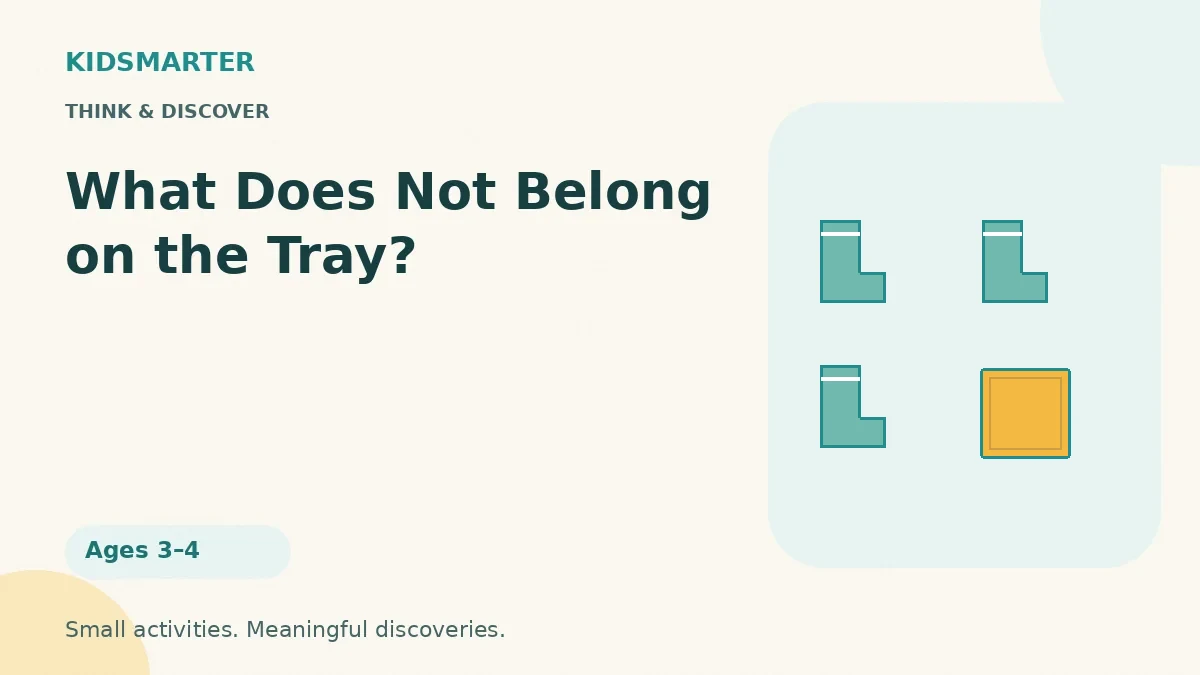
Three socks and a washcloth can start a good question: which one would you put somewhere else, and why? Begin with a shared rule—things we wear on our feet—so your child is not guessing a secret category. Then listen for another rule they notice. A different answer can be sensible if the remaining three really share the feature they describe.
Materials You’ll Need
- Three clean intact socks and one clean washcloth
- A clear low table or mat
Choose three clean socks and one washcloth with no loose threads, buttons, or decorations. Put them on a clear low table or mat away from bags, detergents, and small laundry parts. Keep all four visible. You do not need knives, forks, toothbrushes, or a search through household drawers to make an odd-one-out set.
Step-by-Step How to Play
-
Arrange the four items with a little space between them. Name each one and ask what it is used for. Say, “I am thinking of things we wear on our feet.” If your child does not know washcloth, show the familiar washing action in the air before asking which item might go elsewhere.
-
Ask, “Which of these is not a sock?” Accept a point or movement. If the washcloth is chosen, follow with, “What could we use it for?” If your child does not answer, model one ordinary use instead of asking the same question again and again.
-
If a different item is chosen, ask what they noticed. A child may choose the only striped item. Check the actual remaining three together: do they share the proposed feature? Say, “You were using pattern; I was using what we wear on our feet.” Compare those rules without insisting that your first one is the only way to sort.
-
Return the fourth item and let your child choose the rule for you to guess. Start with the same four objects rather than sending them to find more around the house. Give your reason aloud: “These three are socks, so I would move the washcloth.” Let them point to the feature they intended if their rule was different.
-
End by putting the clean items back in their appropriate places with an adult. Ask whether the “homes” fit the rule you used. You can use the same four another day; there is no need to keep producing harder riddles or to collect many new objects for each round.
Why This Activity Helps
An odd-one-out choice needs a rule. Naming the feature and checking the other three makes the reasoning available to both of you. Sorting by use, color, or pattern can produce different groups; the important check is whether the same rule works for every item in that round. Familiar objects leave room to talk about the rule itself.
Easy Ways to Adapt by Age
Make It Easier: Use two matching socks and one washcloth if four items are too many. Put the socks side by side and say, “These match. Which one is different from the socks?” An adult can name the feature while the child points; an explanation is optional.
Add a Challenge: For a later two-rule round, choose two blue socks, one white sock, and one blue washcloth. By use, the washcloth is the odd item; by color, the white sock is. Check the remaining three under each rule: three socks, or three blue items. Use this only when those colors are clear, and let pointing stand in for a full explanation.
Parent Tip & Safety Note
Use the checked intact fabrics; put aside anything with loose threads or decorations. Keep the area away from detergents, bags, and machines. If a child mouths the materials, put them away and use an adult-drawn whole-page set instead. Make the rule visible if disagreement starts to feel like a guessing test.