Sticker Name Build on a Paper Plate
Quick Activity Snapshot
- Age Range
- Ages 3–4
- Prep Time
- 5 minutes
- Skills Practiced
- Name spelling and fine motor
- Materials
- A paper plate, Dot stickers or letter stickers, A marker
Age ranges are suggestions, not developmental milestones or standards. Choose the setup for this child, and stop whenever needed.
A paper plate can become a cheerful name-building space, but the useful part is matching a few meaningful letters. Your child can find a letter, place it beside its model, and return to the finished name another day. Recognizing the whole name immediately is not required.
Materials You’ll Need
- A paper plate
- Dot stickers or letter stickers
- A marker
Ask which name your child wants to use, including the spelling and any accent marks used by your family. Write it clearly across a sturdy paper plate, using a capital followed by lowercase letters when that fits the name. Prepare matching large stickers, including every repeated letter. Before offering loose stickers, decide whether they are suitable: if the child mouths materials or a younger sibling shares the surface, skip all peel-off pieces. Instead draw the letters in outlined circles on one intact plate and let the child point while you mark each match.
Step-by-Step How to Play
-
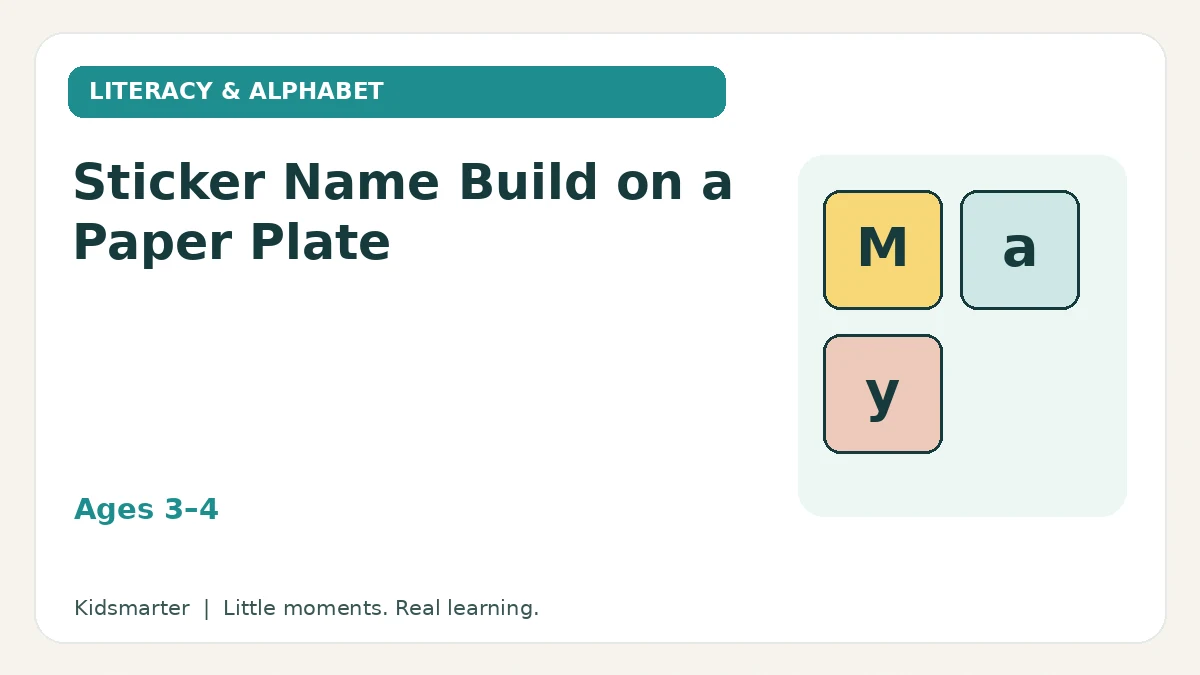
Read the whole name once while pointing left to right. Show the first sticker and compare it with the first written letter. Say, “This M belongs at the beginning of Maya.”
-
Peel a corner of the backing to make the first sticker easier to lift. Invite your child to finish peeling, then place it over the matching letter. Holding the plate steady is useful help that preserves their work.
-
Offer the next two stickers face up. Ask which matches the next space, not which one is the best letter. Keep the remaining stickers nearby but out of the immediate work area.
-
Build the entire name at an unhurried pace. When a sticker lands crooked, check whether the letter remains visible before proposing any repair. Naming and sequencing matter more here than perfect alignment.
-
Point across the finished plate and read the name together. Let your child choose a place to display it at eye level. Save unused stickers for another activity rather than extending this one beyond interest.
Small Details That Make This Activity Work
Keep all duplicate letters when preparing the stickers: Maya needs two separate a stickers. Use the same spelling and case in the model and matching pieces; you are comparing these shapes, not testing every typeface. If color becomes the only matching clue, try a single sticker color. Leave a crooked letter alone when it is still visible. Let your child decide whether to keep or display the plate. If sharing a photograph, use a made-up example name or leave the completed name out of the image; the craft need not reveal a child’s identity to be useful.
Why This Activity Helps
A meaningful name provides repeated encounters with a small set of letters. Peeling and positioning also use coordinated finger movements and two hands with different jobs. These opportunities can coexist without turning the activity into handwriting instruction.
Easy Ways to Adapt by Age
Make It Simpler
Use only the first letter and two matching choices. Partly peel a sticker for a child who can use it without mouthing; otherwise use the intact drawn-circle plate and do the pointing together. Do not replace stickers with another pile of small paper squares when the reason for adapting is mouthing.
Ready for a Challenge
Write the name on an unmarked strip beside the plate and build from that model. Older children may enjoy noticing letters shared with another family member's name.
Parent Tip & Safety Note
Use large, plain stickers rather than tiny decorative pieces, and have an adult collect every backing immediately. If a sticker or backing is headed toward a mouth, nose, or ear, end the sticker version and switch to the intact drawn-letter plate; supervision is not a substitute for removing unsuitable pieces. Keep marker caps under adult control. Display the plate at the child’s level only where it can stay intact.
Explore more activities in this category or free printable games.
NAEYC’s emergent-writing guidance discusses meaningful names and adapting adult support; it does not establish that this sticker craft improves handwriting.