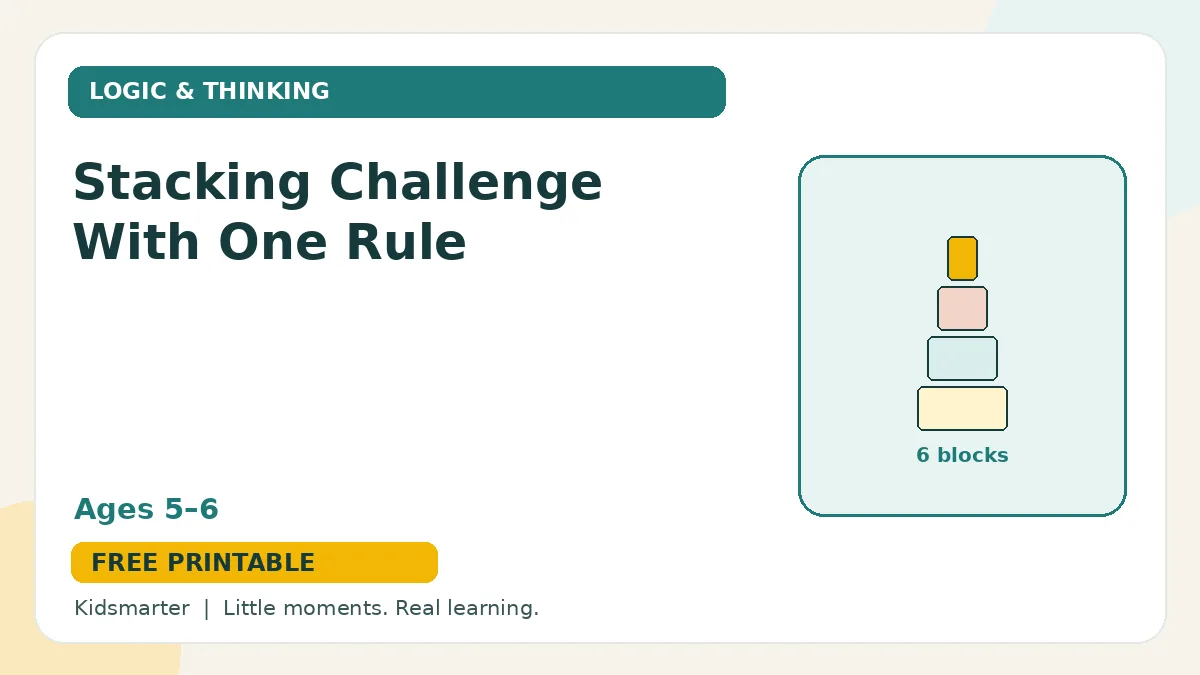
Stacking Challenge With One Rule
Quick Activity Snapshot
- Age Range
- Ages 5–6
- Prep Time
- 8 minutes
- Skills Practiced
- Planning and testing a build under one rule
- Materials
- Large building blocks, the printed rule sheet, and only if they sit stably, lightweight cups or boxes
A building job becomes a thinking puzzle when one clear rule is in play. The printable has six rule cards. Start with Rule 1: build the tallest tower you can with only six pieces, then take your hands away and see whether it stands. The constraint is the point: it turns open stacking into a problem with a boundary. Give enough time for a try, a fall, and a new plan.
Materials You’ll Need
- Large building blocks
- The printed rule sheet
- Lightweight cups or boxes only if they sit stably; no glass or heavy wood
Set out the blocks on a firm, clear table or floor space away from passing feet. Keep the rule sheet whole and point to one card at a time. Count the pieces for that rule before you start, and put extras out of reach. Rule 2 uses the short printed width bar, not the width of the whole sheet. For Rule 5, an adult prepares one paper square the size of the printed square and collects it afterward.
Step-by-Step How to Play
-
Read Rule 1 together: ‘Use only six pieces. Build the tallest tower that still stands when you take your hands away.’ Count six blocks into a small group. Ask, ‘What do we have to remember while we build?’
-
Invite a first tower without advice about the best method. If the tower falls, wait a moment, then say what you saw: ‘The top piece leaned to the left.’ Avoid taking over the rebuild unless your child asks.
-
After a fall or a wobbly try, look at the rule again. Ask whether they want to change the base, try a different piece, or start over with the same six. A second attempt with one change is often more informative than starting a completely new challenge.
-
When a tower stands, check the rule together: count the pieces and give it the agreed test, such as a gentle hands-off moment. Celebrate the standing structure and the adjustments that helped. If it falls at the test, treat that as useful information and decide whether to try once more.
-
Offer a new rule card only if interest is still high. For Rule 2, the base may be no wider than the printed 2-inch bar. For Rule 4, choose a book as a height limit. Play one new version, then tidy the pieces together, including any paper square from Rule 5.
Small Details That Make This Activity Work
Notice whether your child changes the base after a fall or only restacks the same way. A calm comment about the base can be enough. Photograph a standing tower if your child wants a record, then take it down together so the pieces are ready for another day.
Why This Activity Helps
A constraint turns building into a problem because children must hold a limit in mind while they try an idea. Testing a standing tower makes success checkable, and a fall becomes information for the next plan rather than a reason to stop. Changing only one variable—the base, the height, or the pieces—helps everyone see what made a difference. The activity values planning and revision in this game, not dramatic height or a promised skill gain.
Easy Ways to Adapt by Age
Make It Simpler
Use four large pieces and the simple standing rule: ‘Build a tower that stands by itself.’ You may stabilize the first piece, then let your child add the rest. A child can also stack while you count the pieces aloud.
Ready for a Challenge
After a successful six-block tower, try Rule 2 with the printed width bar, or Rule 3 with three stable cups and three blocks if the cups sit steadily. Ask your child to sketch a quick plan before the next build, then compare the drawing with what actually stood. Keep towers low.
Parent Tip & Safety Note
Keep towers low enough that a fall cannot hit faces or nearby objects. Do not allow climbing or standing on furniture to add a piece. Avoid glass or heavy wood blocks, and tidy rolling pieces before they become underfoot hazards. Use cups only when they sit stably. Collect the Rule 5 paper square so it does not become a loose scrap.
The age range above is a suggested starting point for this setup, not a developmental milestone or a standard your child must meet. Change only one part of the plan after a fall, and keep towers low enough that a collapse cannot reach a face.
Find another small invitation to play in Logic & Problem Solving, or explore our free printable games. Choose one that fits your child’s interests, available materials, and energy today.