Squeeze-Bottle Water Transfer
Quick Activity Snapshot
- Age Range
- Ages 4–5
- Prep Time
- 5 minutes
- Skills Practiced
- Squeezing, aiming, and stopping a short stream
- Materials
- An intact food or water squeeze bottle with a fixed spout, two shallow bowls inside a broad tray, a small amount of plain water, and towels
Age ranges are suggestions, not developmental milestones or standards. Choose the setup for this child, and stop whenever needed.
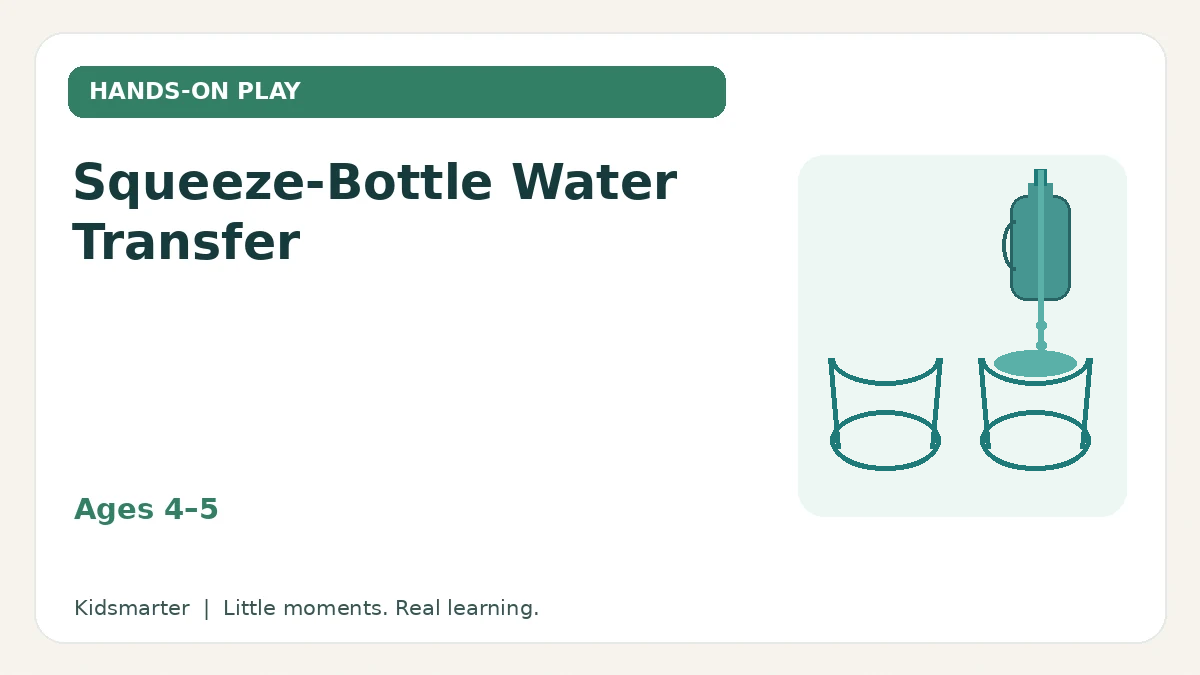
A squeeze bottle turns a little water into a controllable stream. Children can aim, ease off, and try again as they fill a few low targets. This is a tabletop invitation with two shallow bowls inside a tray, and towels ready before the first squeeze—not a muffin-cup race.
Materials You’ll Need
- An intact food or water squeeze bottle with a fixed spout
- Two shallow bowls inside a broad tray
- A small amount of plain water
- Towels
Rinse an intact food or water squeeze bottle with a fixed spout and no loose pop-top parts; never reuse a chemical container. Fill it partly with plain water and place two shallow bowls inside a larger tray. Test the nozzle to ensure the stream is gentle and predictable. Some sports bottles need suction rather than squeezing; choose one that responds to a gentle hand squeeze.
Step-by-Step How to Play
-
Hold the bottle over the first bowl and demonstrate one short squeeze. Say, “My hands press and water comes out.” Release the pressure so your child can see the stream slow or stop.
-
Offer the bottle with both hands and keep the target close. Invite a squeeze into the bowl. Your child may need to explore how much pressure produces a stream before aiming becomes the main task.
-
Move to the second bowl and try another short squeeze. Compare the water levels informally. If the bottle needs tilting, show the angle and return to a close target rather than raising the bottle high.
-
Place a low tape line on one bowl as an optional stopping point. Ask your child to pause before the water reaches it, then inspect together. Overshooting is information about timing, not a reason to restart the whole game.
-
Use the remaining water for one free transfer, then empty all containers together with adult help, even if you expect to return soon. Dry the tray, floor, and bottle. Store the bottle empty so it does not become an unsupervised water-play invitation.
Small Details That Make This Activity Work
A partly filled bottle weighs less and leaves air space that may change the flow; let your child observe that change instead of promising every squeeze will deliver the same amount. Keep targets broad and close until the release feels controllable. If the nozzle sprays unpredictably, switch bottles rather than asking the child to compensate. On a day when the bottle feels frustrating, transfer water with a whole washcloth instead of a sponge that could shed pieces.
Why This Activity Helps
Squeezing and releasing link hand pressure to a visible flow, while aiming adds coordinated visual guidance. A target line introduces stopping and checking. The activity offers practice with control in this setup, not a promise to change hand strength or attention outside this setting.
Easy Ways to Adapt by Age
Make It Simpler
Choose a softer bottle that releases water easily and use one broad bowl. An adult can support its weight while the child supplies the squeeze, or both can hold it together.
Ready for a Challenge
Try equal small cups inside the same tray and predict which needs another short squeeze to match a neighbor. Keep the comparison visible and avoid exact measuring unless your child introduces that interest. Keep quantities small.
Parent Tip & Safety Note
An adult stays within arm’s reach throughout, with no phone or other task competing for attention. Empty the bottle and every bowl immediately after use or any interruption. Keep spray away from faces, pets, electrical equipment, and slippery walkways. Use no old cleaner bottles, and stop if squeezing strains the child’s hands. A dry squeeze with an empty bottle is an alternative when continuous water supervision is unavailable.
Safety reference: AAP water-safety guidance.
Explore more activities in this category or free printable games.