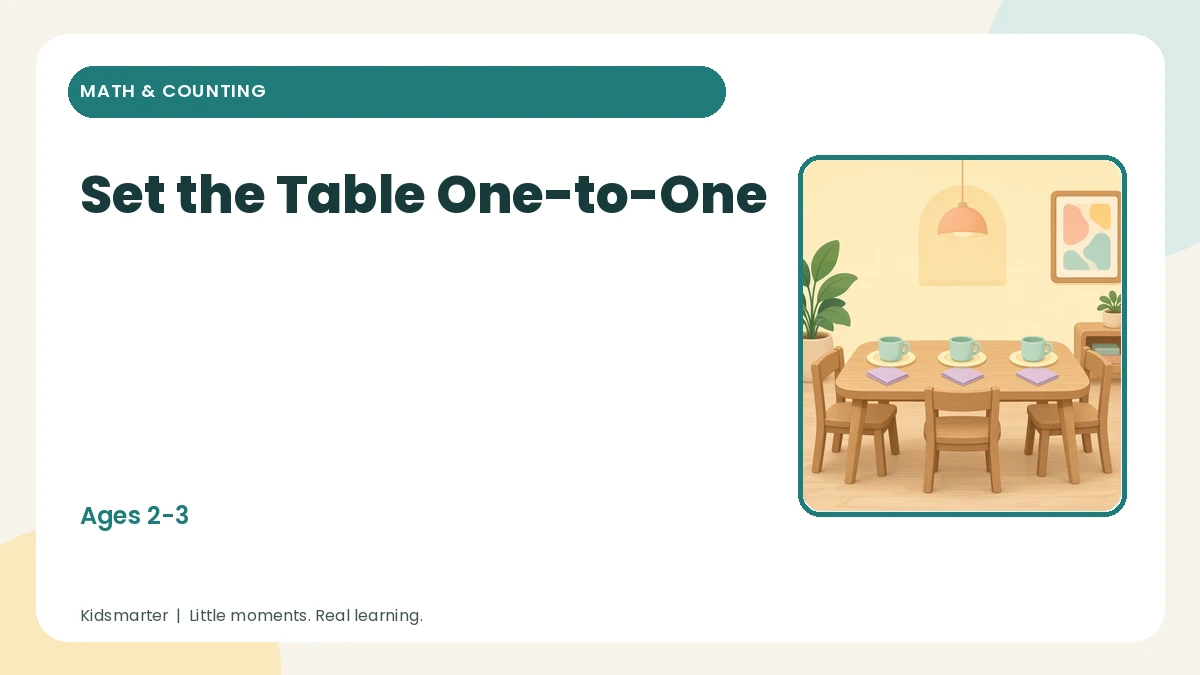
Set the Table One-to-One
Quick Activity Snapshot
- Age Range: Ages 2–3
- Prep Time: 5 minutes
- Skills: One-to-one correspondence
- Materials: Plates, cups, or napkins, A table, A simple place-setting photo (optional)
Age ranges are suggestions, not developmental milestones or standards. Choose the setup for this child, and stop whenever needed.
One napkin for each person is a small household job with a powerful mathematical idea inside it. Your toddler does not need to recite numbers to notice that somebody has no cup or that one place has two. This activity uses a real meal setup, with safe objects and an adult nearby. The reward is a table that is ready for people, not a sticker for getting every answer right. Start with two or three places.
Materials You’ll Need
- Plates, cups, or napkins
- A table
- A simple place-setting photo (optional)
Start with two or three intact, lightweight pieces of tableware the child already uses, plus full-size napkins. Choose a stable surface reachable from the floor without climbing; let an adult position plates if the dining table is too high. Work before food, hot drinks, knives, or glass arrive. Leave napkin rings, small decorations, tablecloths that can be pulled, and heavy stacks out of the setup. A picture of one finished place is optional, not a reading requirement.
Step-by-Step How to Play
-
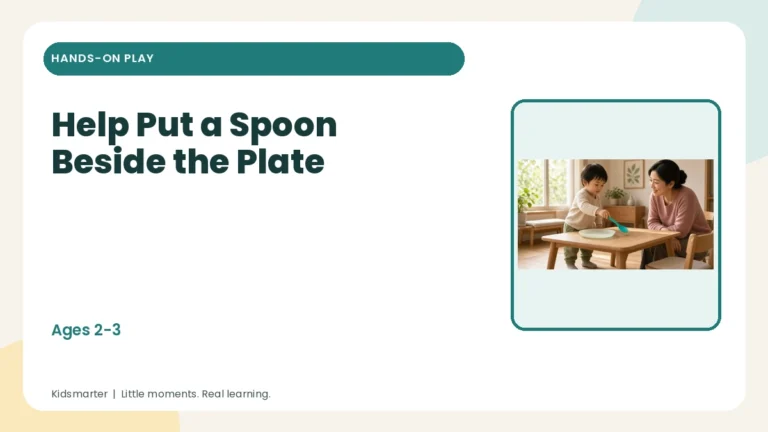
Walk around the table together and name who will sit at each place. Say, "This space is yours. This one is mine. This one is for Grandpa." Put down one plate as a model. Point to the remaining spaces rather than asking your toddler to remember every name. Visible places provide a concrete guide for the job even when the people are not seated yet.
-
Hand over two more plates one at a time. Ask, "Can each person have one plate?" Let your child choose the order of delivery. If two land together, bring attention to the empty place: "Grandpa's space is waiting. Where could this extra plate go?" Allow the child to move it, and avoid rearranging everything silently while they watch.
-
Offer exactly one full-size napkin for each prepared place. Demonstrate separating one from the stack, then let your child choose a waiting plate. Point to the plate and its napkin as a pair: “One here, and one for this place.” There is no need to count aloud. If two napkins land together, point out another place with none and let the child decide whether to move one.
-
Look at the places together. If the child is still interested, offer one extra napkin and ask, “Does anyone still need one?” Walk through the places rather than expecting the toddler to remember them. If each already has one, put the spare aside together. If the child is finished, skip the extra-item question and continue with the meal; it is an optional comparison, not a trick or a completion requirement.
-
When people sit down, connect the setup to its purpose: "You gave each of us a napkin. We can all reach one." Invite the child to check again if an unexpected visitor joins or a place is removed. After the meal, reverse the routine by matching one cup to each plate on a clearing tray, while an adult carries the full tray away.
Why This Activity Helps
Here the child matches one napkin to each place. In counting, a related one-to-one task is matching one spoken number word to each object, counting each once. Doing the table pairing does not show that a child can count or name the total; an adult can model those words without expecting them back. The useful, visible check is whether a place has none, one, or an extra item.
Easy Ways to Adapt by Age
Make It Easier: Set only two places and use one kind of object, such as napkins beside plates that are already positioned. Stand beside the child and point to each empty spot. If a full table feels too large, create a pretend picnic for two large toys on the floor, with broad paper circles marking where each plate belongs.
Add a Challenge: Ask an older preschooler to collect enough napkins before approaching the table. Let them check their estimate by distributing them. Add one guest and ask, "What else do we need now?" Later, compare the number of plates and cups without counting by placing each cup beside a plate and looking for an unmatched object.
Parent Tip & Safety Note
Use cool, intact, lightweight items; adults handle hot food, knives, glass, full trays, and heavy stacks. Keep small decorations and napkin rings away rather than relying on close supervision of them. Do not let the child stand on a chair or pull a cloth to reach the table. If napkins are torn or mouthed, the adult places them while the child points to a waiting place. One contribution is enough; serving the meal never depends on completing the whole table.
NAEYC explains one-to-one counting and naming a total in preschool examples. Those examples are not an expectation that every two-year-old should count the table.