Living-Room Treasure Hunt: Left and Right
A treasure hunt can make position words useful instead of abstract.
A treasure hunt can make position words useful instead of abstract.
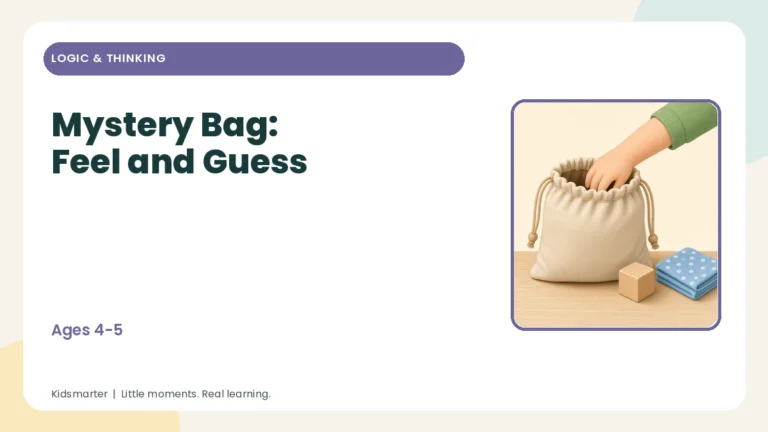
A familiar object can offer clues through touch as well as sight. Start with a known block and washcloth, then hide one in a plain open cloth bag. Your child can describe an edge or surface, look whenever they want, and reveal it to check. The invitation is to compare clues, not to tolerate an unpleasant sensation or keep eyes closed.
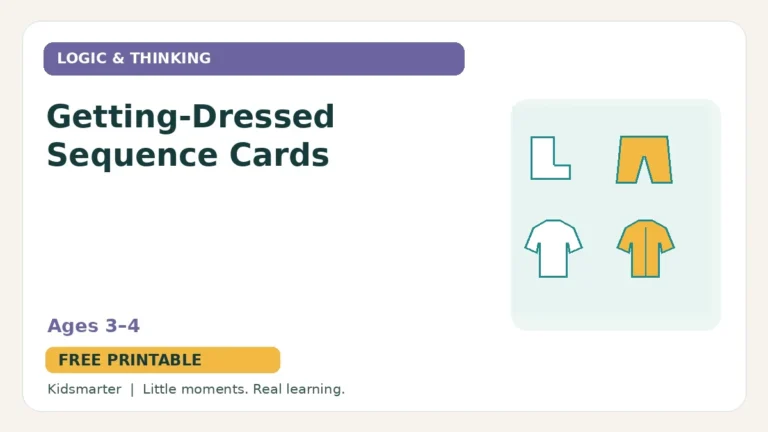
Getting dressed is a sequence, but not every clothing choice has one compulsory order.
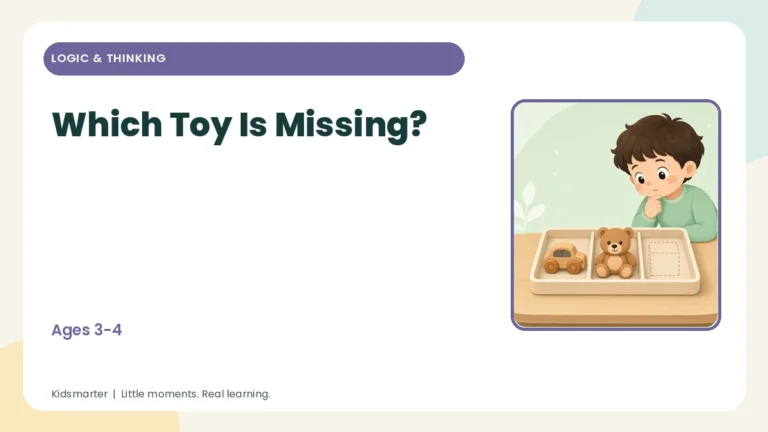
Something has disappeared from the tray, but which thing? A tiny missing-toy game invites close looking and a simple retrieval strategy.
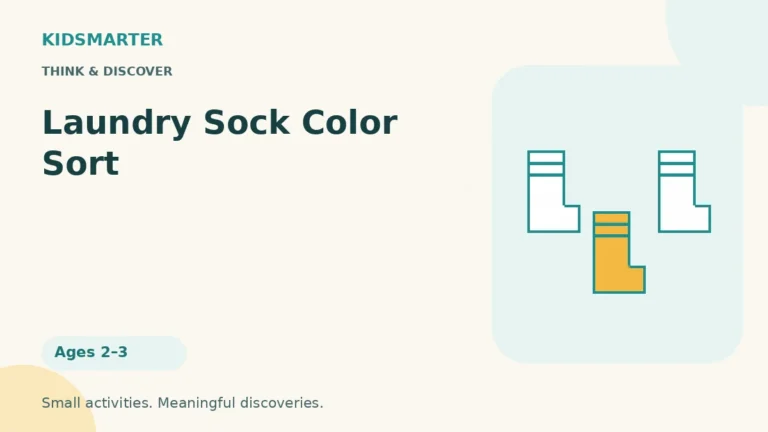
A clean laundry basket contains a sorting game that does not need special supplies.
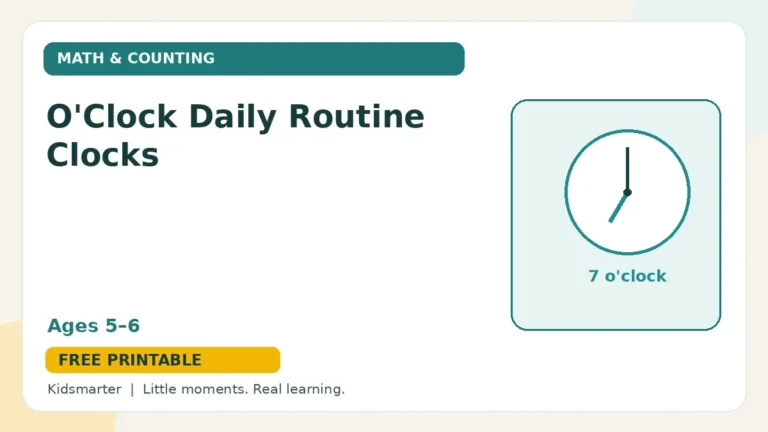
Read the printed o’clock faces and match them to examples from your day. Use whole-page pictures or draw another hour without fasteners or a real clock.
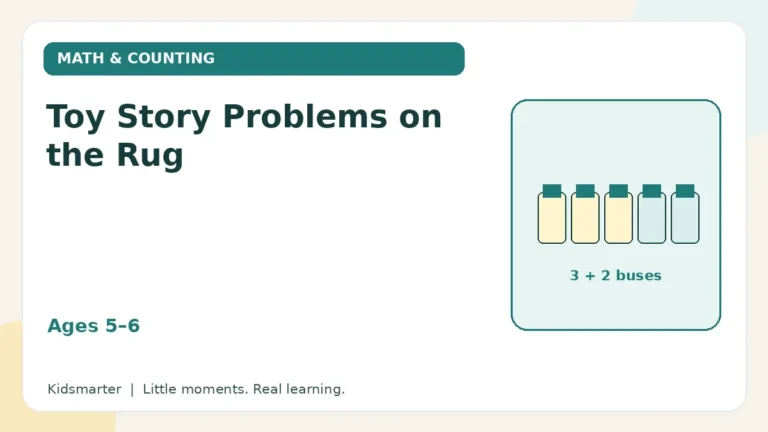
Word problems become something children can act out with toys, so adding and taking away stay visual and understandable.
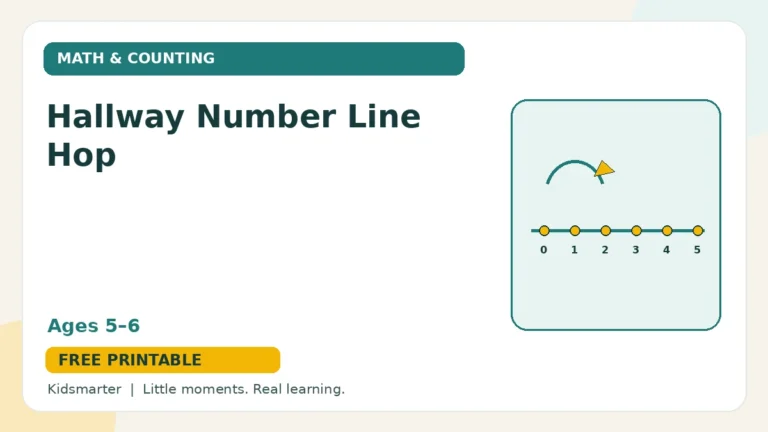
Start on four and point three intervals to the right to reach seven. Use the tabletop line first, with optional number displays beside a clear walking route.
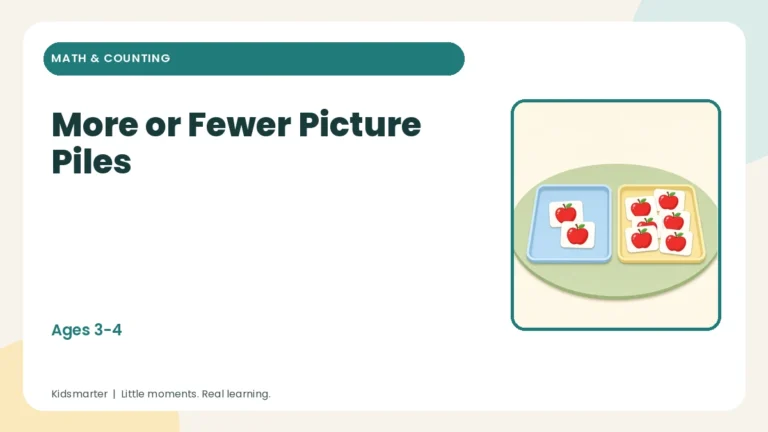
Two little picture piles can invite a surprisingly rich question: which has more? Use quantities small enough to inspect, then move the pieces around to see whether appearance tells the whole story.
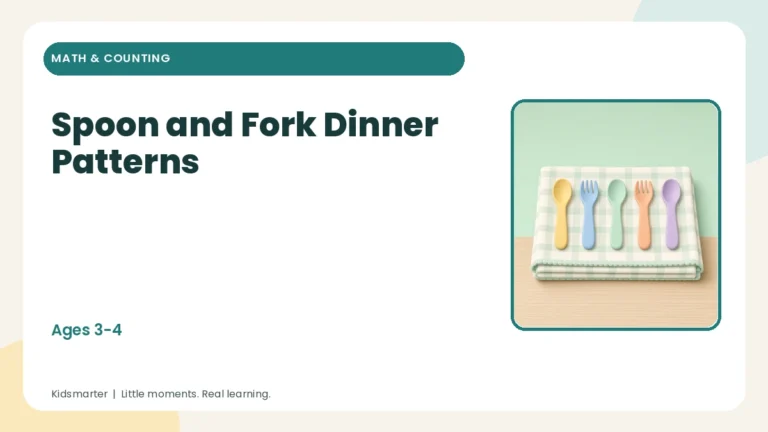
Setting the table can become a pattern workshop before dinner is ready.