Echo My Clap Pattern
Quick Activity Snapshot
- Age Range
- Ages 2–3
- Prep Time
- 1 minute
- Skills Practiced
- Listening and copying a short clap pattern
- Materials
- Your hands, and a clear space to sit together
Age ranges are suggestions, not developmental milestones or standards. Choose the setup for this child, and stop whenever needed.
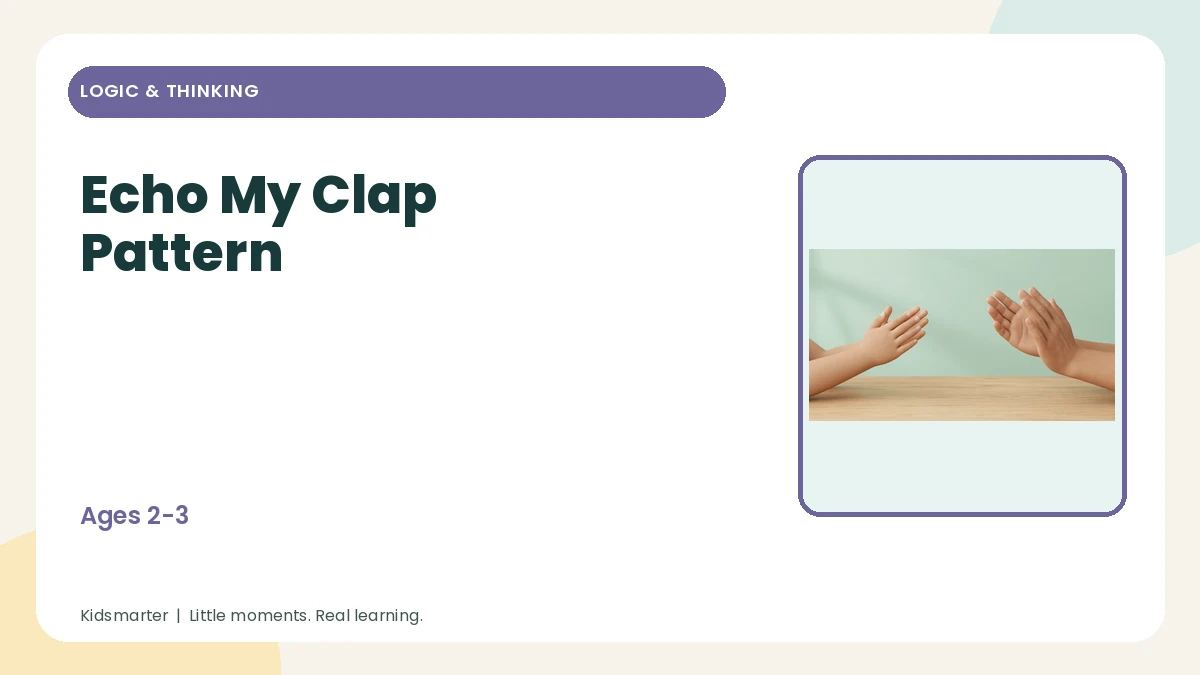
A short clap can become a pattern to copy: you clap, then your child claps back the same way. One clap, two claps, or a clap-clap pause is enough. This is a listening game, not a music lesson and not a test of memory.
Materials You’ll Need
- Two sets of hands—yours and your child’s
- A clear table, rug, or couch where you can sit facing each other
No instruments, sticks, or extra objects are needed. If clapping is too loud for your household, you can pat your knees or tap the table gently instead. Keep the volume comfortable, and stop if anyone’s hands are sore or the game feels like a startle.
Step-by-Step How to Play
-
Sit facing your child so they can see your hands. Say, “I will clap a little pattern. Then you can clap it back.” Smile, and keep the first round very short.
-
Clap once, slowly, and wait. Invite your child to clap once too. If they clap more than once, or only watch, you can copy what they did and try a single clap again, or you can stop.
-
If they still want a turn, try two slow claps, or clap-clap and a pause. Wait long enough for them to start. You do not need to count the claps out loud unless they like the counting.
-
Take two or three turns, then stop while it is still fun. There is no score and no required number of patterns. You can always play again later in the day.
Small Details That Make This Activity Work
Keep the patterns shorter than you think you need, and wait without rushing to correct a mismatch. If your child invents a new pattern, you can echo theirs and call it their turn to lead. Avoid turning the game into “Get it right.” This is not Kitchen Word Clap, which counts the beats in a spoken word, and not a visual pattern strip: the job is to listen to a short clap and try it back.
Why This Activity Helps
Copying a short sound pattern is one everyday way to practice listening and taking turns. NAEYC’s family math-talk guidance includes patterns in daily life and offers examples such as clapping to the beat of a song. That page is about math talk and pattern language, not a test of this echo-clap game, and it does not treat the game as a memory assessment. Finishing a few turns is not evidence of later music or school skill. Children may enjoy clapping together without copying the pattern exactly.
Easy Ways to Adapt by Age
Make It Simpler
Use only a single clap, and clap at the same time rather than in a copy-after-me turn. You can also pat the table once and wait for any answering pat.
Ready for a Challenge
Try a three-clap pattern, or let your child be the leader while you copy. Some children like a clap plus a pause plus a clap. Stop if the longer pattern makes the game feel like a test, or if the clapping gets hard or too loud.
Parent Tip & Safety Note
Sit close enough to watch each other’s hands, but do not clap against your child’s hands unless they clearly want a gentle high-five version. Keep the sound comfortable for everyone in the room, including babies who might startle. You do not need to clap near a child’s ears or face. Stop if hands are tired, if someone is frustrated, or if your child would rather just clap freely.
Explore more activities in this category or free printable games.
For everyday language about patterns, including clapping to a song’s beat, see NAEYC’s Math Talk With Infants and Toddlers. That page offers family conversation examples; it does not evaluate this echo-clap game, and it is not a test of listening or memory.