Paint the Table With Water
Quick Activity Snapshot
- Age Range
- Ages 2–3
- Prep Time
- 3 minutes
- Skills Practiced
- Brushing, noticing wet marks, and process play
- Materials
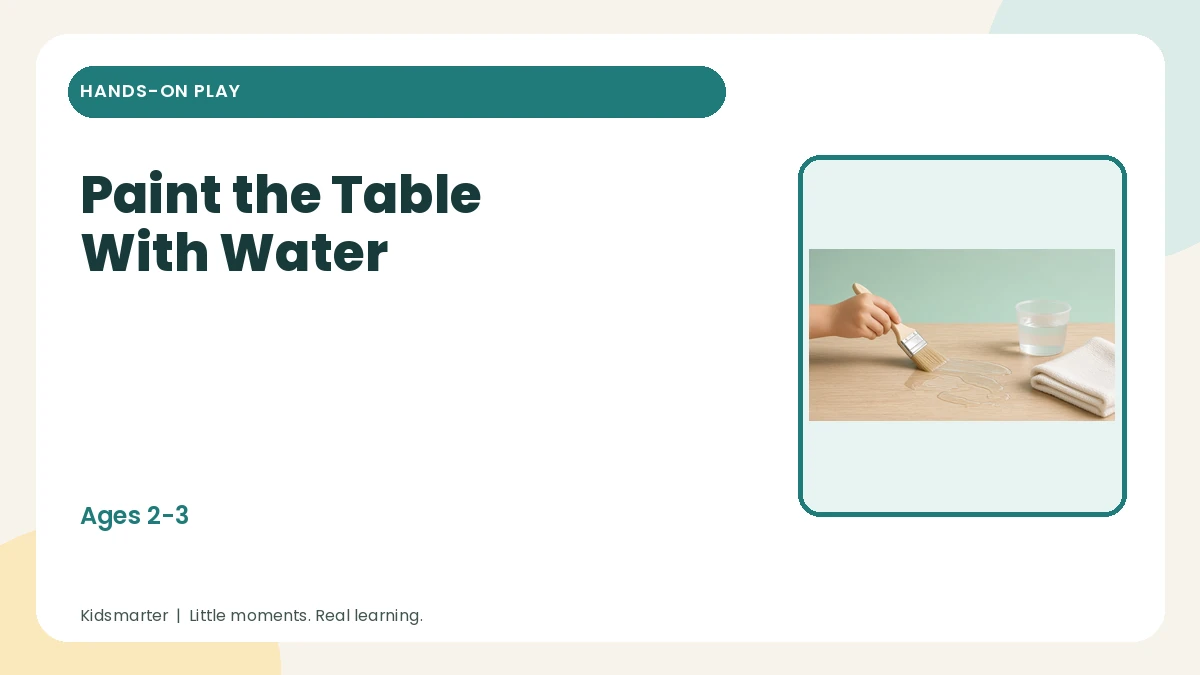
- A small cup of water, a wide brush, and a table you can wipe
Age ranges are suggestions, not developmental milestones or standards. Choose the setup for this child, and stop whenever needed.
A wet brush can leave shiny marks on a table, and then the marks fade as they dry. There is no sample to copy and no picture that has to last. The job is to brush, look, and notice the water, then wipe the table when you are done.
Materials You’ll Need
- A small, sturdy, unbreakable cup with a little room-temperature water
- A wide, clean paintbrush or a clean pastry brush, used only for this water play
- A table or a large tray you can wipe, and a cloth for spills
Use only water—no paint, soap, or oil. Keep the cup only partly full so it is less likely to tip. An adult sets the cup down and stays. The child does not need scissors, and you do not need a finished model of what the marks should look like.
Step-by-Step How to Play
-
Put the cloth and the cup on the table. Dip the brush, wipe extra water on the inside edge of the cup, and make one slow mark on the table. Say, “The brush leaves a wet mark. We can watch it.”
-
Invite your child to dip and brush. Swirls, dots, and long lines all count. Stay nearby, but do not take over or require a recognizable picture.
-
If they want, look together as a mark begins to dry and fade. You may say wet, shiny, or dry if they are interested. There is no sample to match.
-
When they are finished, wipe the table, empty the cup into the sink, and wash the brush. One short session is enough. There is no required number of marks.
Small Details That Make This Activity Work
A little water on the brush goes further than a dripping load, and it is easier to wipe. If the table is very light, the marks still show when they are wet and shiny. Avoid turning the play into “Paint a flower like this model.” This is not a crayon-dot picture, not a texture rubbing, and not a water-pouring station: the interesting part is the disappearing wet mark.
Why This Activity Helps
Open-ended play with a simple material gives a child time to explore without a finished product to copy. NAEYC’s family guidance on creativity and its article on process-focused art experiences distinguish this kind of exploration from product art, in which a child is asked to copy a sample. Those pages describe general support for process art; they do not evaluate water-brush table marks as a program, and a few wet marks are not evidence of later writing or art skill. Children may enjoy the brushing without talking about wet and dry.
Easy Ways to Adapt by Age
Make It Simpler
Use a sponge or a clean cloth instead of a brush, and make marks together, hand over hand if your child likes that. Keep the cup out of reach between dips if tipping is likely, and dip the tool for them.
Ready for a Challenge
Offer a second, darker tray or a chalkboard, where the water marks show more clearly, and talk about which marks dry first. Some children like to “paint” a large letter or a circle and then watch it fade. Keep any letter optional, and do not turn the table into a handwriting lesson.
Parent Tip & Safety Note
Stay at the table for the whole activity. Use a small amount of room-temperature water in an unbreakable cup, and wipe spills so no one slips. When you are finished, empty the cup right away and put it out of reach; do not leave standing water out. The American Academy of Pediatrics warns that young children can drown in small amounts of water and that containers should be emptied after use. Those pages are about drowning prevention in baths, buckets, pools, and other standing water, not about art. This table activity still needs an adult who stays. Keep the brush out of eyes and mouths, and do not let a younger sibling drink from the brush cup. Stop if your child is finished, wants to pour instead, or is done with the wet table.
Explore more activities in this category or free printable games.
For the difference between open-ended process art and copying a finished sample, see NAEYC’s Supporting the Development of Creativity and Process Art Experiences. Those pages offer general guidance; they do not test this water-brush activity. For emptying containers and staying with young children around water, see HealthyChildren.org’s 5 Water Safety Tips for Kids of All Ages and Infant Water Safety. Those pages are about drowning prevention, not about teaching art.