Which Cup Holds More?
Quick Activity Snapshot
- Age Range
- Ages 3–4
- Prep Time
- 5 minutes
- Skills Practiced
- Comparing how much a cup can hold
- Materials
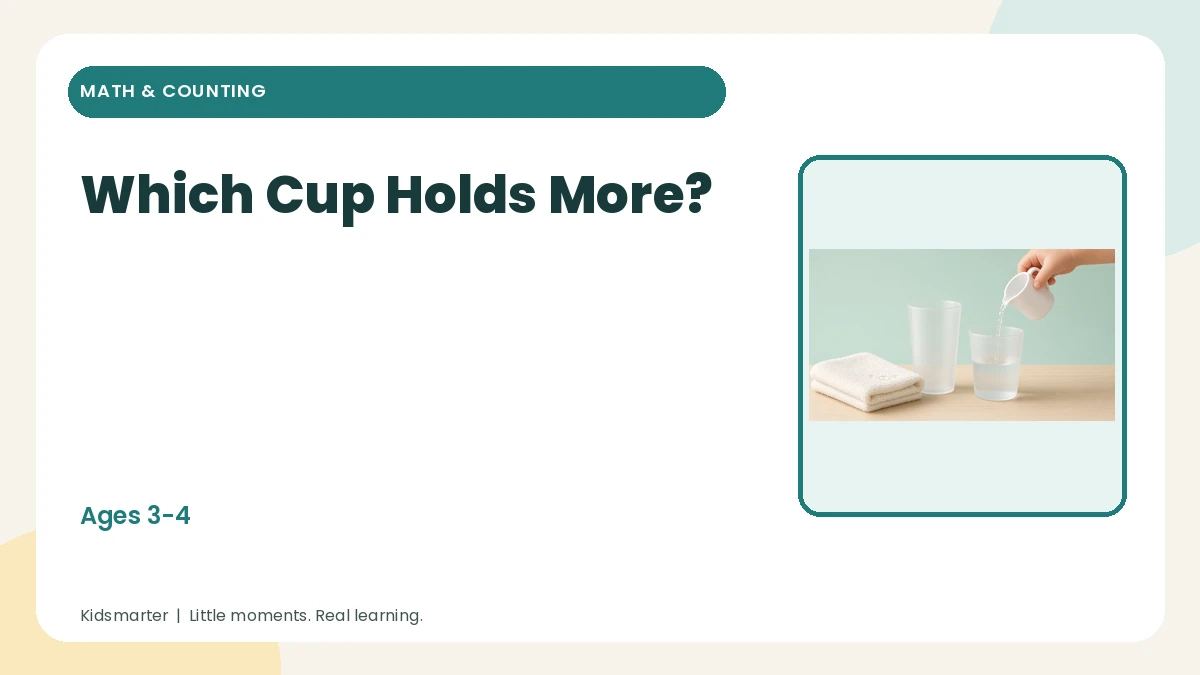
- Two unbreakable cups of different shapes, a small pitcher of water, and a towel
Age ranges are suggestions, not developmental milestones or standards. Choose the setup for this child, and stop whenever needed.
Two cups that look different can hide a surprise: the short wide one may hold more than the tall thin one, or the other way around. You and your child pour a little water and find out. This is everyday talk about how much a container can hold, not a formal lesson in volume.
Materials You’ll Need
- Two sturdy, unbreakable cups of clearly different shapes, such as a tall thin plastic cup and a short wide plastic cup
- A small unbreakable pitcher or a third cup for pouring a little room-temperature water
- A tray or a folded towel to catch spills
Use plastic or other unbreakable cups, not glass. Keep the amount of water small—enough to pour and compare, not enough to fill a basin. An adult sets up the towel and pours the first bit if the pitcher is heavy. Do not use hot water, food coloring that might stain, or a sink full of standing water for this version.
Step-by-Step How to Play
-
Set the two cups side by side on the towel. Say, “These cups look different. We can try to find out which one holds more.” Let your child look at them and touch the outsides.
-
You may ask, “Which one do you think holds more?” A point, a word, or “I don’t know” all count. Then pour water into one cup until it is reasonably full, but not overflowing.
-
Pour from that cup into the second cup. Watch together: does all the water fit, or is there leftover, or does the second cup still have room? Name what you see: “It all fit, and there is still space. This one holds more,” or “It spilled over. This one holds less.”
-
Try once more in the other direction if your child is still interested, or stop. A surprising result is useful, not a failing. When you are finished, empty both cups into the sink and dry the table together.
Small Details That Make This Activity Work
Stay beside the cups the whole time, and keep the pour slow. The interesting part is the comparison, not filling the cups to the brim on the first try. If your child wants only to pour back and forth, you can stay with the pouring and talk about full, empty, or more, or you can stop. This is not a heavier-or-lighter game, not a water-pour race, and not a fair-share plate game: the question is how much each cup can hold.
Why This Activity Helps
Everyday pouring can make comparison words about amount visible. NAEYC’s family math-talk guidance includes measurement ideas such as size, quantity, and volume, and it encourages math talk in daily life rather than a rapid quiz. A NAEYC article on kindergarten assessment also lists sample thinking questions, including “Which holds more: the tall, thin jar or the short, fat one?” Those pages offer language and questions; they do not evaluate this two-cup home routine, and finishing a pour is not evidence of school readiness. Children may enjoy the water without being able to explain why one cup holds more.
Easy Ways to Adapt by Age
Make It Simpler
Do the pouring yourself, and use only the words full, empty, and more as you point. You can fill the tall cup and pour it into the wide one just once, then stop.
Ready for a Challenge
After one comparison, add a third unbreakable cup and see how it compares with the winner. Some children like to predict first and then check. Keep the water amount small, and stop if the extra cup turns the game into a messier pour than you can stay with.
Parent Tip & Safety Note
Stay at the table for the whole activity. Use unbreakable cups, a small amount of room-temperature water, and a towel for spills. Wipe the floor if water drips, so no one slips. When you are finished, empty the cups and the pitcher right away; do not leave standing water out. The American Academy of Pediatrics warns that young children can drown in small amounts of water and that containers should be emptied after use. Those pages are about drowning prevention in baths, buckets, pools, and other standing water, not about teaching math. This table activity still needs an adult who stays, and the water should be emptied when you stop. Do not leave a young child alone with the cups, even briefly.
Explore more activities in this category or free printable games.
For everyday language about measurement, including volume, see NAEYC’s Math Talk With Infants and Toddlers. For a sample thinking question about which container holds more, see NAEYC’s Assessment in Kindergarten, which lists questions adapted from a state early-years guide; it does not test this two-cup game. For emptying containers and staying with young children around water, see HealthyChildren.org’s 5 Water Safety Tips for Kids of All Ages and Infant Water Safety. Those pages are about drowning prevention; they are not math instructions.