A Caption for Our Photo
Quick Activity Snapshot
- Age Range
- Ages 3–4
- Prep Time
- 5 minutes
- Skills Practiced
- Dictated captions and purposeful print
- Materials
- One printed photo or a simple drawing, a paper strip, and a marker
Age ranges are suggestions, not developmental milestones or standards. Choose the setup for this child, and stop whenever needed.
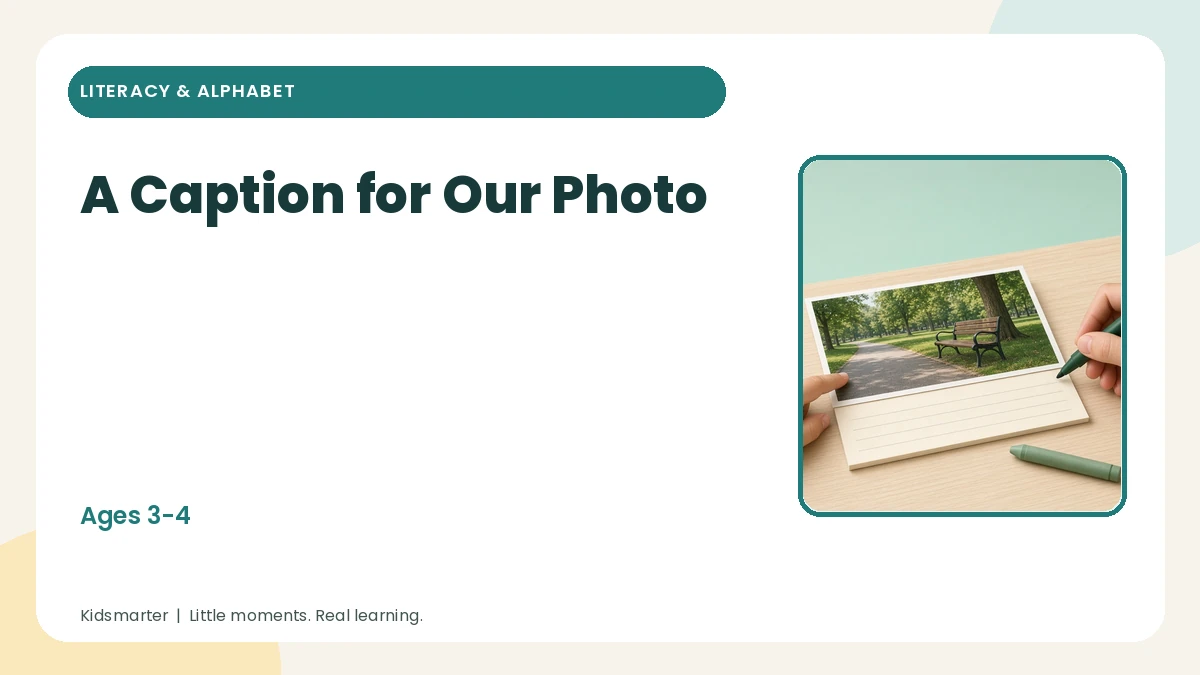
A photo can give writing a real job. Your child tells you what is happening in the picture, you write a short caption in their words, and then you reread it together, pointing under the words. The marks do not need to look like adult letters. One short caption is enough.
Materials You’ll Need
- One printed family photo already in the house, or a simple drawing of something that just happened if you do not have a print
- A strip of paper, or the margin under the photo, for the caption
- A washable marker or a thick crayon
- Optional: tape or a glue stick to attach the caption to the photo
Use a loose paper print or a drawing, not a glass frame. If you have no printer, a quick sketch of the park, the kitchen, or a walk you just took works just as well. You do not need a special caption template. Keep the activity at the table; there is no need to share the photo online.
Step-by-Step How to Play
-
Sit so both of you can see the picture. Show the paper and say, “We can write a caption for this photo.” Let your child look first. There is no required sentence and no correct story.
-
Invite your child to tell you what they notice or remember. A single word, a pointing gesture, or a short phrase all count. If they only point or shrug, you may offer one sentence they can accept or change: “Should I write, We went to the park?” Do not invent a longer story they did not agree to.
-
Write their words slowly in clear letters, saying each word as it appears on the page. The child does not have to form adult letters. If they want to add their own marks, a scribble signature, or a letter they already like, leave space for that.
-
Reread the caption, pointing under each word as you say it. Invite your child to point with you if they wish. Keep the pointing friendly; it is practice with print, not a test of word reading.
-
If you like, tape the caption to the photo and place it where you may see it later in the day. One picture is enough. When they are finished, put the marker away together. There is no required number of captions.
Small Details That Make This Activity Work
Choose a picture the child actually remembers or can see clearly, so the words have a job. Write in front of them, not later in another room. If they want to hold the marker, they can make marks of their own; you can still be the one who writes the agreed words. Avoid turning the rereading into a quiz (“What does this say?”) until they have heard you read it. This is not a mailbox game and not a book-cover walk: the print belongs to this one picture.
Why This Activity Helps
When an adult writes a child’s words and rereads them, the child can see that print can stand for something they just said about a real picture. Reading Rockets’ guidance on supporting very young writers describes dictation and early mark-making as helpful adult support, and NAEYC’s article on emergent writing discusses how preschoolers use drawing, scribbles, and dictation as they learn about writing. Those sources describe general support, not a test of this caption routine. Completing one caption is not evidence of later reading or writing achievement, and children may enjoy the talking and pointing without being able to read the words back alone.
Easy Ways to Adapt by Age
Make It Simpler
Use a drawing you make together in the moment, and write only one or two words the child chose, such as park or dog. You can point to the picture and to the word without asking them to retell a story.
Ready for a Challenge
After you write the caption, invite your child to help you reread it by pointing under the words as you say them. Some children like to add a second sentence, or to choose a second photo later in the day. Keep the addition short, and stop if the job starts to feel like homework.
Parent Tip & Safety Note
Stay at the table. Use a paper print or a drawing rather than a glass frame. Cap markers when they are not in use, and keep tape away from mouths and hair. Do not ask your child to post the photo online, and do not leave small loose parts from a broken frame within reach. If a younger sibling is nearby, keep the marker and any tape out of their mouth. Stop if your child is finished, wants only to talk about the picture, or would rather draw than have words written down.
Explore more activities in this category or free printable games.
For guidance on dictation and early mark-making, see Reading Rockets’ Supporting Very Young Writers and NAEYC’s Promoting Preschoolers’ Emergent Writing. Those sources describe helpful adult support and the idea that print can represent a child’s own words; they do not evaluate this photo-caption activity, and they do not promise later reading or writing achievement.