Same and Different Photo Pairs
Quick Activity Snapshot
- Age Range: Ages 2–3
- Prep Time: 8 minutes
- Skills: Visual comparison
- Materials: The whole two-page comparison printable, or two saved object photos, Optional whole crayon, managed by an adult when needed
Age ranges are suggestions, not developmental milestones or standards. Choose the setup for this child, and stop whenever needed.
Two cups can look nearly identical until someone notices that one handle points the other way. This activity makes careful looking a shared conversation. Begin with familiar objects or your own photographs, then ask about one similarity and one difference at a time. The included printable offers clear line-drawn comparison pairs as a low-ink alternative to photos. There is no timer and no hidden demand to find every detail before moving on to the next picture.
Materials You’ll Need
- The whole two-page comparison printable, or two saved object photos
- Optional whole crayon, managed by an adult when needed
Use the whole first printable page for the child and keep its second-page conversation guide for yourself. The cups both have two stripe lines, but their handles face opposite ways. The houses differ by window count; the socks differ by stripe-line count. No cutting is needed. If using photos instead, choose already saved pictures of objects without names or identifying details, keep them local, and hold the device yourself.
Step-by-Step How to Play
-
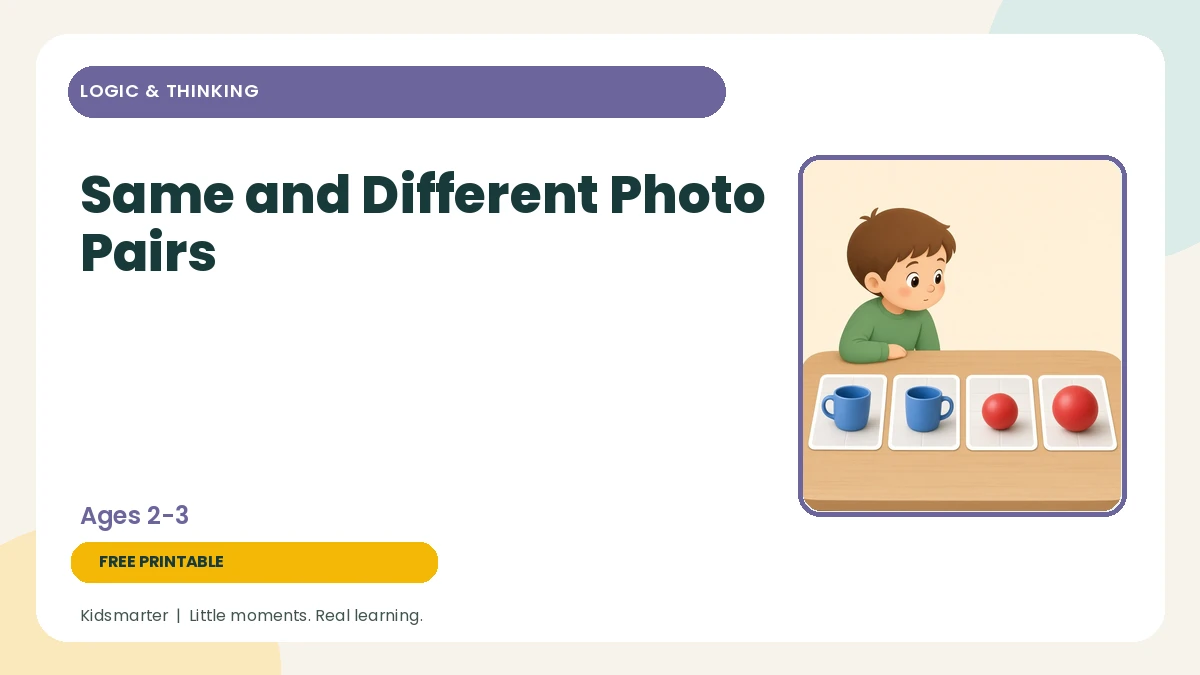
Start with the printed cups. Name them together, then ask, “What matches?” Both are cups with a handle and two stripe lines. Point to the same feature on each drawing before looking for a difference. If using your own photographs, first check which details truly match rather than borrowing the worksheet’s answers.
-
Direct attention to a small area without giving away everything: "Let's look near the handles." Trace each handle in the air and ask, "Do they point the same way?" If the child notices color instead, acknowledge that valid observation before returning to the handles. A specific visual cue is more helpful than repeatedly asking the broad question, "What is different?"
-
Point or draw a broad circle around the handles: one is on the right of its cup and one on the left. For a counting comparison, move to the houses: two windows on the left house and one on the right. The sock pair has two inner horizontal stripe lines on the left and one on the right; do not count the top outline as a stripe.
-
Change to a new pair and switch roles. Invite your child to show you something that matches, then something that changes. Pretend to miss a visible detail once and let them guide your attention: "Should I look at the top or the bottom?" The child can point rather than give directions verbally. Keep both pictures upright and close together to reduce unnecessary memory demands.
-
Return to real objects for a final comparison, such as two clean socks from the same drawer. Ask, "What would you tell someone who could not see these?" Dictate one sentence together, or simply name a shared feature and a difference. Store the cards in a large envelope. A later round with the same pair can reveal a new observation without needing a fresh worksheet every time.
Why This Activity Helps
You and your child are selecting a feature and looking for its counterpart in the other picture. Words such as handle, window, left, right, one, and two let you describe what you see. Choose familiar pictures and model their names so the conversation is about a visible comparison rather than guessing vocabulary. A point to one shared detail is enough to start.
Easy Ways to Adapt by Age
Make It Easier: Use two real cups, one with a handle and one without, and remove every other object from the table. Ask about one named feature: "Where is the handle?" Let the child explore by touch if appropriate. A single comparison is sufficient; skip circling or cutting cards when those extra actions distract from noticing the objects.
Add a Challenge: Choose pictures that differ in two or three features and ask an older preschooler to describe a difference without pointing. Let the listener identify it from the words alone. Invite the child to draw a changed version of a simple house, keeping some parts identical. Compare their intended changes with what another person notices first.
Free Printable Included
Print this activity-specific pack on Letter paper. An adult prepares any cut pieces; use the activity directions above.
Parent Tip & Safety Note
Leave the printable whole for this toddler version. An adult handles any optional cutting away from the child and clears scraps. Use intact unbreakable objects if comparing real things. Keep photos local and remove identifying details from anything shared. Enlarge a picture or stop when looking is tiring; this is a conversation, not an eyesight check.