First-Sound Shopping List
Quick Activity Snapshot
- Age Range: Ages 4–5
- Prep Time: 5 minutes
- Skills: Beginning sounds and early writing
- Materials: Paper, A thick crayon, Printed food pictures or adult drawings, An open tray
Age ranges are suggestions, not developmental milestones or standards. Choose the setup for this child, and stop whenever needed.
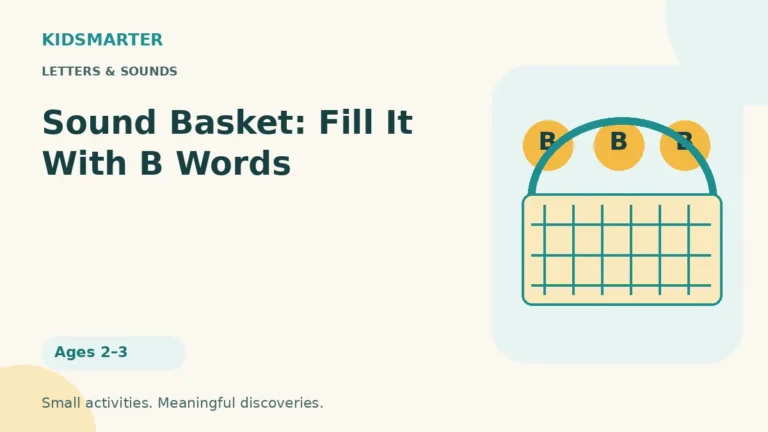
A first-sound shopping list gives early writing a job: remembering which foods to find in a pretend store. The goal is not a perfectly spelled grocery list. Pictures, adult-written labels, and a child's first marks can work together on the same page. Choose a familiar sound such as /b/ and plan just three purchases. When the list leads to a successful shopping trip across the kitchen, those marks have served a real purpose.
Materials You’ll Need
- Paper
- A pencil or crayon
- The printable food pictures or adult-drawn food pictures
- An open tray without handles or cords
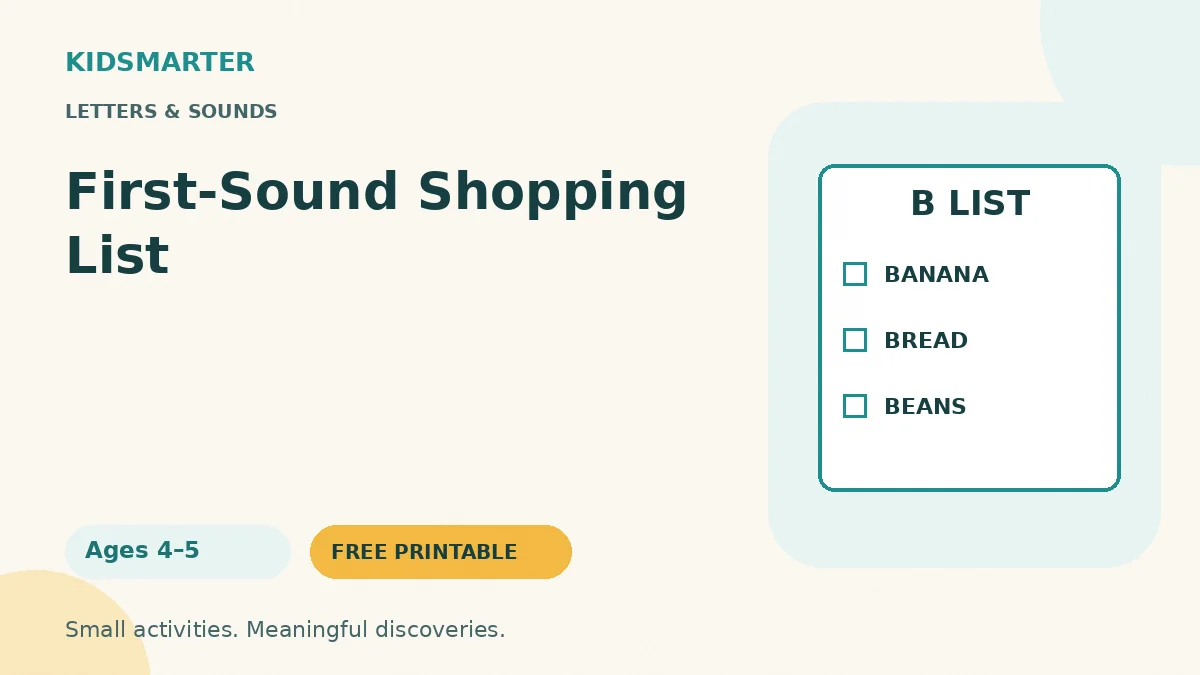
Use the two-page printable, a thick crayon, and an open tray. Page 1 has three draw-and-write rows with checkboxes; page 2 has banana, bread, and beans pictures for optional adult cutting. You can leave page 2 whole and point to its pictures instead. For the shop, draw three matching food pictures on one sheet placed on a low surface. No real beans, tins, glass containers, plastic bags, or handled shopping bags are needed.
Step-by-Step How to Play
-
Introduce a tiny shopping problem: “We want three foods that begin like ball. What could be on our list?” Say a short /b/, without adding “uh,” and point to the banana picture. Name it together. If the child calls the beans picture a tin, agree that you will use the food name beans for this round; otherwise you would be listening to a different first sound. An apple can go on another list, but its first sound is different from /b/.
-
Explore two more possible items, bread and beans. Say each word naturally and let the child listen before you point to the B cue. Explain, "We can write B to remind us of that starting sound." Write one large B in the first row as a model. Do not ask your child to copy a whole word before they have a reason to record anything.
-
Let the child draw one food in each left-hand box on page 1; an adult can attach the optional cut pictures instead. Use the right-hand area for the child’s marks or a first letter. Ask, “What mark would remind you of bread?” A drawing, a B, or a squiggle with an intended meaning can be used. If your child asks for the whole word, write it beside rather than over their marks. The checkbox is for the later shopping check, not a score for neat writing.
-
Point out the three food drawings on your pretend-shop sheet. With the list beside it, ask your child to find one drawing and check the matching row. An adult may draw a check where the child points. If your child can manage cut picture cards without mouthing, you may move those cards onto the open tray instead. Keep the non-cut version when younger children share the surface. There is no need to carry real food or packaging around.
-
Compare the three checked rows with the pretend-shop pictures. Cover the bread drawing with your hand and say, “We found banana and beans. Which thing on the list are we still looking for?” Uncover bread and let the child check the last row. Accept pointing to their own drawing as using a list; it need not look like adult writing. Save the same page for another pretend trip rather than adding a longer list immediately.
Why This Activity Helps
Children learn that writing can communicate and help memory when marks are used for meaningful tasks. Attending to a food's first sound adds a manageable listening component without requiring full spelling. Drawing, dictation, and letter-like marks are useful ways to participate at different stages. This activity does not test reading readiness; its value lies in linking spoken words, pictures, intentional marks, and a real action.
Easy Ways to Adapt by Age
Make It Easier: Choose two foods, provide their pictures already attached, and ask the child to add a check when each goes into the bag. You can write the starting letter while naming its sound. For a child who tires while holding a pencil, let them dictate the entire list and point to each row during the shopping trip.
Add a Challenge: Ask a comfortable older preschooler to suggest an additional /b/ food, then write any sounds they can hear in its name. Accept plausible invented spelling without covering it in corrections. Make a mixed list of B and M foods and circle only the B entries afterward. The shopping task should remain understandable even when writing becomes more ambitious.
Free Printable Included
Print this activity-specific pack on Letter paper. An adult prepares any cut pieces; use the activity directions above.
Parent Tip & Safety Note
Keep this a pretend picture shop, not an eating task. Use an open tray or simply point to an intact sheet; omit plastic bags, cords, handled bags, cans, glass, and loose food counters. An adult does any cutting and keeps scissors and glue caps out of reach. When pieces are mouthed or younger siblings join, do not offer cut cards at all. In a real store, staying together takes priority over a sound game.
The sound-listening examples are consistent with Reading Rockets’ beginning-sound activities; NAEYC discusses writing for real purposes. This worksheet is an original adaptation, not an agency-tested program.