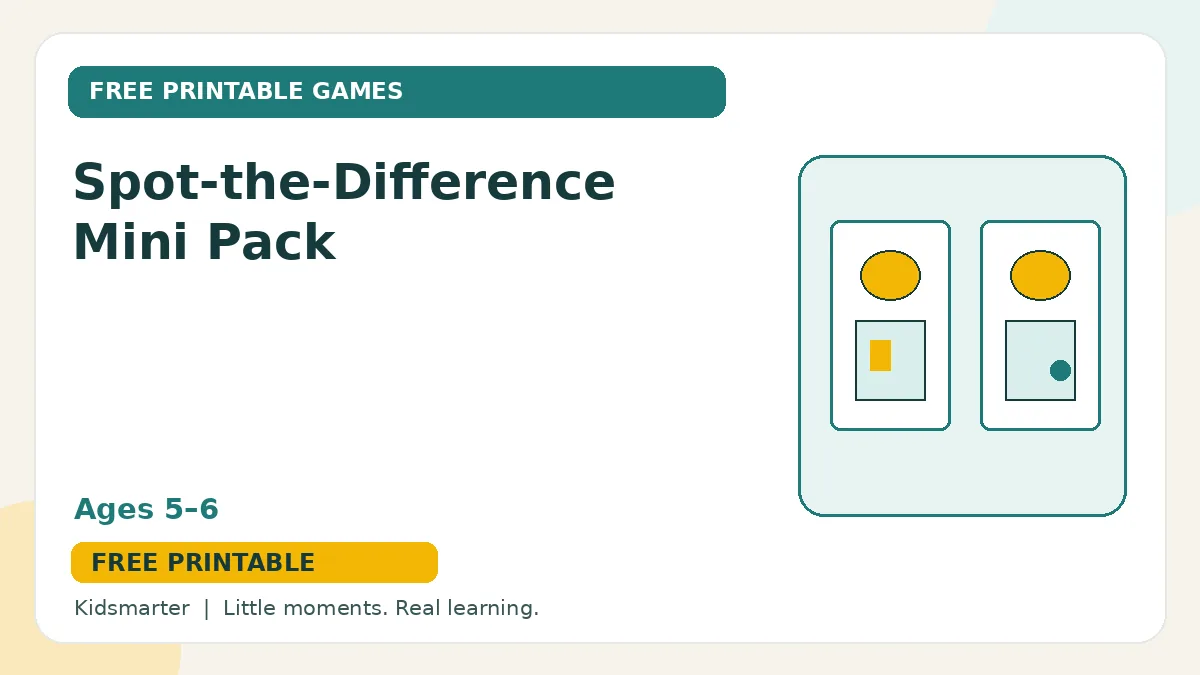
Spot-the-Difference Mini Pack
Quick Activity Snapshot
- Age Range
- Ages 5–6
- Prep Time
- 2 minutes to print
- Skills Practiced
- Visual discrimination
- Materials
- Printed pages, A pencil
Two pictures and five differences can make a quiet, shared search at the table. In this mini pack, your child looks back and forth, marks each difference, and can invite a parent to look at a second pair. The useful habit is careful comparison, not speed. You will print the pages, sit side by side, and agree to circle only the changes you both can find in both pictures, which keeps the search honest and calm.
Materials You’ll Need
- Printed pages
- A pencil
Print the spot-the-difference pages and provide a pencil. Place one pair of pictures flat on the table so both images are fully visible. A second pair can stay face down until the first search is finished.
Step-by-Step How to Play
-
Look at the first pair without marking. Say, ‘These pictures almost match. We will find five differences and circle them as we go.’ Invite your child to describe the scene in one sentence, such as a park path with a bench and a bird, so both of you are looking at the same picture.
-
Search from top to bottom or left to right. When your child finds a possible difference, check both pictures before circling. If a detail is actually the same, look again together and keep the search moving without a scolding tone.
-
Make a small tally for each confirmed difference. If you lose count, number the circles and see how many you have. A hard-to-find change can wait while you finish the more obvious ones, then return to the tricky area with a slower look.
-
When five differences are marked, use the parent key if you want to confirm them, holding it so it does not spoil a second player’s turn. Talk about one difference that was easy and one that was easy to miss, such as the extra cloud in the park scene or a changed number of flowers.
-
Offer the second page as a side-by-side search with a parent or sibling, still without racing unless your child asks for a playful timer. Finish by putting the pencils down and enjoying the pictures. Store the unused copy for another day if you printed extras.
Small Details That Make This Activity Work
Notice whether your child searches in a pattern or jumps around, and describe a pattern you used so it can be borrowed. Keep one completed page as a model of careful circling, and try the second scene another day rather than finishing both in a hurry.
Why This Activity Helps
Spotting differences practices visual discrimination: noticing what has changed while much of the picture stays the same. An orderly search and a tally help children keep track without depending on speed. Checking a discovery in both images before marking it is a careful way to confirm what actually changed. The activity can be social, but it does not require a winner.
Easy Ways to Adapt by Age
Make It Simpler
Start with the page that has larger, more obvious changes, and search only one region of the picture at a time. You can point to a difference while your child circles it. Three differences can be a complete first search.
Ready for a Challenge
Use the second page as a quiet race with a parent, then trade strategies instead of scores. A child may also cover one section with a paper window and search that area only, which is a useful way to look more systematically.
Parent Tip & Safety Note
Use a comfortable sitting position and take a blink break if eyes look tired. Keep the game short enough to stay kind. If two children share a page, give each a different colored pencil so their circles can both belong, rather than competing for the same mark.
The age range above is a suggested starting point for this setup, not a developmental milestone or a standard your child must meet. Look for the five differences listed in the parent key, and keep the search unhurried enough that both pictures can be checked.
Find another small invitation to play in Free Printable Games, or explore our free printable games. Choose one that fits your child’s interests, available materials, and energy today.