Name Puzzle From Paper Strips
Quick Activity Snapshot
- Age Range
- Ages 3–4
- Prep Time
- 8 minutes
- Skills Practiced
- Name recognition and letter order
- Materials
- Cardstock or a cereal box, A marker, Scissors (adult use only)
Age ranges are suggestions, not developmental milestones or standards. Choose the setup for this child, and stop whenever needed.
Few words matter to a preschooler as much as their own name. A handmade name puzzle gives that familiar word movable pieces, so your child can notice which letter begins it and what comes next. A short nickname works if the full name feels overwhelming.
Materials You’ll Need
- Cardstock or a cereal box
- A marker
- Scissors (adult use only)
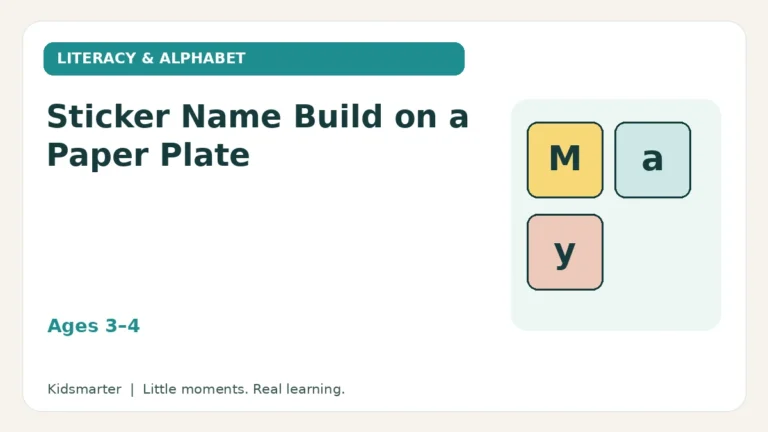
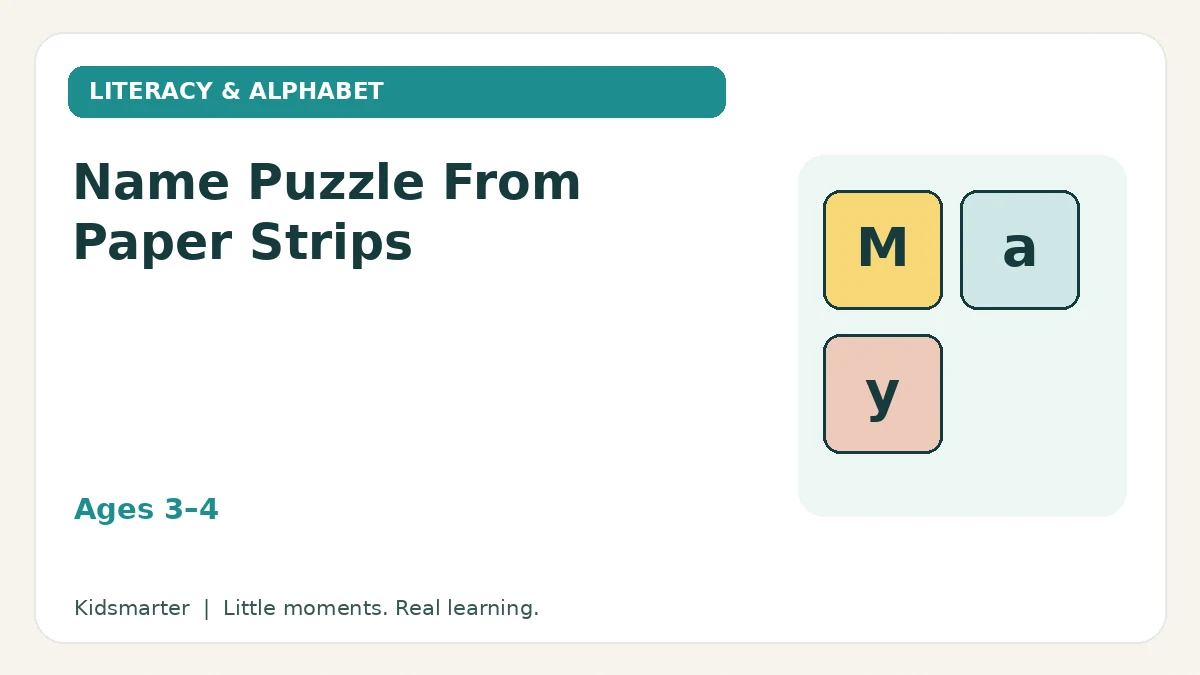
Write the name twice on matching strips of card, using a capital first letter followed by lowercase letters. Keep one strip whole. An adult cuts the second between letters, leaving generous space around each piece and keeping all edges smooth.
Step-by-Step How to Play
-
Show the complete name and read it while moving your finger left to right. Say, “This says Maya. Here is the M where your name begins.” Let your child touch that first letter.
-
Place the matching first piece directly below its model. Offer two remaining pieces rather than the entire pile. Ask, “Which piece has the same shape as this next letter?” Compare side by side.
-
Build the rest of the name underneath the whole strip. Notice repeated letters without treating them as mistakes: two identical a pieces can exchange places even though the written sequence stays the same.
-
Mix the pieces gently and invite a rebuild. Keep the model visible. Let your child check by pointing across both rows, matching one letter at a time rather than relying on your verdict.
-
Store the pieces and model in one envelope marked with the name. Offer to bring the puzzle out again tomorrow. Stop before pieces become missiles or your child begins guessing just to finish.
Small Details That Make This Activity Work
Choose letter spacing that leaves room for your child to grip a piece without covering the entire symbol. Distinctive piece shapes can make assembly easier, but they can also let a child solve the puzzle without looking at letters at all. Straight cuts keep the main attention on the print. If a piece is upside down, turn the whole strip together and compare the first letter with the model. Ask whether they look alike now rather than expecting your child to know the word upside-down. A completed name can be read repeatedly without expecting the child to sound it out.
Why This Activity Helps
A personal word gives letter attention a meaningful purpose. Matching the pieces supports shape recognition and noticing sequence, while the whole strip provides an external memory aid. Assembling a familiar name does not mean a child can read unfamiliar words.
Easy Ways to Adapt by Age
Make It Simpler
Leave all but the first two pieces in place and invite your child to fill the gaps. Use a familiar short name rather than shrinking tiny letters onto a crowded strip.
Ready for a Challenge
Remove the model for one voluntary attempt, then bring it back for checking. Another extension is comparing two family names to find a shared starting letter.
Parent Tip & Safety Note
Adults handle cutting, particularly thick cereal-box card; children do not cut. Give every letter an equal-width card so a narrow i does not become a tiny sliver. Use large pieces with children who still mouth paper, stay beside them, and gather every piece afterward. Keep spelling consistent with the name your family actually uses. For a shared photo, use a made-up example or photograph only two unidentifiable letter pieces, and keep the real-name puzzle for use at home.
Explore more activities in this category or free printable games.