Animal Memory Match Cards
Quick Activity Snapshot
- Age Range
- Ages 3–4
- Prep Time
- 5 minutes to print and cut
- Skills Practiced
- Visual memory
- Materials
- Printed card sheets, Scissors, Optional: scrap paper backing so pictures do not show through
Age ranges are suggestions, not developmental milestones or standards. Choose the setup for this child, and stop whenever needed.
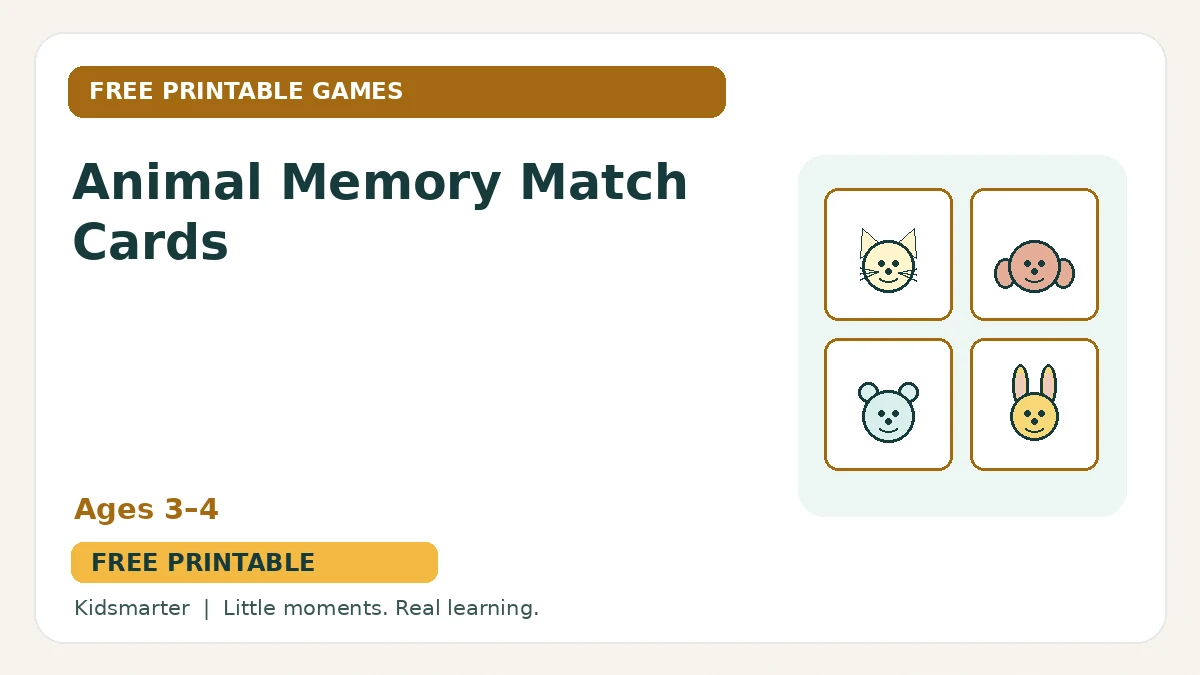
A small set of animal pictures can support matching before it ever becomes a memory game. These printable cards show four clear animal faces in identical pairs. Start with the pictures visible and add hiding only when your child understands what makes a pair.
Materials You’ll Need
- Printed card sheets
- Scissors
- Optional: scrap paper backing so pictures do not show through
Print the card page once at actual size. An adult cuts the eight cards along their borders. If the images show through, glue the sheet to opaque scrap card before cutting, using the same backing for every card.
Step-by-Step How to Play
-
Lay out one cat and its matching cat. Name the animal and compare ears, eyes, and whiskers. Say, “These pictures are the same,” then invite your child to find a matching dog in the remaining face-up cards.
-
Build all four pairs with the cards visible. Let your child use an animal noise or gesture instead of a spoken name. Confirm the visual match without requiring a particular English vocabulary response.
-
Select just two pairs for the first hidden round. Turn them face down in a square and flip two cards slowly. If they match, leave them up; otherwise replace them in their original positions.
-
Take turns without keeping a competitive score. Name a location cue aloud: “The cat was close to you.” If your child wants another look, allow it; learning the routine is more useful than enforcing strict tournament rules.
-
Finish with the cards face up and invite a favorite pair to be chosen for next time. Store the complete set in a labeled envelope, checking that all eight cards are present before putting it away.
Small Details That Make This Activity Work
Print all cards in the same orientation and use identical opaque backing if you plan to hide them. A dark patch on one reverse can act as an accidental location marker. That does not spoil face-up matching, but it changes the memory version. Let your child compare two nearly similar faces by pointing to ears or whiskers; naming those details is more informative than saying one card is wrong. The set has exactly two of each animal, so a finished pair can leave the search area without stranding a third copy. Count the four pairs together only if your child wants that extra task.
Why This Activity Helps
Matching identical animal images draws attention to shared visual features. Turning them over adds remembering a location across a delay. Keeping these demands separate lets the adult adjust the game to the child rather than assuming every preschooler needs a full memory challenge.
Easy Ways to Adapt by Age
Make It Simpler
Use only two animal pairs face up, with plenty of space between them. Offer the matching animal directly beside the target if scanning the whole table is difficult.
Ready for a Challenge
Play with all four pairs or ask your child to describe a remembered location before flipping. Invent a cooperative goal of finding every pair together rather than a winner.
Parent Tip & Safety Note
Adults cut the cards and manage glue. Paper pieces should not go into mouths, and laminating is unnecessary for normal home use. If laminated later, round and inspect the edges; discard any peeling film immediately.
One More Useful Way to Try It
Before hiding cards, compare the two copies of each animal face. The set contains two cats, two dogs, two bears, and two rabbits, so every card has exactly one partner. Start with cat and dog pairs only, using the remaining cards later rather than making the first round harder. If printing shows through the paper, use identical opaque backing so the game is not solved by a reverse-side clue. Place a matching pair in a finished row and leave nonmatches where they were found. Count all eight cards into the envelope afterward. The goal is remembering locations in this game, not claiming a general increase in memory capacity.
Explore more activities in this category or free printable games.