Sensory Rice Letter Rescue
Quick Activity Snapshot
- Age Range
- Ages 5–6
- Prep Time
- 8 minutes
- Skills Practiced
- Feeling for letters and naming them
- Materials
- A shallow bin, fabric scraps or a towel, letters too large for this child to mouth, and a tray (dry rice only if no one in the room mouths materials; no dry beans)
Age ranges are suggestions, not developmental milestones or standards. Choose the setup for this child, and stop whenever needed.
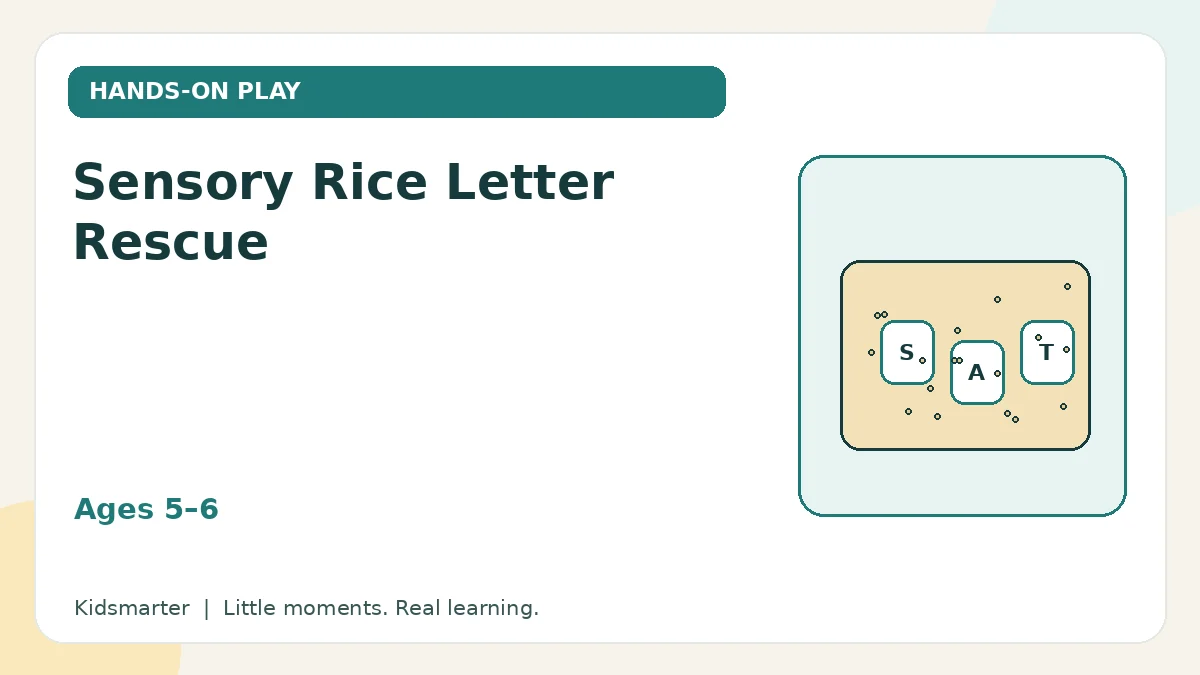
A shallow bin of fabric scraps or a towel can hide a few letters and turn letter finding into a slow, tactile search. Your child feels for a letter, names it when it appears, and places it on a tray. Keep the search calm: hands in a contained bin, a small number of letters, and no pressure to find the whole alphabet. Use dry rice only when no one in the room mouths materials; otherwise keep the bin free of loose fill. Do not use dry beans.
Materials You’ll Need
- A shallow bin
- Fabric scraps or a towel (dry rice only if no one in the room mouths materials; no dry beans)
- Large commercial letters, never tiny letter beads
- A tray
Fill a shallow bin with fabric scraps or a towel, and hide four to six sturdy letters that are large for this child and never small beads. Place a tray beside the bin for rescued letters. Do not use dry beans. Use dry rice only if no one in the room mouths materials; otherwise keep the bin free of loose fill. Spread a towel underneath. Size is not a safety certification; if a letter can be mouthed, choose a different set.
Step-by-Step How to Play
-
Show one letter before you hide the set. Trace it with a finger and say its name: ‘This is S.’ Then let your child watch you bury two or three letters under the fabric or towel so they understand the search, leaving the rest for later rounds if you wish.
-
Invite a first rescue with hands or a small scoop. When a letter appears, pause the searching and look at it on the tray. Ask, ‘Which letter did you find?’ If the name is uncertain, say it yourself and let your child repeat it, or simply hear it, before going back to the bin.
-
Continue until the hidden letters are found, laying them in a row as they appear. You can say a familiar word that starts with one rescued letter, but keep that extra step optional. If fill spills, pause for a quick sweep rather than letting the bin become a messy blur.
-
Hide the same letters once more, or swap in one new letter if interest is still high. Let your child hide a letter for you to find, and name it when you place it on the tray. Keep this second round short so the sensory search does not last past comfort.
-
Finish by finding any remaining letters, returning the fabric or fill to the center, and washing hands. Store the letters dry, and if you used rice, close it in a labeled container.
Small Details That Make This Activity Work
If naming a letter is hard, spend more time feeling its edges and hearing you say the name. Repeat the same small set another day before growing the collection. The familiar S or first letter of a name is a kind place to begin each search.
Why This Activity Helps
A tactile search gives hands a reason to explore texture while a letter remains the object of the hunt. Naming the letter after it is found connects the feel of the shape with its name, and a tray keeps the discoveries visible. Limiting the set helps children finish and review, rather than digging endlessly. The activity should stay optional and closely supervised, because loose grains and small letters are not safe for every child.
Easy Ways to Adapt by Age
Make It Simpler
Hide only two large letters and leave part of each one slightly visible. You can name every letter as it appears. A child who dislikes the texture can use a scoop only, or search among fabric scraps rather than any loose fill.
Ready for a Challenge
Hide a mix of uppercase and lowercase forms of the same letter, or ask your child to find a letter that starts a spoken word after each rescue. You can also sort rescued letters into ‘in my name’ and ‘not in my name’ on the tray.
Parent Tip & Safety Note
Do not use this as a rice or bean bin if anyone present might mouth the materials: loose grains are a choking hazard, and supervision does not make them safe in a mouthing child’s hands. Prefer fabric scraps. Sweep any spill at once, and never use cooked food, scented oils, or tiny letter beads.
The age range above is a suggested starting point for this setup, not a developmental milestone or a standard your child must meet. Prefer fabric scraps or a bin without loose fill whenever anyone in the room might mouth materials, and keep letters large enough for this child.
Find another small invitation to play in Hands-On & Fine Motor, or explore our free printable games. Choose one that fits your child’s interests, available materials, and energy today.