Help Wash a Plastic Plate
Quick Activity Snapshot
- Age Range
- Ages 2–3
- Prep Time
- 3 minutes
- Skills Practiced
- Wiping, squeezing a cloth, and helping with a real job
- Materials
- An unbreakable plastic plate, a cloth, a towel, and a little water
Age ranges are suggestions, not developmental milestones or standards. Choose the setup for this child, and stop whenever needed.
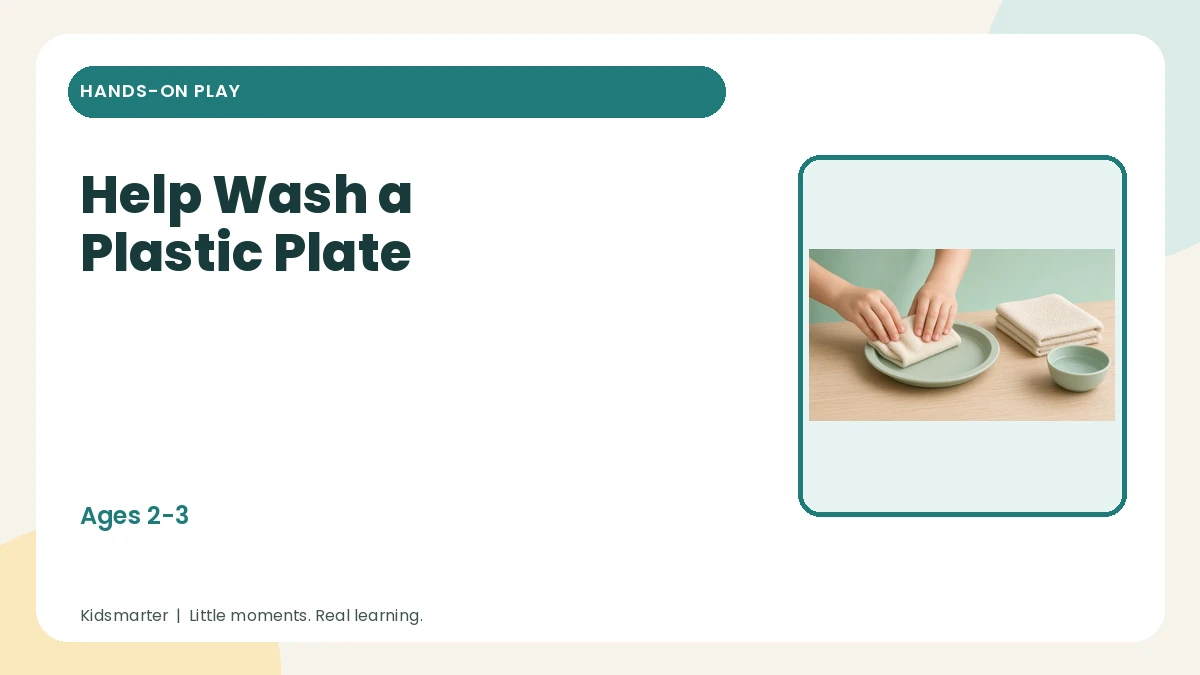
A plastic plate and a damp cloth can turn washing up into a short job a young child can help with. The work is to wipe the plate, notice the wet cloth, and dry the table when you are done. This is not a pouring station, not a washcloth-squeezing game for its own sake, and not water painting on the table.
Materials You’ll Need
- One sturdy, unbreakable plastic plate—not glass and not easily breakable ceramic
- A clean washcloth or sponge used only for this job
- A folded towel for spills and for drying
- A small unbreakable bowl or cup with a little room-temperature water, or just a pre-dampened cloth
Keep the amount of water small—enough to dampen the cloth, not enough to fill a basin or a bucket. Soap is optional; if you use it, add a tiny drop yourself and keep the bottle out of reach. An adult sets up the water and stays. Do not use hot water, glass dishes, or knives.
Step-by-Step How to Play
-
Sit at the table with the towel underneath or nearby. Show the plate and the cloth. Say, “We can wash this plate. The cloth gets the plate wet, and then we can dry it.”
-
Dip the cloth, wring extra water back into the small bowl so it is only damp, and wipe the plate together. Circles, back-and-forth wipes, and simple holding all count. Stay nearby, but do not take over unless the plate is about to fall.
-
If they want, turn the plate and wipe the other side, or use the towel to dry it. You may say wet, soapy, or dry if they are interested. There is no required shine and no sample to copy.
-
When they are finished, dry the table, empty the small bowl into the sink, and put the plate and cloth where they belong. One plate is enough. There is no required number of dishes.
Small Details That Make This Activity Work
A damp cloth is easier to manage than a dripping one, and it is easier to wipe up. If your child wants only to play in the little bowl of water, you can stay with that briefly and then try one wipe, or you can stop. Avoid turning the job into a race or a perfect-clean test. This is not a kitchen pour station, not a squeeze-bottle transfer, not a washcloth-squeeze color game, and not painting the table with water: the job is to help wash a real plate.
Why This Activity Helps
Helping with a real, short job gives a child a chance to use their hands and to hear ordinary words such as wet, dry, and clean. This article does not treat dishwashing as a proven program for later independence or school skill, and washing one plate is not a developmental test. Families may simply enjoy the shared job. Children may like the water and the cloth without finishing a fully clean plate.
Easy Ways to Adapt by Age
Make It Simpler
Skip the bowl of water and use a cloth you have already dampened. Hold the plate steady while your child wipes once or twice, then dry it together and stop.
Ready for a Challenge
Offer a second unbreakable cup or a plastic bowl to wash, or let your child help carry the dry plate to a low, safe shelf. Keep the water amount small, and stop if the extra dishes make a spill you cannot stay with.
Parent Tip & Safety Note
Stay at the table for the whole activity. Use only unbreakable plates and bowls, a small amount of room-temperature water, and a towel for spills. Wipe the floor if water drips, so no one slips. If you use soap, keep it out of eyes and mouths, and do not let a child drink from the wash bowl. When you are finished, empty the bowl or cup right away and put it out of reach; do not leave standing water out. The American Academy of Pediatrics warns that young children can drown in small amounts of water and that containers should be emptied after use. Those pages are about drowning prevention in baths, buckets, pools, and other standing water, not about teaching chores. This table activity still needs an adult who stays, and the water should be emptied when you stop. Do not leave a young child alone with the bowl, even briefly. Do not use a bucket or a deep basin of water for this version.
Explore more activities in this category or free printable games.
For emptying containers and staying with young children around water, see HealthyChildren.org’s 5 Water Safety Tips for Kids of All Ages and Infant Water Safety. Those pages are about drowning prevention; they are not chore instructions, and they do not evaluate this plate-washing activity.