Tear-and-Stick Paper Collage
Quick Activity Snapshot
- Age Range
- Ages 2–3
- Prep Time
- 5 minutes
- Skills Practiced
- Tearing, sticking, and open-ended collage
- Materials
- A large paper base, scrap paper, and a glue stick
Age ranges are suggestions, not developmental milestones or standards. Choose the setup for this child, and stop whenever needed.
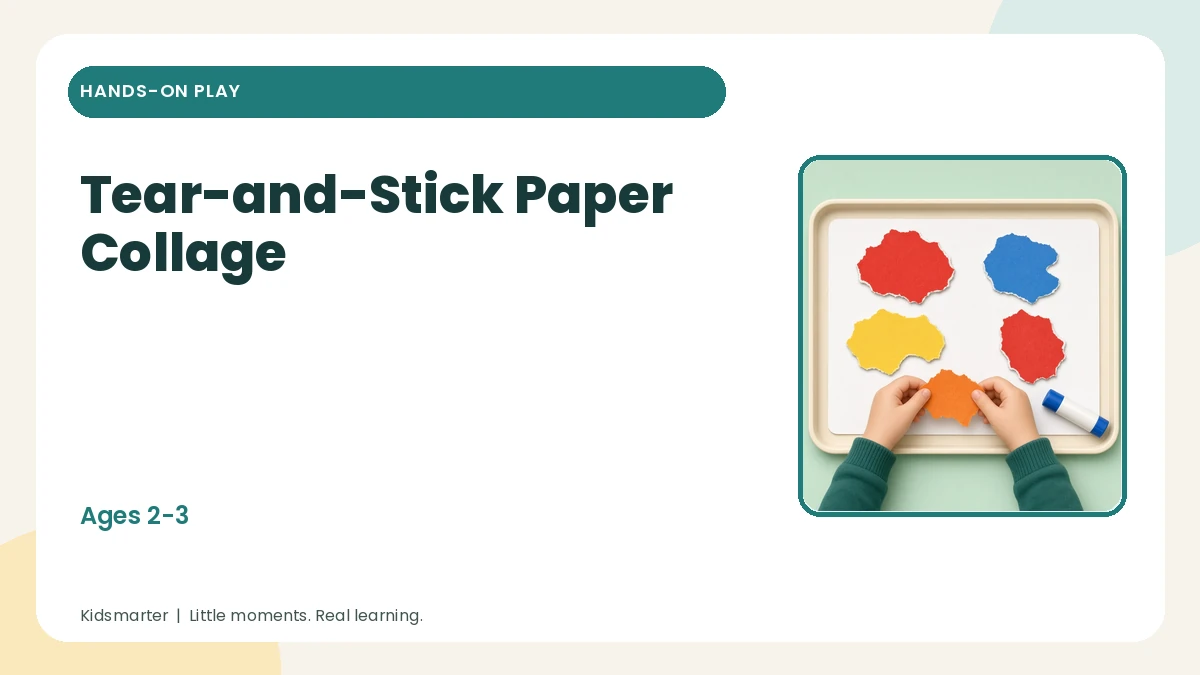
A collage can start with the sound of paper tearing. Your child rips large scraps, swipes a glue stick, and places the pieces wherever they like. There is no required picture and no sample to match. The interesting work is in the hands, the sticky paper, and the choices.
Materials You’ll Need
- One large sheet of paper or light cardboard as a base
- A small stack of scrap paper in two or three colors, with staples and plastic windows removed by an adult
- A nontoxic glue stick
- A tray or tablecloth to catch scraps
This version is tearing and a glue stick only. Do not add beads, buttons, loose glitter, pom-poms, or other small decorations. The child does not need scissors; if you trim the base sheet, do that before they sit down and put the scissors away. Magazine pages may be used if an adult has removed staples and you are comfortable with the images, but keep torn pieces large.
Step-by-Step How to Play
-
Sit together at a table with the base sheet on a tray. Show a slow tear: hold the scrap with both hands and rip off a large piece. Invite your child to try. The torn edge can be ragged. That is part of the material, not a mistake.
-
Offer the glue stick. Uncap it, show one swipe on the back of a scrap or on the base sheet, and stay close while they try. Recap the stick when it is not in use if your child is likely to mouth it. A thin swipe is enough; the page does not need to be soaked.
-
Let your child place torn pieces on the base, overlap them, or leave empty space. Say, “You can put the pieces wherever you like.” Do not steer them toward a house, a flower, or any adult plan. If a piece falls off, they may press it again or leave it.
-
Talk about what you actually see: “That red piece has a long torn edge.” “This one is sticky.” “You put the blue on top.” Avoid starting with “What is it?” A collage does not have to represent a thing. If your child wants to tell you a story about it, listen.
-
Stop when your child is finished, even if much of the paper is still unused. You may write their words on the back of the sheet if they want a title, then display the work only with their agreement. Clean sticky fingers and cap the glue before you leave the table.
Small Details That Make This Activity Work
Process matters more than a tidy result. NAEYC encourages adults to comment on what they see rather than requiring a finished product that looks a certain way. If your child only wants to tear and not glue, that can be the whole activity for today; collect the large pieces in a bowl and try sticking another time. Keep scraps large enough that they are not tempting to put in a mouth. One color at a time can help a younger toddler. An older child may want more colors or a second sheet; follow their lead rather than adding a model picture of your own.
Why This Activity Helps
Open-ended art gives a child choices about materials and placement, and tearing and gluing also use the small muscles of the hands. NAEYC explains that process-art experiences support exploration and self-expression in a different way from following steps to copy an adult sample, and that talking about the work can add language for textures and actions. This particular tear-and-stick routine has not been evaluated as therapy or as a writing program. It is not a test of creativity, and it is not a substitute for professional advice if you have concerns about a child’s motor skills.
Easy Ways to Adapt by Age
Make It Simpler
Pre-tear a few large pieces yourself and let your child only do the sticking, or let them only tear while you handle the glue stick together, hand over hand if they want help. Two or three pieces make a complete collage.
Ready for a Challenge
Offer a second material that is still large and flat, such as a piece of fabric scrap or a paper bag rectangle, still with a glue stick and no small parts. You might invite the child to tell you about a favorite piece while you write their words on the back. Still do not require the collage to look like a recognizable object.
Parent Tip & Safety Note
Stay with your child. Use a nontoxic glue stick, not liquid glue, super glue, or hot glue, and do not let anyone eat the glue. Wash hands when you finish. Keep all pieces too large to swallow, and keep beads, buttons, glitter, and other small decorations out of this activity because they are choking hazards. Put scissors away if they were used in setup. Stop if your child starts mouthing paper or glue, and keep loose scraps away from babies who still explore with their mouths.
Explore more activities in this category or free printable games.
For the difference between open-ended process art and copying a finished sample, see NAEYC’s Supporting the Development of Creativity and Process Art Experiences. Those pages describe how families and teachers can comment on what they see and follow the child’s lead; they do not evaluate this tearing activity and do not treat a finished collage as a developmental standard. For small-object choking risks, see HealthyChildren.org’s Choking Prevention for Babies & Children.