Full or Empty?
Quick Activity Snapshot
- Age Range
- Ages 2–3
- Prep Time
- 2 minutes
- Skills Practiced
- Noticing whether a container is full or empty
- Materials
- A basket or box, an unbreakable plastic cup, and a cloth or large blocks to fill one container
Age ranges are suggestions, not developmental milestones or standards. Choose the setup for this child, and stop whenever needed.
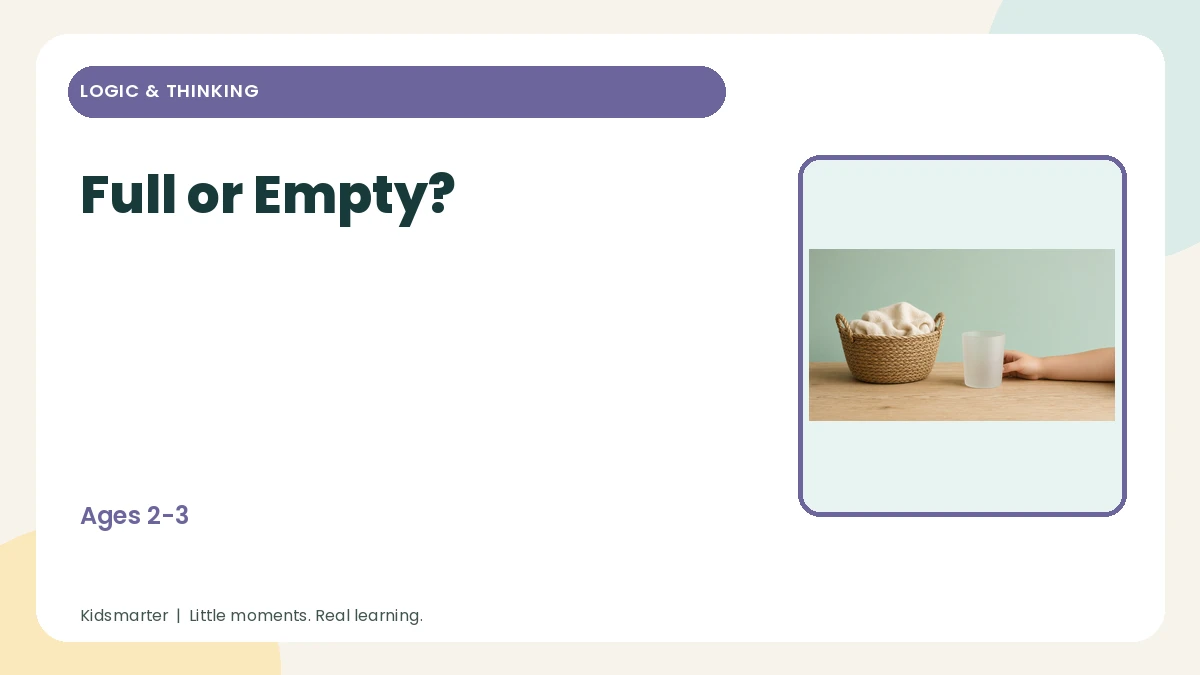
A basket and a cup can show two simple states: full and empty. You fill one container, leave the other empty, and talk about which is full and which is empty. This is not an open-or-closed game, not which cup holds more, and not a water-pouring station.
Materials You’ll Need
- One small basket or unbreakable box
- One sturdy, unbreakable plastic cup, never glass
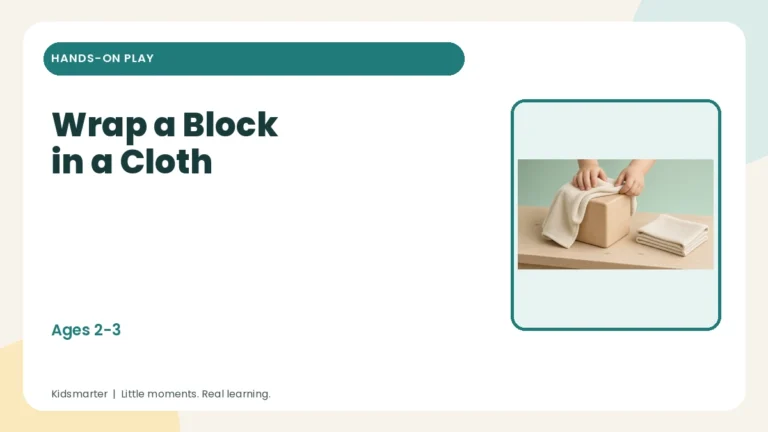
- A folded cloth, or two or three large wooden blocks, each too big to swallow, to fill one container
Use dry materials only for this game, so the job stays about full and empty, not pouring. Stay at the table. Do not use glass, and do not fill the cup or basket with small beads, buttons, coins, or anything that can fit in a mouth.
Step-by-Step How to Play
-
Set the empty basket and the empty cup on the table. Say, “These are both empty. We can fill one.”
-
Place the cloth or the blocks into the basket so it looks clearly full. Say, “The basket is full. The cup is empty.” Invite your child to point to the full one, or to the empty one.
-
You may empty the basket and fill the cup with the folded cloth instead, then name the new pair: “Now the cup is full, and the basket is empty.” There is no score, and they do not have to explain a rule.
-
If they still want a turn, they may help fill or empty one container once more. One or two clear comparisons can be a complete game.
Small Details That Make This Activity Work
Start with one container clearly full and one clearly empty, so the difference is easy to see. Keep the filling dry and large. If they only want to take the cloth in and out, you can name “full” and “empty” and stop. This is not open or closed, not loud or quiet, not near or far, not soft or hard, not which cup holds more, not a kitchen water pour, and not a more-or-less snack pile: the job is noticing whether a container is full or empty.
Why This Activity Helps
A short, visible comparison gives a reason to use the words full and empty. There is no official study cited for this homemade table game, and deciding which container is empty is not evidence of later skill. Children may enjoy filling and emptying without naming the words.
Easy Ways to Adapt by Age
Make It Simpler
Use only the basket. You fill it, say “full,” empty it, and say “empty.” Then invite your child to help move the cloth.
Ready for a Challenge
After one easy pair, you may change which container is full and ask, “Which one is empty now?” Stop if it starts to feel like a quiz.
Parent Tip & Safety Note
Stay at the table. Use only an unbreakable plastic cup, never glass. Fill containers with a cloth or large blocks only; do not use water, small beads, buttons, or coins. Keep the objects away from the edge of the table, and put them away when you finish. Stop when your child is finished or wants to play with the basket or the cloth in another way.
Explore more activities in this category or free printable games.