What Happens Next in This Story?
Quick Activity Snapshot
- Age Range
- Ages 3–4
- Prep Time
- 2 minutes
- Skills Practiced
- Pausing in a familiar story to guess what might happen next
- Materials
- A familiar picture book or sturdy board book your family already shares
Age ranges are suggestions, not developmental milestones or standards. Choose the setup for this child, and stop whenever needed.
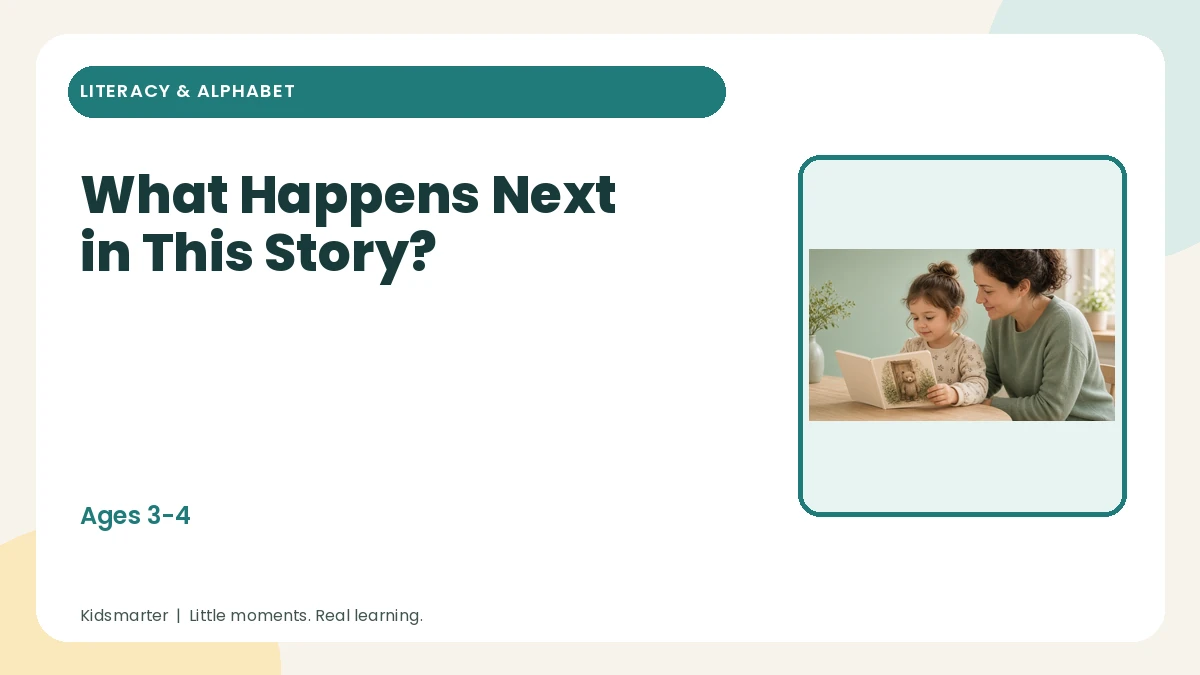
A familiar story can leave room for one short pause. You read a book your family already knows, stop at an interesting moment, and ask what might happen next. This is not a three-question cover walk, not lingering on a favorite picture, not finishing a familiar last word, and not retelling the whole story with a set of cards.
Materials You’ll Need
- One familiar picture book or sturdy board book your family already shares, with no need to buy a new title
- A clear table, couch, or rug where you can sit together and both see the pages
Choose a book you already own. You do not need to copy any pages, and you do not need a printed worksheet. Stay with your child, and help turn the pages so they are not torn.
Step-by-Step How to Play
-
Sit so you can both see the book. Say, “Let’s read this story we know. I’ll pause once, and you can tell me what you think happens next.”
-
Read in the usual way until you reach one good stopping place, such as a character at a door or at the edge of a path. Pause and say, “What do you think happens next?”
-
Listen to your child’s idea. You may say, “That’s one possibility. Let’s see.” There is no required right guess, and this is not a quiz.
-
Turn the page and finish that part of the story together. One pause can be a complete activity. If they still want a turn, you may pause once more later, or you may simply finish the book.
Small Details That Make This Activity Work
Use a book they already know, so the pause is about wondering, not struggling to follow a new plot. Stop only once or twice, and keep the question short. If they shrug or want you to keep reading, you can offer one simple idea of your own and go on. This is not a cover-clues book walk, not talking about a favorite picture, not finishing a familiar line, not clapping each word, and not a three-card or four-card story retell: the job is to pause in a familiar story and guess what might happen next.
Why This Activity Helps
A short pause in a shared story is one everyday way to talk about what might happen next. Reading Rockets’ tutoring guidance for preschool and kindergarten read-alouds includes talking about what might happen next and inviting a child to predict during the story. That page describes general read-aloud strategies; it does not evaluate this homemade one-pause activity, and guessing what happens next is not evidence of later reading. Children may enjoy listening without offering a guess.
Easy Ways to Adapt by Age
Make It Simpler
Pause at a very clear picture, and offer two spoken choices, such as “Do you think the bear will open the door, or walk away?” Then turn the page together. You may do all the reading.
Ready for a Challenge
After the page turn, you may say, “You thought __. Here’s what the story did.” Stop if the extra comparison starts to feel like a quiz, or if they would rather just listen.
Parent Tip & Safety Note
Stay together. Use a book you already own, and do not copy pages from a copyrighted book to make a new packet. Help turn the pages so they are not torn, and keep small or loose pieces of a damaged book out of mouths. Sit in a stable place, and do not balance the book where it could fall and hit anyone. Stop when your child is finished or wants to hear the story without pauses.
Explore more activities in this category or free printable games.
For inviting a child to talk about what might happen next during a read-aloud, see Reading Rockets’ Tutoring Strategies for Preschool and Kindergarten. That page describes general read-aloud strategies, including inviting a child to predict what might happen next; it does not evaluate this homemade one-pause activity, and it does not treat guessing what happens next as evidence of later reading.