Paper Fold a Tiny Card
Quick Activity Snapshot
- Age Range
- Ages 5–6
- Prep Time
- 8 minutes
- Skills Practiced
- Folding in order and decorating a small card
- Materials
- One separate sheet of paper, crayons, and an optional sticker or stamp
Age ranges are suggestions, not developmental milestones or standards. Choose the setup for this child, and stop whenever needed.
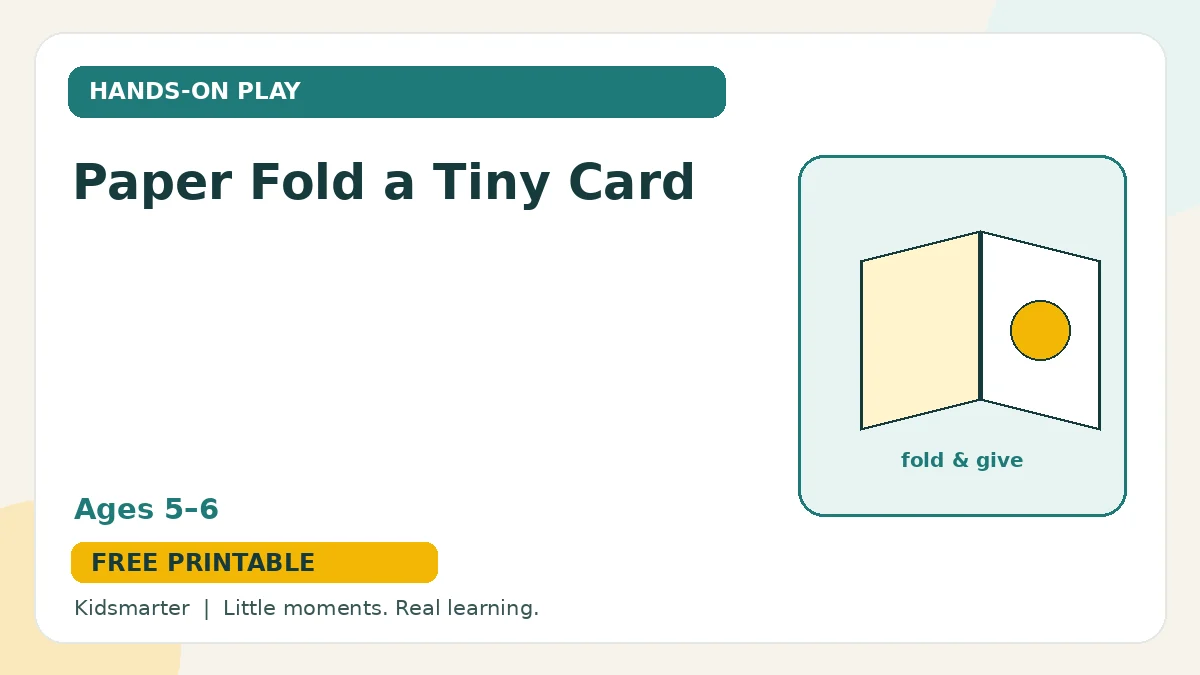
A small folded card is something your child can give if they wish, which gives a short folding sequence a purpose. In three clear steps, one sheet becomes a little card, and then crayons or a sticker can make it personal. The useful practice is in lining up edges, pressing a crease, and following an order. The printable is a step guide; fold a separate sheet, and do not cut the guide page.
Materials You’ll Need
- One separate sheet of paper
- Crayons
- A sticker or stamp, optional
- The printed three-step guide
Provide one sheet of paper, crayons, and an optional sticker or stamp. Sit the printed step card nearby. Sit at a clear table, with the paper in a start that matches the first step (short edge to short edge). Have a second sheet ready in case a fold needs a fresh start.
Step-by-Step How to Play
-
Show the first step: fold the paper in half by bringing one short edge to the other, then press the crease from the center outward. Say, ‘We line up the edges, then we press.’ Let your child try on their sheet, helping only to hold the edges while they press if needed.
-
Fold it in half again to make a smaller card, as the second step card shows. Compare the folded paper with the picture. If the edges do not meet, unfold once and try that single step again rather than adding a new fold on top.
-
Check that the card opens like a book, with the crease on the left or top. Offer crayons and invite a drawing or a short dictated message you can write inside. A sticker or stamp can sit on the front as a simple decoration, not as a requirement for every bit of space to be filled.
-
If your child wants a second card, repeat the same three steps with less talking, letting the step cards do more of the reminding. A second card for another person can be a satisfying reason to practice the sequence again.
-
Write the recipient’s name if your child wishes, then deliver or set the card aside together. Collect leftover stickers and backing so they do not end up on furniture or in a younger child’s reach. The finished card is the natural end of the activity; there is no need to begin a more complicated fold today.
Small Details That Make This Activity Work
If a fold is crooked, decide together whether to keep it as a unique card or start a fresh sheet. Saving one finished card as a model can help the next attempt more than a long verbal recap of the steps.
Why This Activity Helps
Folding in a fixed order asks children to remember steps, manage both hands, and notice whether edges meet. A real card gives the sequence a purpose, and a crease that can be tried again keeps the practice kind. Matching a step card to the paper also supports early work with visual instructions. The goal is a usable little gift, not a perfect craft display or a promised school skill.
Easy Ways to Adapt by Age
Make It Simpler
Pre-fold the first crease yourself and let your child press it, then help with the second fold. Use a smaller rectangle that already looks like a card. A child can decorate a single-fold card and skip the third fold entirely.
Ready for a Challenge
Try a slightly longer sequence, such as folding a tiny pocket on the front, or write a two-word message together after the folds are done. You can also make an envelope from a second sheet, but treat that as a new project rather than a requirement for the first card.
Parent Tip & Safety Note
Paper edges can be sharp; model smooth pressing rather than scraping a fingernail quickly along the crease. Supervise stickers, backing, and small stamps, and collect leftovers immediately. If scissors appear later for a decoration, an adult should handle or closely help with them.
The age range above is a suggested starting point for this setup, not a developmental milestone or a standard your child must meet. Line up the edges before pressing a crease, and let a slightly uneven card still be a gift worth giving.
Find another small invitation to play in Hands-On & Fine Motor, or explore our free printable games. Choose one that fits your child’s interests, available materials, and energy today.