Ladle Transfer With Washcloths
Quick Activity Snapshot
- Age Range: Ages 2–3
- Prep Time: 3 minutes
- Skills: Hand-eye coordination and scooping
- Materials: Two broad shallow bowls inside a tray, a blunt serving ladle, four whole washcloths rolled loosely; no cotton balls or small fabric scraps
Age ranges are suggestions, not developmental milestones or standards. Choose the setup for this child, and stop whenever needed.
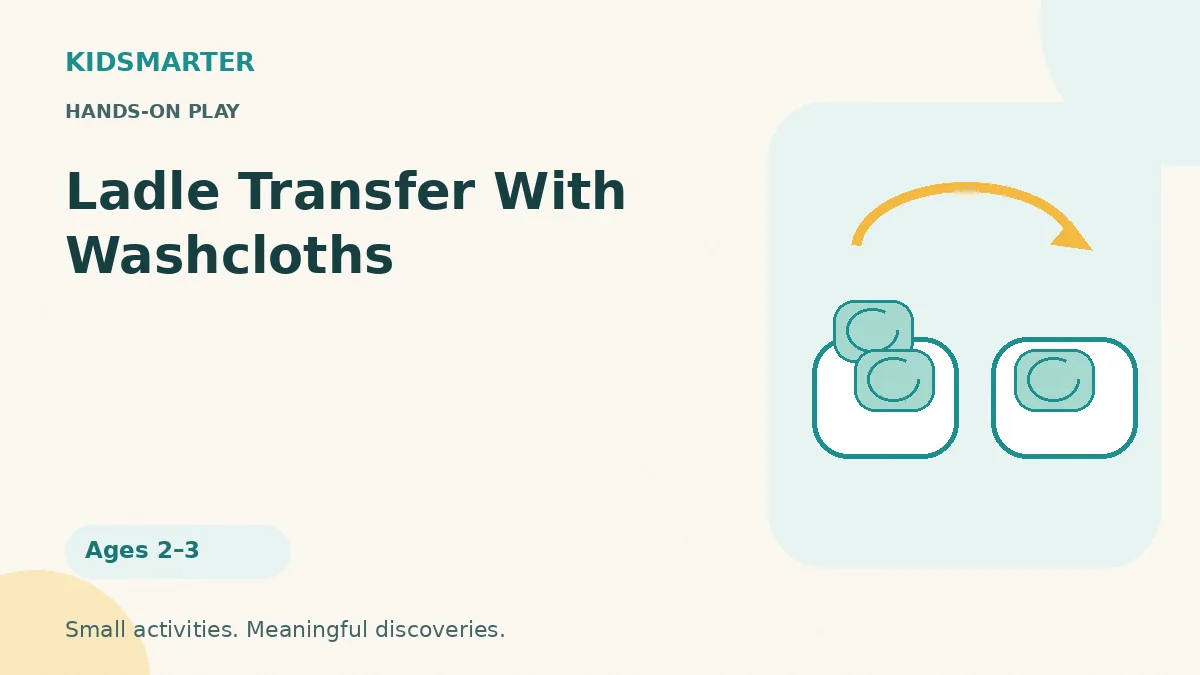
A ladle, two broad bowls, and a few whole rolled washcloths create a clear little job: move everything from here to there. This version deliberately excludes cotton balls and tiny craft pieces. There is no race, only a chance to explore loading a tool and carrying a large soft object. Put the bowls close together so the child can succeed without stretching or hurrying. A short shared round is enough, and using fingers to reset a roll is allowed.
Materials You’ll Need
- Two broad shallow bowls inside a tray
- A blunt serving ladle
- Four whole washcloths rolled loosely; no cotton balls or small fabric scraps
Set out two broad shallow bowls, a blunt serving ladle, a tray, and four whole washcloths loosely rolled. Each cloth stays whole; use no cotton balls, pom-poms, small scraps, elastic ties, or detachable decorations. Check that a roll fits the ladle and destination bowl freely. If it does not fit, enlarge the tool and bowl rather than cutting the cloth smaller. Put a nonslip cloth beneath the bowls and stay beside the child.
Step-by-Step How to Play
-
Put the full bowl on the child’s preferred-hand side and the empty bowl immediately beside it. Say, “Can we carry these across with our ladle?” Demonstrate scooping one rolled washcloth by sliding the ladle underneath instead of pushing down on top. Lift just above the bowl’s rim. Keep your own movements slow enough for the child to see how the ladle stays level.
-
Offer the ladle without adjusting the child’s grip into a supposedly perfect position. A whole-hand grasp is a reasonable way to explore. Invite, “Hold your ladle like a little shelf.” Let them steady the bowl with their other hand if helpful. If the rolled washcloth will not load, place one onto the ladle for the first transfer so carrying can be practiced separately from scooping.
-
Move one piece at a time into the second bowl. Use a simple cue: “Scoop, carry, tip.” If a piece drops onto the tray, ask, “How could we pick that one up?” Fingers are allowed for resetting. Avoid restarting the entire game after a spill. The immediate feedback from a tilted ladle is useful information, not a reason for an adult to take over.
-
When the first bowl is empty, pause to notice the result. “Everything moved across. This bowl is empty now.” Let the child reverse direction or swap the bowls’ positions. Changing direction adds a small challenge without requiring a longer distance or more pieces. If the child becomes interested in unrolling the washcloth instead, name the texture and allow a brief exploration while the washcloth stays whole and you stay beside them.
-
Finish with a cooperative close: “Can we each move two, then put the ladle away?” Count only if that adds enjoyment; the main task remains controlled transfer. Invite the child to gather any dropped pieces into the storage container and wipe the tray. Skip photos or clips that present a toddler’s speed as a benchmark for other children.
Why This Activity Helps
Scooping requires coordinating vision with the direction and angle of a tool. Carrying the loaded ladle asks the child to adjust movement when an object shifts. Holding a bowl with the other hand also gives a simple two-hand role. These actions relate to everyday utensil use, but cloth transfer is play rather than a test of feeding ability. Materials, ladle shape, and fatigue all affect how easy it feels.
Easy Ways to Adapt by Age
Make It Easier: Use a wide serving ladle, place the bowls rim to rim, and load the ladle for the child. Start with two pieces only. A child who cannot yet manage the tool can transfer large washcloth rolls by hand and practice the ideas of full and empty. Move to a ladle later rather than insisting on a tool before it is enjoyable.
Add a Challenge: Invite an older preschooler to choose between a shallow ladle and a deep ladle, then predict which will carry a piece more steadily. Increase the gap slightly while keeping both bowls inside the tray. Try passing the ladle from one hand to the other while seated. Do not add a blindfold or a high-speed contest; those changes remove useful visual feedback.
Parent Tip & Safety Note
Cotton balls and small fabric pieces are excluded from this toddler setup, not made suitable by supervision. Use whole intact washcloths with no ties and a blunt ladle. Stay beside the child, stop if fabric is mouthed or shedding, and remove damaged materials. Keep bowls stable and use the tools only at the table; the child never walks with a utensil near their mouth.