Letter Hunt in the Junk Mail
Quick Activity Snapshot
- Age Range: Ages 2–3
- Prep Time: 5 minutes
- Skills: Letter recognition
- Materials: Old catalogs or junk mail, A crayon or washable marker, An optional toy magnifier without glass or loose parts
Age ranges are suggestions, not developmental milestones or standards. Choose the setup for this child, and stop whenever needed.
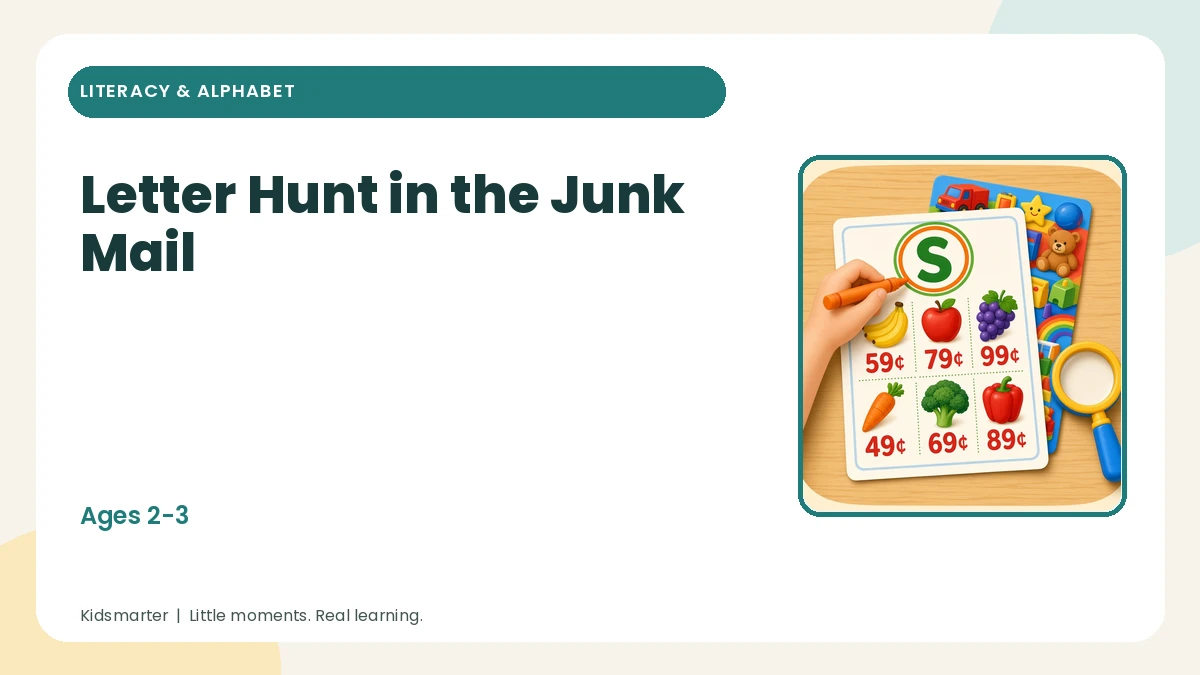
A grocery flyer can become a small adventure before it reaches the recycling bin. Instead of asking your toddler to name every letter, invite them to find just one familiar shape in real print. A page of enormous sale headings works better than a crowded column of prices. Sit beside your child, let them hold the marker, and expect a short exploration rather than a completed page. Looking together is the useful part, even when only two letters get circled.
Materials You’ll Need
- Old catalogs or junk mail
- A crayon or washable marker
- An optional toy magnifier without glass or loose parts
Choose clean mail without personal details, staples, plastic windows, or subscription inserts. Add a thick washable crayon that is easy to grasp. Keep a plain scrap of paper nearby for drawing your target letter. A magnifier is optional; if you use one, choose a toy version without glass or loose parts. That preference is not a safety certification. Start with an uppercase letter from your child's name, preferably one with a distinctive shape such as O, T, or B.
Step-by-Step How to Play
-
Open one flyer and fold away most of it so only a single large heading shows. On the scrap paper, draw a letter that also appears in that heading. Point to its main feature: "Our B has a straight back and two round bumps." Trace it once with your finger. Avoid introducing both uppercase and lowercase forms unless your child already recognizes them.
-
Model a slow search with your finger moving across the heading. Stop on a different letter and compare rather than quizzing: "This has a round part, but it has no straight back. Let's keep looking." Then find one matching B and make a roomy circle around it. Show that circling is simply a way to mark a discovery, not a handwriting test.
-
Give your child the crayon and offer a small search area. Say, "I see another B somewhere on this red strip. Can your eyes find it?" Wait without moving their hand. If they point instead of marking, circle it for them. If they choose a different letter, place the sample alongside it and look at one feature together before trying another spot.
-
Reveal a second section with the same letter in a different size. Ask, "Is this little B still a B? What looks the same?" It is fine to tell the answer after a pause. Compare the shapes side by side. Do not count logos or highly decorative lettering as mistakes when the design makes a letter genuinely hard to recognize.
-
Finish by letting your toddler choose a favorite discovery to show someone. "You found a B in a bread advertisement!" Fold that section into a small keepsake, or recycle it when the game ends. On another day, hunt for the same letter in a book cover. Repeating the target in a new setting is more useful than racing through the alphabet today.
Why This Activity Helps
Recognizing a letter across fonts involves attending to stable visual features while ignoring changes in color and size. That is different from reciting an alphabet song. Seeing letters on everyday packages also introduces the idea that print belongs in daily life. These brief encounters can support emerging print awareness, but toddlers vary widely in interest; enjoying pictures or talking about the advertised foods is worthwhile participation too.
Easy Ways to Adapt by Age
Make It Easier: Cut or tear out two large headings yourself and place them on plain paper. Draw the target immediately above the matching heading. Offer pointing, tapping, or placing a whole-hand mark instead of circling. A child who is not ready for letters can hunt for pictures of bananas or shoes while hearing you name one printed letter naturally.
Add a Challenge: Invite an older preschooler to find the target in three sizes, then draw a simple tally for each discovery. Compare two fonts and explain why both represent the same letter. Try a new target only after the first remains enjoyable. Keep sounds separate from letter names: say, "This letter is B; it can represent /b/, as in ball."
Parent Tip & Safety Note
Sit with children under three whenever paper scraps, caps, or other small objects are present; remove anything they might mouth. Keep markers capped only by an adult and avoid glossy ink that rubs onto hands. Never use bills or envelopes showing addresses. Stop when searching becomes tiring, and describe what your child noticed instead of how many answers they got right.