Help Put a Spoon Beside the Plate
Quick Activity Snapshot
- Age Range
- Ages 2–3
- Prep Time
- 1 minute
- Skills Practiced
- Placing an unbreakable spoon beside an unbreakable plate
- Materials
- One unbreakable plastic plate, one unbreakable plastic spoon, a low table, and an adult staying with the child
Age ranges are suggestions, not developmental milestones or standards. Choose the setup for this child, and stop whenever needed.
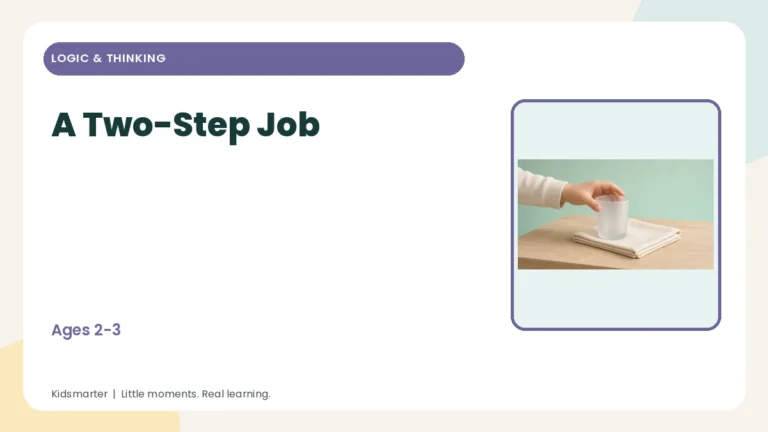
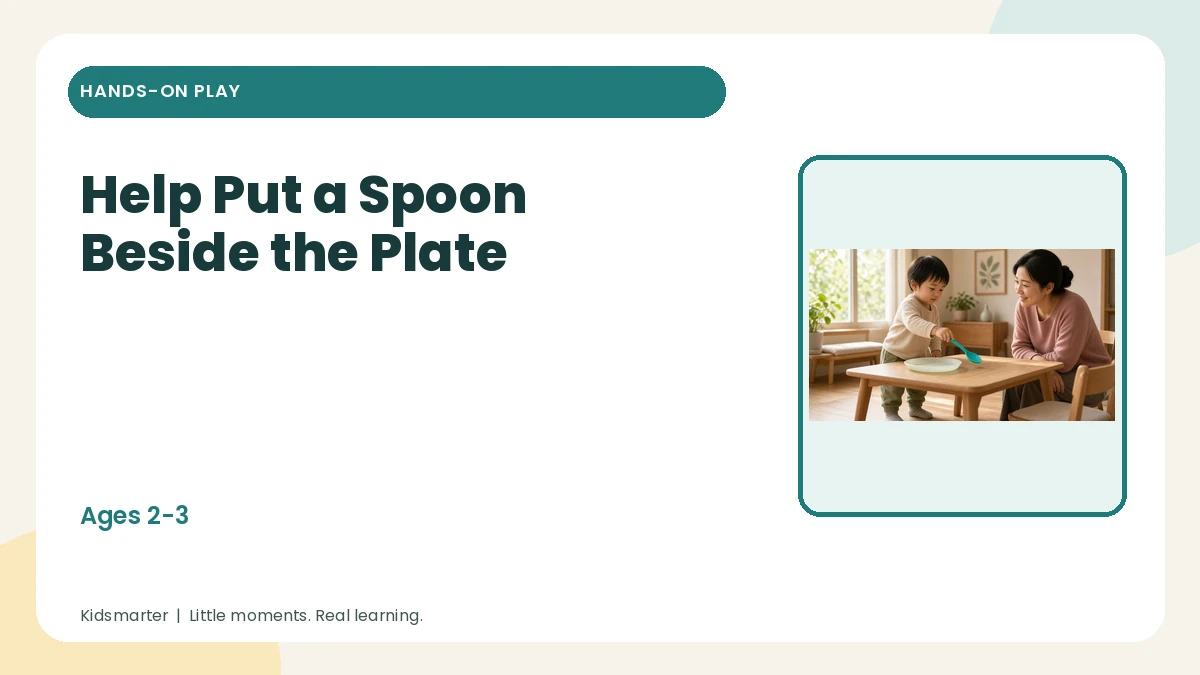
A plate already on the table can become a short putting job. You hand your child one spoon and help them set it beside the plate, not on top of it. This is not a one-to-one place-setting counting game, not washing the plate, and not pushing in a chair.
Materials You’ll Need
- One unbreakable plastic plate, already placed on a low table. Use only sturdy plastic. Never use glass or a plate that can shatter
- One unbreakable plastic spoon. Do not use a knife, and do not add glass or metal pieces for this job
- An adult staying beside the child the entire time
Clear breakable things off the table before you begin. Stay at that one table, and keep both of the child’s feet on the floor. You do not need a full place setting, and you do not need a worksheet. Do not stand on a chair or climb onto the table.
Step-by-Step How to Play
-
Set the plate on the table, then hand your child the spoon. Say, “Let’s put the spoon beside the plate.”
-
Show the spot next to the plate, not on top of it. Invite your child to set the spoon down there. If they need help, you may guide their hand, or set the spoon down together.
-
When the spoon is beside the plate, say, “The spoon is beside the plate.” There is no score, and you do not need to add a fork, a cup, or another plate.
-
Placing this one spoon can be a complete job. You do not need to set a whole table unless they ask to keep helping in another way.
Small Details That Make This Activity Work
Use only one plate and one spoon, and place the spoon beside the plate, so the job is a short putting-down job, not a counting pattern, not a washing job, and not a full place setting. Keep the talk short, and do not test whether they can name every piece of a table setting. If they only want to hold the spoon, that can be enough. This is not setting the table one-to-one, not making a spoon-and-fork pattern, not a spoon transfer race, not washing a plastic plate, not pushing in a chair, and not wiping the table: the job is to put one spoon beside the plate.
Why This Activity Helps
A short, real putting job gives a reason to use two hands and stay with a small task. There is no official study cited for this homemade table job, and placing a spoon beside a plate is not evidence of later skill. Children may enjoy holding the spoon without setting it down.
Easy Ways to Adapt by Age
Make It Simpler
You may set the spoon most of the way down and let your child add only the last little nudge, while you keep the plate steady.
Ready for a Challenge
After one placement is easy, you may hand the spoon back and invite them to put it beside the plate again with a little less help. Stop if it becomes frustrating, or if they would rather just hold the spoon.
Parent Tip & Safety Note
Stay with your child the entire time. Use only unbreakable plastic for both the plate and the spoon; never glass, and do not bring a knife to the table for this job. Keep both of the child’s feet on the floor; do not stand on a chair, kneel on a chair, or climb onto the table. Keep the plate and spoon away from the table edge so they cannot fall and hit anyone, and clear any breakable things off the table before you begin. This is a placing job, not a tasting game, so the spoon does not need to go in anyone’s mouth. Stop when your child is finished or wants to play with the plate and spoon in another way.
Explore more activities in this category or free printable games.