Count the Cups on the Table
Quick Activity Snapshot
- Age Range
- Ages 3–4
- Prep Time
- 2 minutes
- Skills Practiced
- Counting unbreakable cups already placed on a table, while standing on the floor
- Materials
- Two, three, or four frosted unbreakable plastic cups already on a low table, and an adult staying with the child
Age ranges are suggestions, not developmental milestones or standards. Choose the setup for this child, and stop whenever needed.
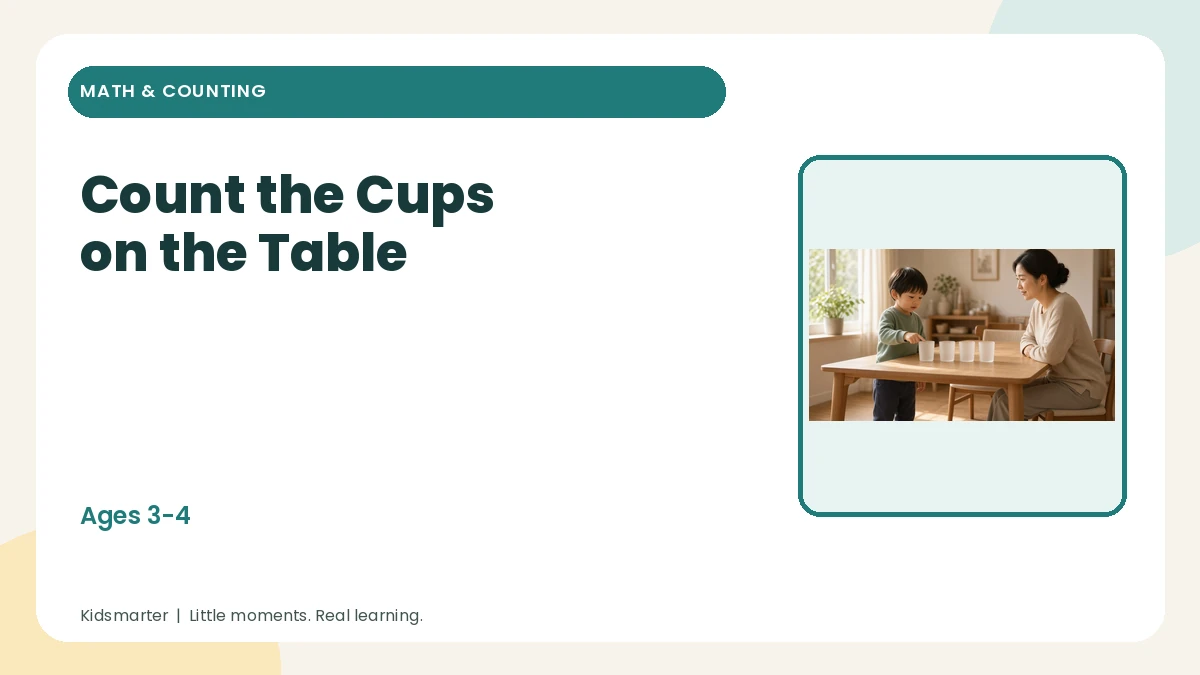
The cups already sitting on a low table can become a short counting job. You stand together with both feet on the floor, look at the cups, and count how many there are. This is not comparing which cup holds more, not talking about full or empty, and not pouring any water.
Materials You’ll Need
- Two, three, or four identical frosted, unbreakable plastic cups already placed on a low table. Use only sturdy plastic with a frost or matte finish. Never use glass, and do not use thin cups that crack easily
- An adult staying beside the child the entire time
Stay at that one table, and keep both feet on the floor. You do not need a worksheet or a number line. Do not pour water for this game, and do not talk about which cup is fuller. The cups can stay empty. Do not bring over a chair or a stool, and do not climb onto the table.
Step-by-Step How to Play
-
Stand together where you can both see the cups already on the table. Say, “Let’s count the cups on the table.”
-
Point to the first cup and say, “One.” Invite your child to point with you, or to say the number.
-
Point to the next cup and count, “Two.” If there is a third or fourth cup on the same table, count those too. Then say how many you found, such as “This table has four cups.”
-
If they still want a turn, you may count the same cups once more. A few cups already on the table can be a complete game. You do not need to pour, fill, or compare the cups.
Small Details That Make This Activity Work
Count only the cups you can both see on the table while standing on the floor, and keep the count short. Leave the cups where they are, so this does not become a pouring job, a packing job, or a walk around the room. If they only want to touch one cup, you can name it as one cup and stop. This is not asking which cup holds more, not talking about full or empty, not counting the books on a shelf, not counting the shoes by the door, not counting the chairs, not counting the windows, not counting the doors you pass, not a line of four, not a group of three, not one more on a tray, and not packing a box: the job is to count the cups already on the table.
Why This Activity Helps
Counting things you can already see at home is one everyday way to talk about “how many.” NAEYC’s family page Support Math Readiness Through Math Talk includes examples of counting things you notice around you, such as tiles on a floor or light poles on a walk. That page offers family examples of everyday counting; it does not evaluate this homemade cup-counting game, and counting the cups on a table is not evidence of later math achievement or of “math readiness.” Children may enjoy pointing to a cup without saying the number.
Easy Ways to Adapt by Age
Make It Simpler
Count only two cups that are easy to see on the table. You may say the number first, and invite your child to point.
Ready for a Challenge
After one count, you may look at the same cups again and ask, “How many cups do we see?” Stop if the extra count starts to feel like a quiz.
Parent Tip & Safety Note
Stay beside your child the entire time. Keep both feet on the floor. Use only frosted, unbreakable plastic cups; never glass, and never thin cups that can crack. Do not pour water for this game, and do not stack the cups into a tall tower that can fall. Keep the cups away from the table edge so they cannot fall and hit anyone, and do not let the child climb onto the table or stand on a chair to see them. If a cup starts to slip, an adult catches it. Stop when your child is finished or wants to look at the cups without counting.
Explore more activities in this category or free printable games.
For family examples of counting things you can see around you, see NAEYC’s Support Math Readiness Through Math Talk. That page includes everyday counting, such as counting tiles on a floor or light poles on a walk; it does not test this homemade cup-counting game, and it does not treat counting the cups on a table as a developmental screening or as later math achievement.