Count the Books on This Shelf
Quick Activity Snapshot
- Age Range
- Ages 3–4
- Prep Time
- 2 minutes
- Skills Practiced
- Counting the books you can see on a low shelf, while standing on the floor
- Materials
- A low bookshelf with a few books already on it, and an adult staying with the child
Age ranges are suggestions, not developmental milestones or standards. Choose the setup for this child, and stop whenever needed.
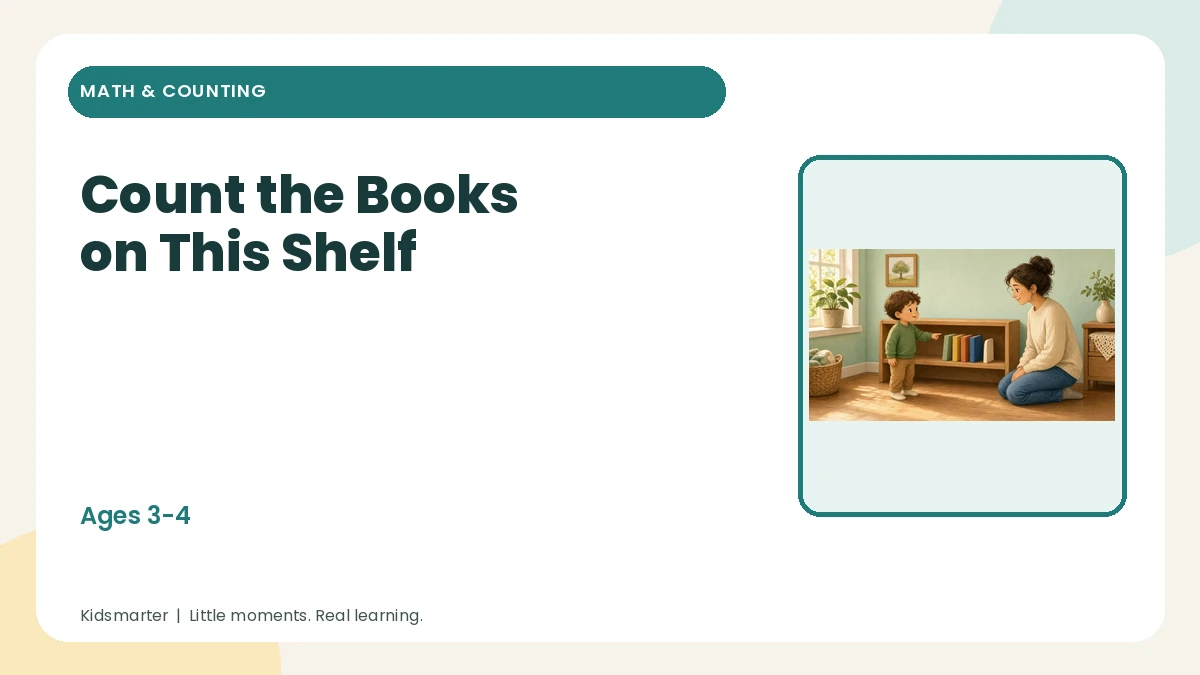
The books already sitting on a low shelf can become a short counting job. You stand together on the floor, look at one low shelf, and count the books you can see. This is not putting a book on the shelf, not counting chairs, not counting windows, and not counting the shoes by the door.
Materials You’ll Need
- One low bookshelf the child can see while standing on the floor, with two, three, or four familiar books already on that shelf
- An adult staying beside the child the entire time
Stay in that one spot, and keep both feet on the floor. You do not need a worksheet or a number line. Do not use a high shelf, and do not bring over a chair or a stool. Do not take the books down for this game unless a book starts to slip and an adult needs to catch it.
Step-by-Step How to Play
-
Stand together in front of the low shelf, where you can both see the books. Say, “Let’s count the books on this shelf.”
-
Point to the first book and say, “One.” Invite your child to point with you, or to say the number.
-
Point to the next book and count, “Two.” If there is a third or fourth book you can see on the same low shelf, count those too. Then say how many you found, such as “This shelf has four books.”
-
If they still want a turn, you may count the same books once more. A few books on one low shelf can be a complete game. You do not need to count another shelf or put a book away.
Small Details That Make This Activity Work
Count only the books you can both see on one low shelf while standing on the floor, and keep the count short. Stay in one place so this does not become a walk around the room or a putting-away job. If they only want to look at one favorite book, you can name it as one book and stop. This is not putting a book on the shelf, not counting the chairs in this room, not counting the windows, not counting the doors you pass, not counting the shoes by the door, not a line of four, not a group of three, not one more on a tray, and not packing a box: the job is to count the books on this low shelf.
Why This Activity Helps
Counting things you can already see at home is one everyday way to talk about “how many.” NAEYC’s family page Support Math Readiness Through Math Talk includes examples of counting things you notice around you, such as tiles on a floor or light poles on a walk. That page offers family examples of everyday counting; it does not evaluate this homemade book-counting game, and counting the books on a shelf is not evidence of later math achievement or of “math readiness.” Children may enjoy pointing to a book without saying the number.
Easy Ways to Adapt by Age
Make It Simpler
Count only two books that are easy to see on the low shelf. You may say the number first, and invite your child to point.
Ready for a Challenge
After one count, you may look at the same books again and ask, “How many books do we see?” Stop if the extra count starts to feel like a quiz.
Parent Tip & Safety Note
Stay beside your child the entire time. Keep both feet on the floor. Use only a low shelf the child can already see; do not stand on a chair or a stool, and do not climb the bookcase or pull at a high stack of books. If a book starts to slip, an adult steadies the shelf and catches the book. Stop when your child is finished or wants to look at a book without counting.
Explore more activities in this category or free printable games.
For family examples of counting things you can see around you, see NAEYC’s Support Math Readiness Through Math Talk. That page includes everyday counting, such as counting tiles on a floor or light poles on a walk; it does not test this homemade book-counting game, and it does not treat counting the books on a shelf as a developmental screening or as later math achievement.