Morning Routine Cards
Quick Activity Snapshot
- Age Range
- Ages 3–4
- Prep Time
- 3 minutes
- Skills Practiced
- Putting morning pictures in order
- Materials
- The printable morning routine cards, or four homemade pictures
Age ranges are suggestions, not developmental milestones or standards. Choose the setup for this child, and stop whenever needed.
A morning can be told in four pictures: waking up, washing hands, eating breakfast, and going out the door. These cards give that order a simple pointing or arranging job. This is not a getting-dressed clothing sequence, not a four-card made-up story, and not writing three words about the day.
Materials You’ll Need
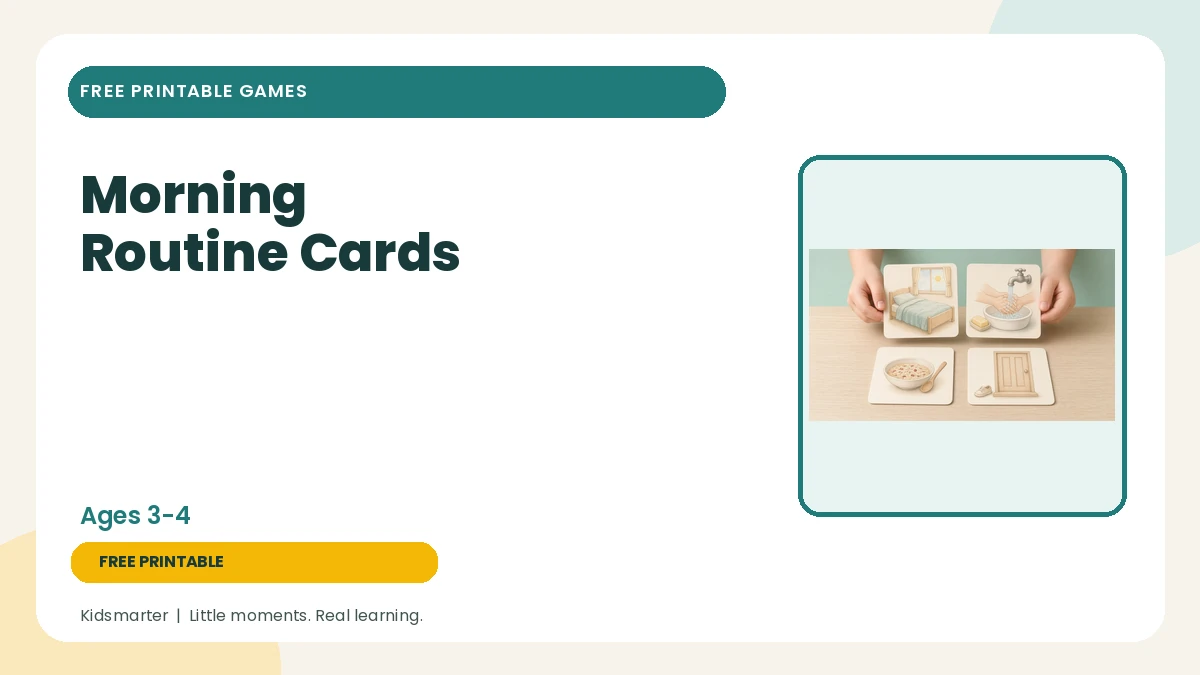
- The printable Morning Routine Cards, or four homemade picture cards showing the same four ideas: a bed and a morning window, washing hands, a breakfast bowl, and a door with a shoe
- A clear table or rug space
- Optional, for the cut version only: adult scissors, used in advance and then put away
Print the page at actual size. You may leave the sheet whole and point to the pictures in order, or an adult may cut the four cards apart and mix them. The child does not need to cut. If you make homemade cards, use large, simple pictures and keep them too big to swallow. The cards have no words.
Step-by-Step How to Play
-
Sit together with the sheet where both of you can see it. Point to the bed picture and say, “This is waking up. What do we do next in the morning?”
-
Invite your child to point to the next picture. If they point somewhere else, you can name that picture and then look together for washing hands, or you can model once: “After we wake up, we wash our hands.” There is no score.
-
Continue through breakfast and going out the door if they still want a turn. You may leave the page whole the entire time. They do not have to tell a long story or read any words; the cards have none.
-
If you like a hands-on version, an adult can cut the four cards, mix them, and invite your child to put them in morning order. Keep any scissors out of reach once the cutting is done. The child does not cut.
-
When they are finished, put the page or the cards away together. Talking through one morning order can be a complete game.
Small Details That Make This Activity Work
Start with the bed picture so the beginning of the morning is clear. If your family’s morning uses a different order, you can say so and still use the same four pictures, or you can stop. If they want to play with only one favorite card, that can be enough. These cards are not getting-dressed sequence cards, not a first-second-third line of toys, not a four-card story, and not a three-word list about the day: the job is the order of a simple morning.
Why This Activity Helps
Talking through a morning in pictures is one everyday way to notice order. NAEYC’s family math-talk guidance includes talking about the order of daily routines, such as what comes after breakfast. A related family page about everyday problem-solving suggests making cards for everyday tasks and talking about what happens if the steps are mixed up. Those pages offer general ideas for talking about order; they do not evaluate this morning-card set. Putting four pictures in a line is not evidence of later math skill, of “computational thinking,” or of school success. Children may enjoy looking at the pictures without arranging a full sequence.
Easy Ways to Adapt by Age
Make It Simpler
Cover all but the first two pictures, and talk through “wake up, then wash hands.” No cutting is needed.
Ready for a Challenge
Use the cut cards, mix all four, and let your child put them in order. You may also mix two cards on purpose and ask what would happen if breakfast came first. Stop if the extra mix-up starts to feel like a quiz.
Download Free Printable PDF
This original US Letter page is free to download. Print at actual size. Use the whole page and point to the pictures in order, or let an adult cut the four cards apart. The child does not need to cut. No email signup is required.
Parent Tip & Safety Note
Stay at the table. If you cut the cards, an adult does the cutting, then puts the scissors away before the game begins. Keep paper cards out of mouths, and do not add small decorations, buttons, or coins to the cards. Supervise as you would with any small paper pieces if a baby is nearby. Stop when your child is finished or wants to look at the pictures in another way.
Explore more activities in this category or free printable games.
For everyday language about the order of daily routines, see NAEYC’s Math Talk With Infants and Toddlers. For the family idea of making cards for everyday tasks and talking about mixed-up steps, see NAEYC’s Message in a Backpack: Helping Your Preschool Child with Computational Thinking. Those pages offer general sequencing and routine-order ideas; they do not evaluate this morning-card set, and they do not treat putting four pictures in order as evidence of later math skill, computational thinking, or school success.