Toy Car Alphabet Parking Lot
Quick Activity Snapshot
- Age Range
- Ages 3–4
- Prep Time
- 10 minutes
- Skills Practiced
- Letter identification
- Materials
- The printed parking mat, Paper letter labels, Toy cars, Masking tape only if you make a floor version
Age ranges are suggestions, not developmental milestones or standards. Choose the setup for this child, and stop whenever needed.
A parking lot gives letter practice a destination. Instead of asking your preschooler to sit through flashcards, let a toy car deliver itself to A, B, or C. The car is an invitation to compare letters, not a prize for producing a correct answer.
Materials You’ll Need
- The printed parking mat
- Paper letter labels
- Toy cars
- Masking tape only if you make a floor version
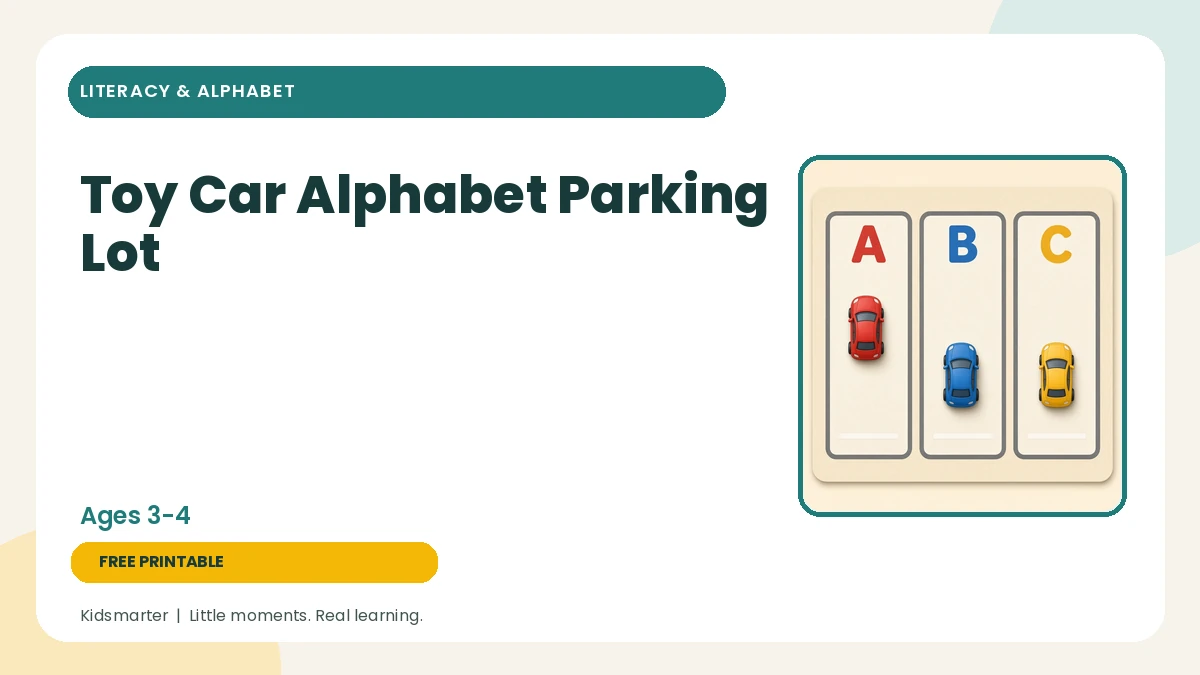
Print the parking mat; its six wide bays repeat A, B, and C, so either matching space is valid. Paper letter labels are tickets you write yourself; they are not on the printable. Play on a table, or on the floor away from doors and stairs. Use masking tape only if you build a separate floor version, and only on a surface where the tape removes safely.
Step-by-Step How to Play
-
Drive one car along the central road and park beside A. Say, “This parking place says A.” Point out its two slanting sides and middle line before inviting your child to drive.
-
Call one destination with a matching paper letter visible beside you. Your child can compare the paper with the bay, then move the car. Leave time for looking rather than repeating the instruction rapidly.
-
Offer a choice between two bays if the full mat is distracting. Say, “Our ticket has B. Which space matches our ticket?” Slide the ticket directly beside the bay when extra support is helpful.
-
Switch roles so your child becomes the parking attendant. Follow their direction, including a playful wrong turn they can correct. Ask them to show the destination with a finger if naming it is difficult.
-
Park the last car and count occupied spaces together. Put the mat away while the game is still enjoyable, keeping the same three letters for another day instead of continually adding new destinations.
Small Details That Make This Activity Work
Keep the spoken instruction short while the vehicle is moving. A request to park at B, name its sound, count the cars, and describe a color adds several tasks that can obscure the original goal. If your child races between bays, make that part of a short free-driving turn and return to one matching ticket afterward. Repeated letters on the printable are intentional: there may be more than one valid parking space. Let your child choose either matching bay and explain that the letter stays the same even when its address changes. An empty road is also available for unstructured play.
Why This Activity Helps
Matching a ticket to a bay separates visual recognition from remembering a spoken name. Driving adds a meaningful action and turn-taking. Letter names and letter sounds are different tasks; establish the matching game before introducing a familiar sound.
Easy Ways to Adapt by Age
Make It Simpler
Cover four spaces with plain paper and play with just A and B. A large cardboard vehicle can replace small toy cars for children who need an easier grip.
Ready for a Challenge
Remove the ticket cue and call a letter name. Later add lowercase tickets beside the uppercase bays, explicitly showing which forms belong together before expecting independent matching.
Parent Tip & Safety Note
Check toy cars for loose wheels and avoid small vehicles for children who mouth objects. A folded card vehicle with no wheels can replace a toy car if parts are a concern. If a vehicle covers a letter, slide it aside while comparing, then let it return. Keep the floor route away from doors and stairs. A table version prevents tripping if siblings share the play area.
Explore more activities in this category or free printable games.