Same-Color Picture Cards
Quick Activity Snapshot
- Age Range
- Ages 2–3
- Prep Time
- 3 minutes
- Skills Practiced
- Matching pictures that show the same color
- Materials
- The printable same-color cards, or homemade picture pairs
Age ranges are suggestions, not developmental milestones or standards. Choose the setup for this child, and stop whenever needed.
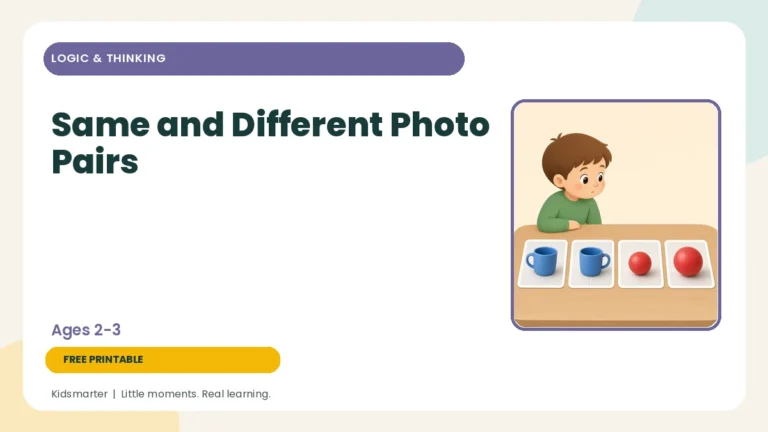
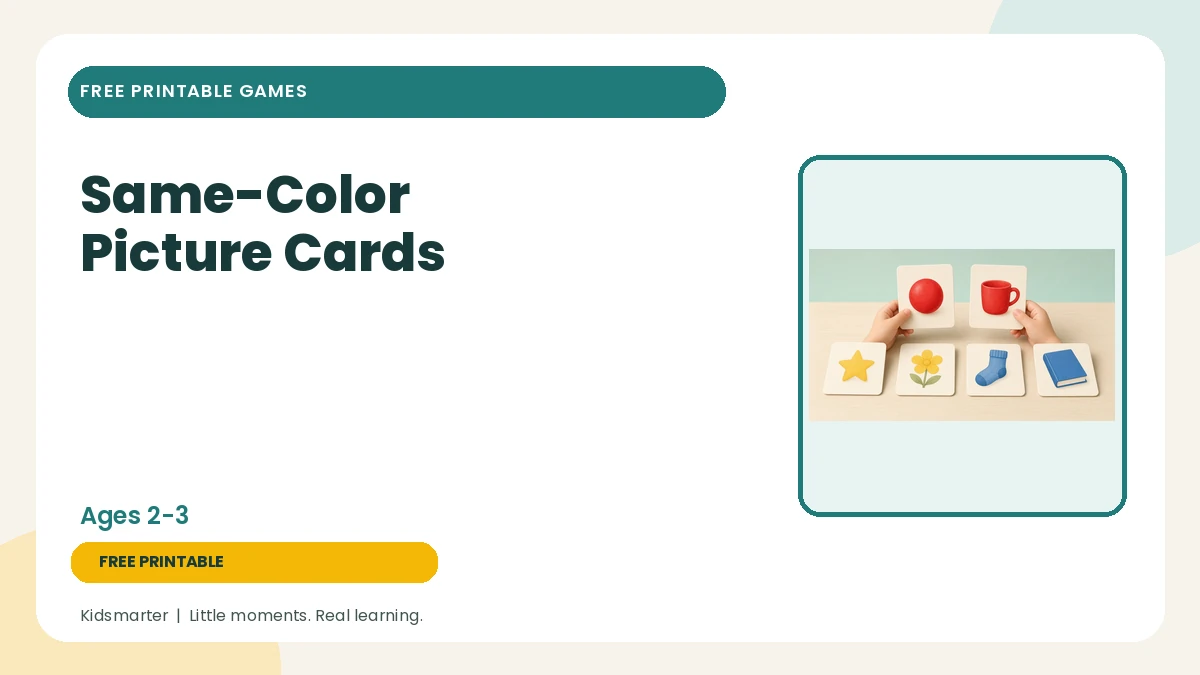
Two pictures can share a color even when they show different things: a red ball and a red cup, or a yellow star and a yellow flower. These cards give that idea a simple pointing or matching job. This is not sorting real socks by color, not clipping clothespins onto a color, and not matching two pictures that show the same number.
Materials You’ll Need
- The printable Same-Color Picture Cards, or eight homemade cards with the same four color pairs: a red ball and a red cup, a yellow star and a yellow flower, a blue sock and a blue book, a green leaf and a green block
- A clear table or rug space
- Optional, for the cut version only: adult scissors, used in advance and then put away
Print the page at actual size. You may leave the sheet whole and point to two pictures that show the same color, or an adult may cut the eight cards apart and mix them. The child does not need to cut. If you make homemade cards, use large, simple pictures and keep them too big to swallow. The cards have no words.
Step-by-Step How to Play
-
Sit together with the sheet where both of you can see it. Point to one picture and name its color: “This ball is red. Which picture is also red?”
-
Invite your child to point to the other red picture. If they point somewhere else, you can name that picture’s color and then look together for the red cup, or you can model once by placing the two red cards side by side. There is no score.
-
Find the other color pairs if your child still wants a turn. You may leave the page whole the entire time. They do not have to name every color aloud or explain a rule.
-
If you like a hands-on version, an adult can cut the eight cards, mix them, and invite your child to place same-color partners side by side. Keep any scissors out of reach once the cutting is done. The child does not cut.
-
When they are finished, put the page or the cards away together. One or two pairs can be a complete game.
Small Details That Make This Activity Work
Start with a color that is easy to see, often red or yellow, so the idea of “the same color, different pictures” is clear. If a picture has a small extra detail, such as a green stem on the yellow flower, match the main color of the picture. If your child pairs two favorite pictures that are not the same color, you can name both colors and then look for one printed partner, or you can stop. These cards are not a laundry sock color sort, not clothespin color clips, not identical memory pairs, not go-together objects, and not same-number pictures: the match is two different pictures that share a color.
Why This Activity Helps
Matching two pictures that share a color is one everyday way to notice color and to look closely. There is no official study cited for this homemade card set, and matching the pairs is not evidence of later skill. Children may enjoy pointing to a favorite picture without finding every partner.
Easy Ways to Adapt by Age
Make It Simpler
Cover all but two pictures that already show the same color, and name them together: “Red ball. Red cup.” Then uncover one more pair. No cutting is needed.
Ready for a Challenge
Use the cut cards, mix all eight, and let your child find each pair. You may also hold up one card and ask, “Can we find another yellow?” Stop if the extra hunt turns the game into a quiz.
Download Free Printable PDF
This original US Letter page is free to download. Print at actual size. Use the whole page and point to two pictures that show the same color, or let an adult cut the eight cards apart. The child does not need to cut. No email signup is required.
Parent Tip & Safety Note
Stay at the table. If you cut the cards, an adult does the cutting, then puts the scissors away before the game begins. Keep paper cards out of mouths, and do not add small decorations, buttons, or coins to the cards. Supervise as you would with any small paper pieces if a baby is nearby. Stop when your child is finished or wants to look at the pictures in another way.
Explore more activities in this category or free printable games.