Kitchen Water Pour Station
Quick Activity Snapshot
- Age Range: Ages 2–3
- Prep Time: 5 minutes
- Skills: Pouring and two-hand control
- Materials: A shallow pan or tray on a stable low table, two small intact plastic cups, a whole washcloth for spills, a small amount of plain water and floor towels
Age ranges are suggestions, not developmental milestones or standards. Choose the setup for this child, and stop whenever needed.
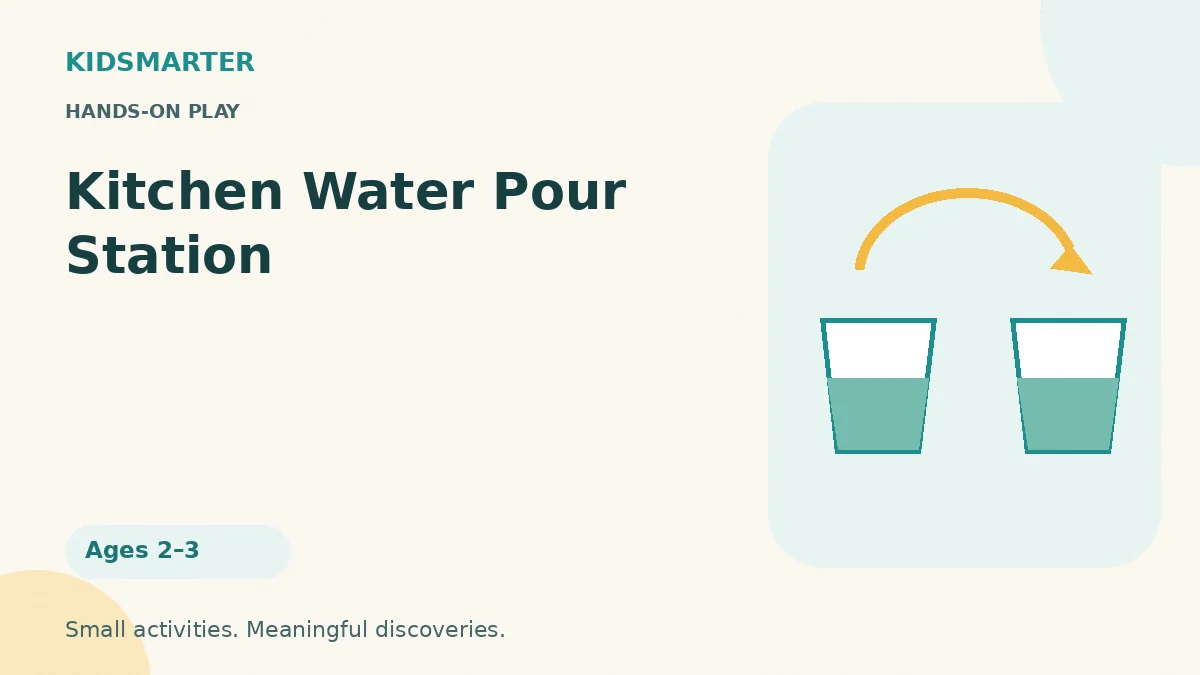
A shallow pouring station gives toddlers a place where a little spill is expected and cleanup is part of the play. Two small cups inside a roasting pan are enough. The child fills one, tips it toward the other, and uses a washcloth to gather the water that missed. Instead of aiming for a completely dry table, help them notice how the cup’s angle changes the stream. Keep the water amount small and stay within arm’s reach throughout.
Materials You’ll Need
- A shallow pan or tray on a stable low table
- Two small intact lightweight plastic cups; no glass
- A whole washcloth for spills
- A small amount of plain water and floor towels
Use a stable roasting pan or shallow basin, two small lightweight plastic cups, a large washcloth, and towels. Add only a small amount of cool or comfortably lukewarm water, with no soap required. Set the tray on a low table rather than a counter that requires climbing. The floor towel should lie flat without creating a slipping edge. Remove electrical appliances and cords from the area.
Step-by-Step How to Play
-
Put the cups inside the pan and fill one about a quarter full. Explain the boundary: “Water stays in our tray. We can pour from this cup into that cup.” Demonstrate slowly, bringing the cup rims close together before tipping. Start the pour gently and return the cup upright before it is completely empty so your child can see the stopping action clearly.
-
Hand the full cup to your child and let them explore holding it with one or two hands. Keep the receiving cup steady if necessary. Say, “Bring the cups close, then tip a little.” Do not grip the child’s wrist to produce a perfect stream. If everything empties into the pan, point out where the water went and refill a smaller amount for the next attempt.
-
Invite a second pour in the opposite direction. Pause halfway and ask, “Can you make the stream stop?” Model returning the cup upright, then let the child try. Stopping may be harder than starting because the child must anticipate when enough water has moved. Keep the task brief and let repeated visible results provide feedback instead of giving a long sequence of instructions.
-
Bring in the washcloth when water collects in the tray. Press it into the puddle and squeeze over a cup: “The washcloth holds water. Our hands squeeze it out.” Let the child try with both hands. This makes cleanup a useful transfer method rather than a punishment for spilling. Replace a washcloth that is too large or stiff with one the child can compress comfortably.
-
Finish by pouring the remaining water into an adult-held container for disposal. Help the child wipe the tray, dry the cups, and check the floor with you. Say, “We are closing the water station now.” Empty everything immediately, even if you expect to return soon. Repeat another day with the same cups before introducing funnels or extra containers that change the task substantially.
Why This Activity Helps
Pouring combines two-hand coordination, visual feedback, and adjusting force as a container becomes lighter. Watching a stream change with the cup’s angle creates a simple cause-and-effect experience. Squeezing a washcloth offers a different way to move the same water and a practical cleanup routine. These are everyday learning opportunities, not a measure of independence; toddlers still need active adult support even when their movements become more controlled.
Easy Ways to Adapt by Age
Make It Easier: Use very small amounts of water and hold the receiving cup yourself. A broad bowl offers a larger target than a narrow cup. Let your child pour from a small measuring jug with an easy handle if cups are slippery. A dry practice round with empty cups can clarify the movement before any water is added.
Add a Challenge: Invite an older preschooler to fill a cup only to a broad marker line, stopping and checking as they go. Compare a slow pour with a fast pour and describe what changes. Offer two differently shaped containers and ask which might hold more, then test inside the tray. Keep quantities small; extra water adds risk and mess rather than useful difficulty.
Parent Tip & Safety Note
Water play requires continuous, close adult supervision; even a small amount of water in an open bowl or tray needs full attention, without a phone or another task. Empty every container immediately afterward. Do not leave to answer a phone or fetch supplies. Use no glass, hot water, or electrical equipment nearby. Dry spills promptly, prevent drinking the play water, and inspect and store the whole washcloth; replace it if threads or pieces come loose.
Safety reference: AAP water-safety guidance.