Mystery Bag: Feel and Guess
Quick Activity Snapshot
- Age Range
- Ages 4–5
- Prep Time
- 5 minutes
- Skills Practiced
- Describing and inferring
- Materials
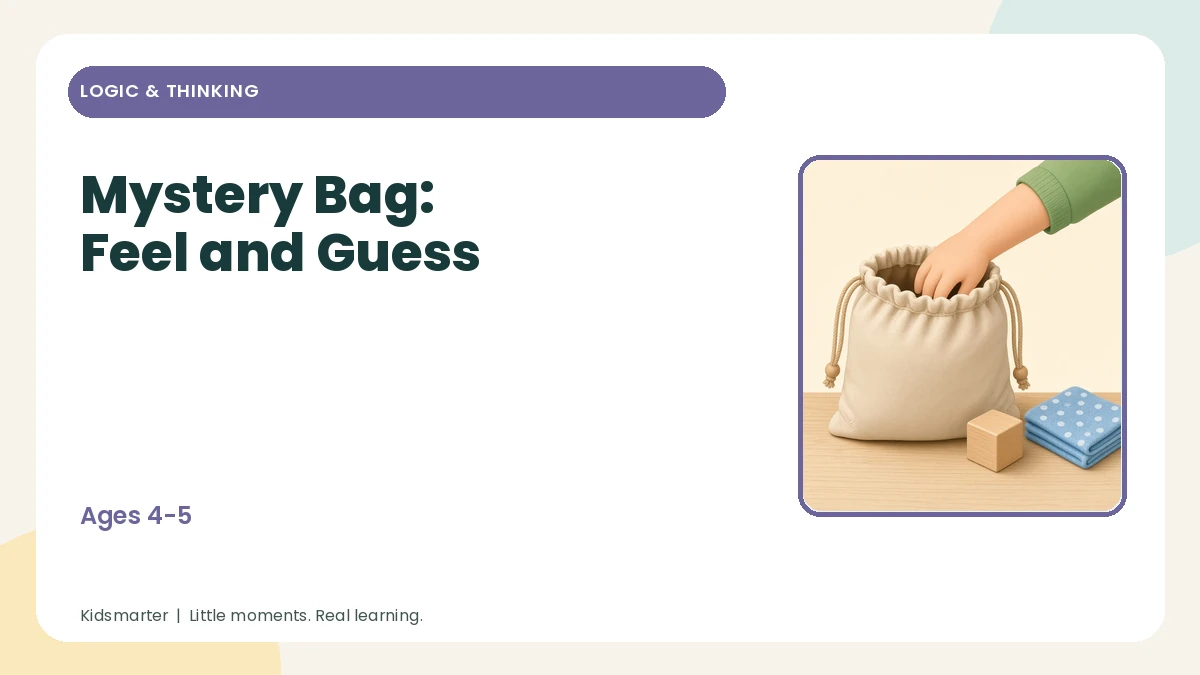
- A plain cloth bag with no cords, handles, straps, or drawstring, An intact age-appropriate block and a clean whole washcloth, if suitable
Age ranges are suggestions, not developmental milestones or standards. Choose the setup for this child, and stop whenever needed.
A familiar object can offer clues through touch as well as sight. Start with a known block and washcloth, then hide one in a plain open cloth bag. Your child can describe an edge or surface, look whenever they want, and reveal it to check. The invitation is to compare clues, not to tolerate an unpleasant sensation or keep eyes closed.
Materials You’ll Need
- A plain cloth bag with no cords, handles, straps, or drawstring
- An intact age-appropriate block and a clean whole washcloth, if suitable
Choose a clean whole washcloth and one intact age-appropriate block with no detachable parts. Preview both in the open. Use only a plain cord-free, strap-free bag held open by an adult at tabletop height, below the face. If reaching into a bag is unwelcome or the materials would be mouthed, put the bag away and compare visible objects or adult-held pictures instead; that is a looking-and-describing version.
Step-by-Step How to Play
-
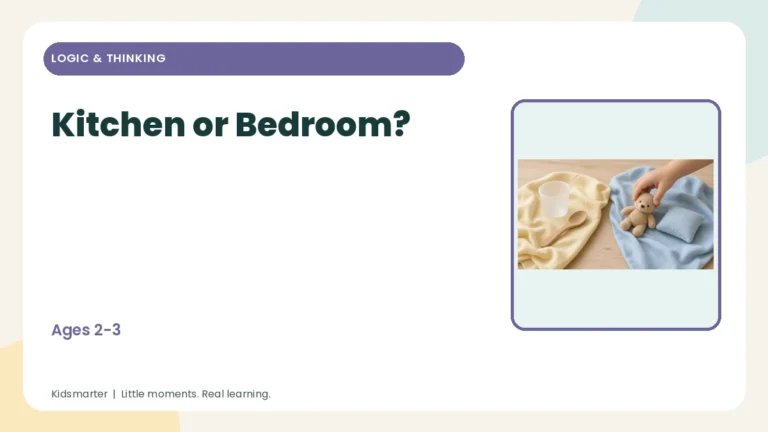
Explore the two objects openly. Compare a flat face or corner with the cloth’s flexible fold, using ordinary words such as firm, soft, edge, and bend. These describe the objects, not which texture a child should like. A point to a feature is a useful response.
-
Place one object inside while your child watches. Hold the bag open and ask, “What does your hand notice?” The child may touch it, look, or ask you to reveal it immediately. Describe one feature yourself if helpful; no guess is required before taking a hand out.
-
Offer a guess and say which clue suggested it: “I feel a hard corner, so I think block.” Bring the object out to check. If the guess differs from the object, compare the noticed feature rather than scoring the answer.
-
For another turn, choose from the same two known objects while the child looks away if they wish. Name both possibilities again before offering the open bag. Keep the check available, and do not add unfamiliar objects as a surprise.
-
Switch roles and let your child choose the hidden object. Describe your own uncertainty aloud, then reveal and compare. Finish with a favorite texture or a drawing of one feature noticed by touch.
Small Details That Make This Activity Work
A useful tactile clue describes a feature rather than a judgment such as nice or funny. You can accept your child's first word, then offer a more specific possibility: “Funny because it has bumps?” Do not treat roughness or softness as universally pleasant or unpleasant. If the child chooses to look into the bag, simply name the version you are playing: now both eyes and hands can help. The activity remains a worthwhile comparison. You can record one shared description on a scrap of paper after the reveal, showing that observations can be remembered without turning the game into a written vocabulary lesson.
Why This Activity Helps
Describing tactile features encourages careful observation and using evidence to narrow possibilities. Holding a few possible objects in mind adds a memory demand. The task should not be used to diagnose sensory differences or require tolerance of an unwanted sensation.
Easy Ways to Adapt by Age
Make It Simpler
Leave the bag open so your child can alternate looking and feeling. Use two very different objects, such as a cloth and a block, and name the alternatives clearly.
Ready for a Challenge
For a later round, compare two familiar whole cloths with different surfaces, if the child welcomes them. Preview both and name one additional clue that distinguishes them. This is optional; there is no need to make the bag harder or introduce a brush to create a challenge.
Parent Tip & Safety Note
Use no plastic bag, straps, cords, blindfold, sharp edges, loose bristles, or small pieces. The adult keeps the plain bag open below the face and puts it away after play. Stop and reveal immediately if a hand is withdrawn or the child wants to look. Do not hold a hand in the bag to finish a turn.
Explore more activities in this category or free printable games.